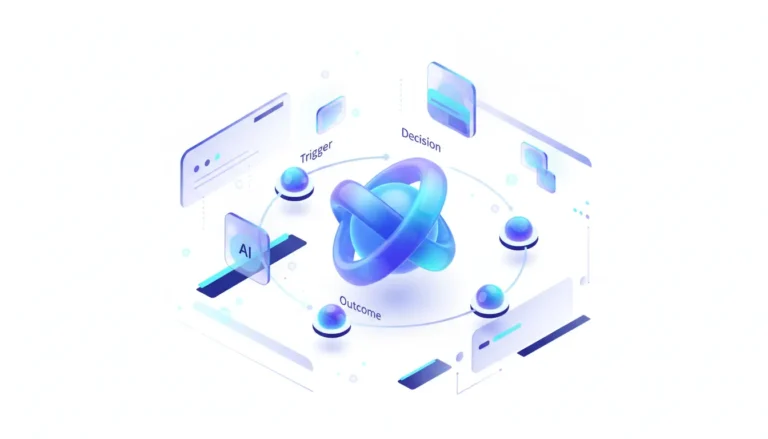
Large Language Models are escaping the browser. By moving into the chaotic, high-friction environment of the retail floor, voice AI is forcing a critical evolution in low-latency infrastructure and edge computing.
Quick Take
- Summary: Conversational AI is making the leap from digital customer service to the physical retail floor, transforming how complex product information is delivered in brick-and-mortar stores.
- What happened: A Japanese retailer recently deployed AI voice agents in-store to assist with appliance purchases, successfully guiding approximately 30,000 shoppers through complex decision trees in just two weeks without requiring human associate intervention.
- Why it matters now: This deployment proves that ambient, voice-driven LLMs can survive real-world, noisy environments. It signals a shift from text-based chatbots to real-time, multi-modal AI interactions, expanding the battlefield for AI providers into physical retail infrastructure.
- Who is most affected: Retail operations executives, AI infrastructure engineers focusing on real-time speech pipelines, and enterprise software vendors building integrations between foundational models and product inventory systems.
- The under-reported angle: While market coverage focuses on the novelty of “robot shop assistants,” the real breakthrough is architectural. Successfully deploying these agents requires mastering strict latency budgets across a complex ASR (Speech-to-Text) → LLM → TTS (Text-to-Speech) pipeline while handling acoustic noise and human interruptions (barge-in) on the edge.
Deep Dive
Have you ever stood in an appliance aisle, staring at a wall of fridges and wondering which one actually fits your kitchen? For the past two years, the enterprise AI narrative has been dominated by digital co-pilots and browser-based chat interfaces. Yet the deployment of AI voice agents in physical retail environments marks a pivotal crossing of the digital-to-physical divide. Guiding 30,000 shoppers through appliance purchases in a matter of weeks is not just a customer service win for retail; it is an infrastructure stress test for the AI ecosystem. Shoppers facing decision overload are now interacting directly with localized LLMs that cross-reference real-time product catalogs (PIM) and point-of-sale (POS) data to deliver instant, conversational guidance.
Mainstream retail coverage frames this as a simple labor story – an “always-on” associate augmenting human staff during peak foot traffic. From an AI infrastructure perspective, though, the physical shop floor is one of the most hostile environments imaginable for a language model. To achieve conversational fluidity, developers must orchestrate a grueling latency budget. The total round-trip time for Automatic Speech Recognition (ASR), Natural Language Understanding/Generation (NLU/LLM), and Text-to-Speech (TTS) synthesis must remain under one second. Anything longer, and the human user abandons the interaction or speaks over the agent.
This latency constraint is exposing the limits of pure cloud inference. Processing a spoken query by sending audio to a centralized cloud server and waiting for a synthesized voice response introduces network volatility. Consequently, these deployments are accelerating the demand for edge-cloud hybrid architectures. We are seeing a heightened focus on noise-robust ASR models running locally to handle Voice Activity Detection (VAD) and echo cancellation, filtering out the ambient chaos of the store before pinging the cloud-based LLM for reasoning.
Furthermore, this deployment unlocks an entirely new data exhaust: real-time, granular audio logs of shopper intent. Retailers are no longer guessing why a customer abandoned a physical aisle. By analyzing voice agent logs, they can map exact user constraints (e.g., “I need a fridge under 30 inches wide that makes spherical ice”) against actual inventory, turning the voice agent into a high-fidelity analytics engine.
Yet, as this technology scales across multi-store rollouts, a massive compliance gap remains. Bridging PII redaction and voice data retention policies (like GDPR) in a public setting requires strict guardrails. The vendors who will dominate this space won’t just be those with the smartest foundational models, but those who can package robust telephony integrations, secure data enclaves, and localized hardware inference into a single, deployable enterprise stack.
Stakeholders & Impact
| Stakeholder / Aspect | Impact | Insight |
|---|---|---|
| AI / LLM Providers | High | Pushes the frontier of real-time, multi-modal streaming APIs. Models must now handle “barge-in” interruptions natively. |
| Retail Infra & IT | High | Requires tight integration of AI layers with legacy systems (POS, PIM, Inventory) and investments in edge compute. |
| Store Staff & Shoppers | Medium-High | Radically reduces decision fatigue for complex purchases while augmenting human staff during peak traffic. |
| Regulators & Policy | Significant | Ambient voice capture in public retail spaces will trigger new scrutiny over acoustic surveillance, PII redaction, and consent. |
About the analysis
Researched and written with AI assistance under the editorial responsibility of the i10X News team. The title image is an AI-generated illustration. Read our AI Use Policy. Spotted an error? Request a correction.
This is an independent, research-based analysis synthesizing recent retail AI deployments, technical architecture gaps, and real-world performance data. It is designed for CTOs, AI infrastructure engineers, and retail operations leaders looking to navigate the transition from digital LLMs to spatial, voice-driven AI agents.
i10x Perspective
The arrival of AI voice agents on the retail floor is the canary in the coal mine for spatial computing and ambient intelligence. Over the next five years, the competitive moat for AI companies will shift from pure reasoning capabilities to low-latency, multi-modal execution in the physical world. As models from OpenAI, Google, and Anthropic are deployed in increasingly chaotic environments, watch for a massive convergence between cloud giants and edge hardware manufacturers. The ultimate winner of the AI race won’t just own the data center – they will own the sub-second acoustic pipeline everywhere intelligence intersects with the physical world.