Quick Take
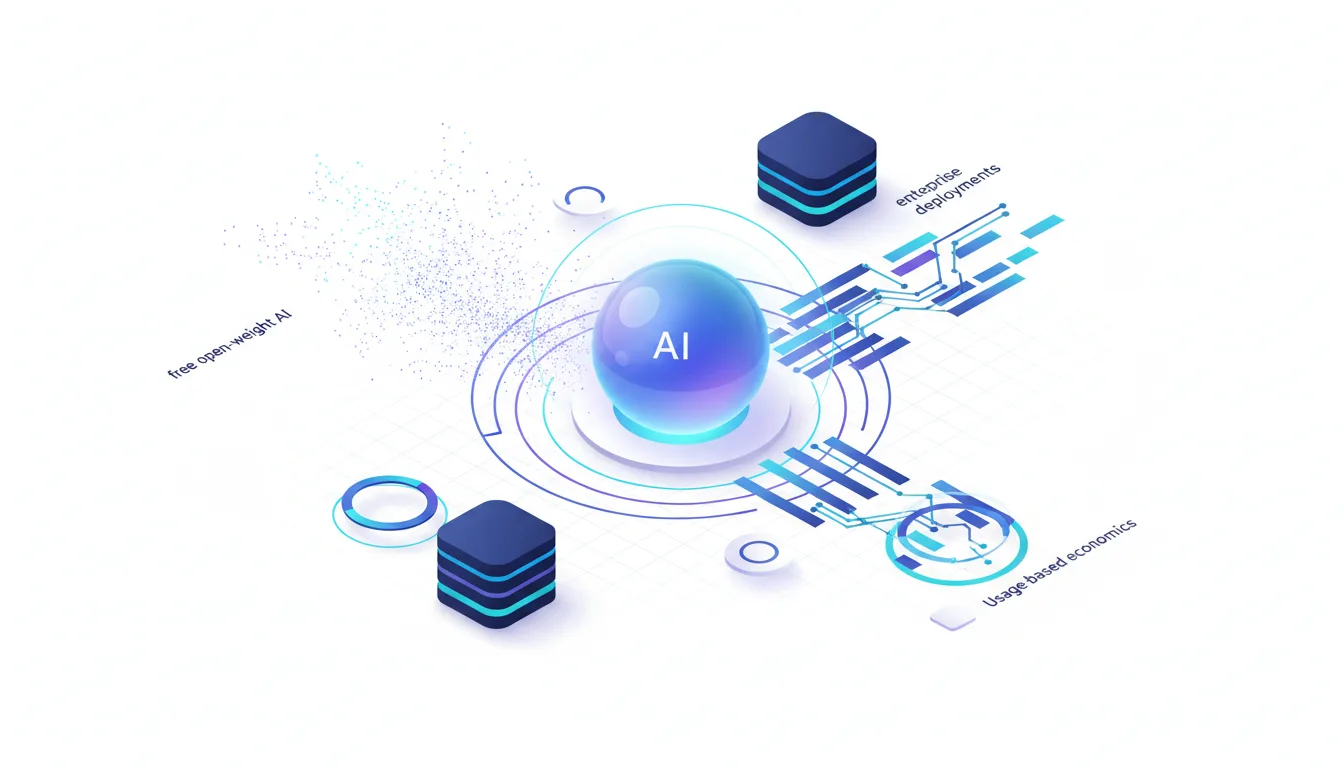
Alibaba looks set to shake up the open-weight AI space. Reports suggest the company will introduce a revenue-sharing model for large commercial deployments of its upcoming Qwen3.8-Max model. That marks a clear shift in how open-source LLMs get monetized.
- Summary: Alibaba’s Qwen (Tongyi Qianwen) family has grown into a major force in the open-weight LLM ecosystem. It now spans everything from lightweight quantized models for edge devices to heavy-duty enterprise versions. The new licensing approach for Qwen3.8-Max adds a revenue-sharing requirement for the heaviest commercial users, which effectively ends the period of completely unrestricted freemium access.
- What happened: After the strong performance of the Qwen2.5 series, Alibaba is tightening the rules around pure open-source commercial use for its most capable models. Large-scale enterprise users of Qwen3.8-Max will reportedly need to share a portion of the revenue they generate rather than simply downloading the weights for free and unlimited deployment.
- Why it matters now: The move challenges Meta’s Llama and Mistral’s open-weight dominance. It tests whether enterprises will trade full licensing freedom for access to top-tier Chinese AI capabilities. At the same time, it changes the economics of self-hosted AI and forces CTOs to revisit their Total Cost of Ownership calculations.
- Who is most affected: Enterprise solution architects, CTOs, and infrastructure engineers who count on locally hosted or cloud-managed open-source LLMs to sidestep vendor API lock-in and keep inference costs under control.
- The under-reported angle: The real friction isn’t only the added cost. Compliance and telemetry requirements will also matter. A revenue-share model means enterprises may have to share usage metrics with Alibaba to verify downstream monetization, which creates significant data governance and auditing challenges for global deployments.
Deep Dive
Qwen has developed into far more than another open-source option. It now functions as a broad, highly optimized intelligence infrastructure that includes dense LLMs, multimodal models like Qwen-VL, and audio variants. Alibaba has given developers solid tools for fine-tuning through LoRA and high-throughput serving through vLLM. For a long time the core offer was simple: strong benchmark results on tests like MMLU and GSM8K paired with easy deployment of open weights on Hugging Face, GitHub, and China’s ModelScope.
That straightforward value proposition is changing. While Alibaba Cloud’s official channels keep stressing enterprise-grade managed services, security, and flexible cloud-to-on-prem options, independent observers point to an approaching shift. Reports indicate Alibaba plans a revenue-sharing model for Qwen3.8-Max. The days of consequence-free, large-scale commercial use of its frontier open-weight models appear to be ending.
For infrastructure teams this alters the scaling math. Previously, downloading a Qwen checkpoint meant the main costs were compute, GPU resources, and power. Under a revenue-share agreement, self-hosting stops being purely an engineering and hardware question and becomes an ongoing financial commitment as well. Teams will need to weigh the silicon costs of running quantized versions locally against the new licensing overhead, or consider moving to Alibaba Cloud’s managed APIs where pricing is clearer but vendor lock-in is total.
What most coverage overlooks is how difficult it will be to enforce a revenue-share model when the weights themselves remain decentralized. For global enterprises in regulated sectors, any revenue-sharing tier will likely require some form of auditing. That means telemetry, prompt volume, and monetization metrics must be verifiable, which opens up a real governance gap. Western CTOs will face extra friction if using Qwen3.8-Max requires bridging data-residency rules and exposing internal accounting just to stay compliant.
Stakeholders & Impact
- AI / LLM Providers — Impact: High. Insight: Validates alternative monetization strategies for open-weight models, moving the industry beyond standard commercial licenses.
- Enterprise CTOs & Devs — Impact: High. Insight: Forces immediate TCO recalculations; self-hosting open-weight models no longer guarantees protection from usage-based scaling costs.
- Infrastructure & Cloud — Impact: Medium. Insight: May drive users back toward managed cloud APIs to avoid the complex on-prem auditing and legal logistics of revenue-sharing.
- Regulators & Legal Teams — Impact: Significant. Insight: Introduces complex cross-border compliance, IP, and data governance challenges regarding revenue auditing and telemetry.
About the analysis
Researched and written with AI assistance under the editorial responsibility of the i10X News team. The title image is an AI-generated illustration. Read our AI Use Policy. Spotted an error? Request a correction.
This independent, research-based analysis draws on official repository data, cloud provider positioning, and global tech reporting to map the shifting monetization landscape of open-weight LLMs. It is aimed at CTOs, AI architects, and enterprise decision-makers who are actively weighing intelligence infrastructure investments and deployment strategies.
i10x Perspective
Alibaba’s move with Qwen3.8-Max signals the end of “freemium innocence” in the open-weight LLM race. As the compute needed to train and run frontier models grows to enormous levels, AI labs can no longer subsidize enterprise usage purely for ecosystem goodwill. If Alibaba manages to normalize revenue-sharing for decentralized open-weight models, other labs around the world will likely watch closely and may follow, which would reshape the economics of self-hosted AI in lasting ways.