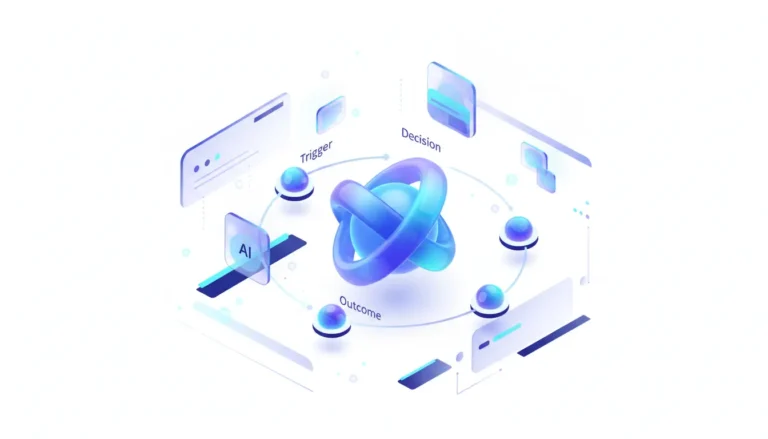
Anthropic has stepped into the arena of persistent digital workers with Claude Duet, an always-on agent designed to keep running, watching apps, and handling tasks even after the chat window shuts. Built on the Claude Opus 5.5 model and hosted on dedicated cloud virtual machines, it moves AI away from one-off prompts toward steady background work. The move sharpens competition with OpenAI Dots and Meta Muse, and it points to bigger changes in how AI infrastructure gets used and managed.
Quick Take
- The launch: Anthropic opened a waitlist on October 21 for Claude Duet, a proactive AI agent tailored for professionals and small businesses available via research preview for Claude Pro and Max subscribers.
- The architecture shift: Unlike traditional stateless chatbots, Duet operates on an Anthropic-hosted cloud computer, allowing it to maintain persistent memory, identify unpaid invoices, and generate briefings asynchronously.
- The market battle: Duet directly challenges OpenAI’s “Dots” (powered by GPT-6 Astra), Meta’s “Muse Secure VM,” and Google’s Gemini enterprise agents for dominance in the continuous agent layer.
- The governance bottleneck: To mitigate the high risks of autonomous execution, Anthropic requires explicit human-in-the-loop approval before the agent can process payments, sign documents, send outbound messages, or delete data.
What happened
Anthropic opened the waitlist for Claude Duet on October 21, marking its entry into a fast-filling market for persistent AI agents. At first it is available as a research preview for U.S. subscribers on the Claude Pro and Max tiers. Duet links straight into thousands of workplace tools such as Gmail, Slack, and Google Calendar through the Claude Marketplace. It runs in the background, surfaces daily briefings, flags urgent messages, and readies tasks like financial forecasts without needing a fresh prompt each time.
Duet sits on a dedicated Anthropic-hosted cloud computer that holds persistent, editable memory. That change turns the AI from a simple text generator into a workflow orchestrator that stays connected across sessions.
To handle security and privacy concerns that come with autonomous systems, Anthropic built in strict approval gates. The agent can gather data and draft material on its own, yet it stops for human sign-off before taking higher-stakes steps such as sending external messages or touching financial tools.
Why it matters now
Claude Duet’s release marks the close of the conversational-only AI phase. Labs are no longer just shipping models that sit idle until prompted; they are launching continuous digital workforces. Moving from single-session inference to always-on virtual machines with lasting context demands far more compute and changes how data centers allocate resources. An agent that keeps polling APIs and checking background triggers uses steady compute, which shifts the cost structure of AI deployment.
Anthropic’s timing responds to intense competition. OpenAI has moved ahead with its GPT-6 Astra-powered Dots and more than 4,000 app connections, Meta has launched its Muse architecture, and Google has placed persistent Gemini agents inside enterprise setups. By framing Duet as an “AI chief of staff” with editable memory and clear approval logs, Anthropic aims to win over professionals and small businesses before rivals lock them into closed ecosystems.
The launch also tests the industry’s safety systems. Hard human-in-the-loop gates are meant to balance productivity with control. How well those guardrails hold up in real use, and whether they stop hallucinations from causing actual harm, will shape future compliance rules and liability standards.
Who is most affected
The shift to always-on agents immediately touches enterprise software buyers, cloud providers, and knowledge workers. As agents handle ongoing monitoring and background tasks, traditional SaaS interfaces may lose ground to direct agent-to-agent exchanges.
| Stakeholder | Impact | Why |
|---|---|---|
| Enterprise AI Buyers | Shifting evaluation metrics. | Buyers must now audit persistent cloud-VM security, app permissions, audit logs, and revocation controls, moving far beyond standard model intelligence benchmarks. |
| Cloud & Infra Providers | Exploding compute demands. | Always-on agents require dedicated, continuous background compute, straining existing GPU and data center capacity differently than bursty, session-based chat requests. |
| Knowledge Workers | Workflow transformation. | The human role shifts from executing digital tasks to managing, editing, and approving autonomous agent outputs as a critical “human-in-the-loop” decision maker. |
About the analysis
Researched and written with AI assistance under the editorial responsibility of the i10X News team. The title image is an AI-generated illustration. Read our AI Use Policy. Spotted an error? Request a correction.
This is an independent, research-based i10x analysis mapping the shift from conversational LLMs to persistent, autonomous agent ecosystems, designed for AI founders, CTOs, and infrastructure strategists.
- Anthropic joins the race for AI agents that keep working between conversations
- Always-On AI Agents: Dots, Muse, Grok Bot Explained (2026)
- Always-On AI Agents Are Here: OpenAI Dots, Meta Muse & Google Gemini Agents (2026)
- OpenAI Dots: Always-On Agents in ChatGPT, Explained
- Top always-on AI agents
- Anthropic Unveils Claude Duet To Challenge OpenAI And Meta in the AI Agent Field
i10x Perspective
The move from chatbots to always-on agents like Claude Duet stands as one of the largest architectural shifts since modern LLMs arrived. We are moving from AI as a static software tool to AI as a sovereign, persistent compute node. This change collides scaling goals with real infrastructure limits: running millions of personalized virtual machines that scan APIs nonstop will consume energy and silicon at a scale not seen before. In the end, the winner will be the ecosystem that delivers the most trusted, secure, and efficient way to host these digital proxies.