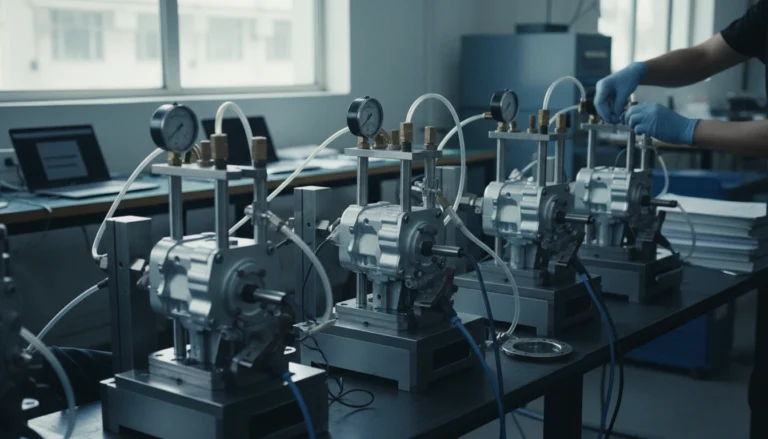
Anthropic is reportedly spending $3.4 billion on 1.7 gigawatts of gas-fired generators. The move lets the company sidestep conventional power grids and keep its next-generation AI data centers running. First reported by the Financial Times, the deal underscores a stark shift in the generative AI race: the real limit on scaling intelligence has moved from chips to the sheer availability of electricity.
Quick Take
- The deal: Anthropic has agreed to take over Caterpillar generator orders from OnePWR Solutions in a $3.4 billion data-center capacity push.
- The scale: At 1.7 gigawatts, the procured power is equivalent to one or two nuclear power plants, marking the largest known single power-equipment purchase by an AI lab.
- The driver: Multi-year grid interconnection delays are paralyzing AI buildouts, forcing frontier model builders to secure their own primary generation to meet immediate compute demands.
- The climate friction: Relying heavily on gas-fired turbines highlights the growing tension between the AI industry’s staggering energy requirements and corporate zero-emission pledges.
What happened
In a large infrastructure step first reported by the Financial Times, Anthropic reached an agreement in late September to acquire about $3.4 billion in gas-fired power equipment. The transaction does not involve buying the energy firm OnePWR Solutions outright. Instead, Anthropic is stepping into the supplier’s existing orders for heavy-duty Caterpillar generators placed from its base in San Antonio.
The arrangement locks in 1.7 gigawatts of capacity meant specifically for Anthropic’s growing data-center needs. It also covers the engineering and construction work required to install and run the equipment. By taking OnePWR’s place in the queue, Anthropic has effectively paid to skip a multi-year backlog for industrial power hardware. Public statements from either party on exact timelines have not appeared yet, yet the deal’s structure shows clear pressure to secure assets before supply constraints grow tighter.
Why it matters now
The generative AI sector has reached a point where scaling ambitions run into hard physical limits. Training the next wave of models like Claude demands hundreds of thousands of GPUs and power loads that nearby utilities cannot supply on demand. With U.S. grid queues often running five years or longer, Anthropic’s generator purchase shows that leading labs are no longer just software companies. They are now actively building energy infrastructure themselves.
The transaction also points to a change in the main constraint on progress. While demand for NVIDIA chips has eased somewhat, shortages now affect the heavy electrical gear needed to power those chips, from transformers to large gas turbines. Securing 1.7 GW of generation capacity outright is Anthropic’s way of protecting its compute roadmap from grid shortfalls or slow utility approvals.
Still, the choice of gas-fired units reveals a widening gap between immediate needs and long-term climate goals. Rivals such as Microsoft and Google have highlighted nuclear and geothermal projects to stay aligned with clean-energy targets. Anthropic’s decision to bypass the grid reflects a priority on speed: when the choice is between waiting for greener upgrades or locking in power to stay ahead in the LLM race today, developers are opting for the latter.
Who is most affected
The move ripples across the AI infrastructure supply chain. Rival labs now see that staying competitive means bidding for industrial turbines as well as server racks. Grid operators and policymakers, meanwhile, face the prospect that if they cannot deliver power quickly enough, large tech firms will simply create their own fossil-fuel setups outside utility oversight.
| Stakeholder | Impact | Why |
|---|---|---|
| Frontier AI Labs | Escalating capital expenditure | Must directly fund billion-dollar power generation deals to stay competitive in the model-training race. |
| Utility Companies | Bypassed demand and lost leverage | Slower grid expansion forces tech giants to go “off-grid,” creating parallel energy infrastructures outside utility control. |
| Hardware Supply Chain | Saturated order books | Demand for industrial generators (e.g., Caterpillar) now mirrors the earlier frenzy for AI accelerators. |
About the analysis
Researched and written with AI assistance under the editorial responsibility of the i10X News team. The title image is an AI-generated illustration. Read our AI Use Policy. Spotted an error? Request a correction.
This is an independent, research-based i10x analysis intended for AI founders, infrastructure engineers, and data-center operators tracking the evolution of compute constraints.
i10x Perspective
Anthropic’s $3.4 billion move around the electrical grid marks the point at which AI development has effectively separated from public infrastructure. When scaling machine intelligence demands the immediate energy output of two nuclear reactors, frontier labs cannot rely on utilities to keep pace. The next stage of the AI arms race will hinge not only on algorithmic advances but also on the capital and operational resolve required to generate that power on the ground.