Quick Take
YouTube has rolled out Ask YouTube, a conversational AI layer driven by Google’s Gemini Omni that lets viewers pose questions inside any video and land on timestamped answers. At the same time the company is folding similar AI assist tools into Shorts and YouTube Create.
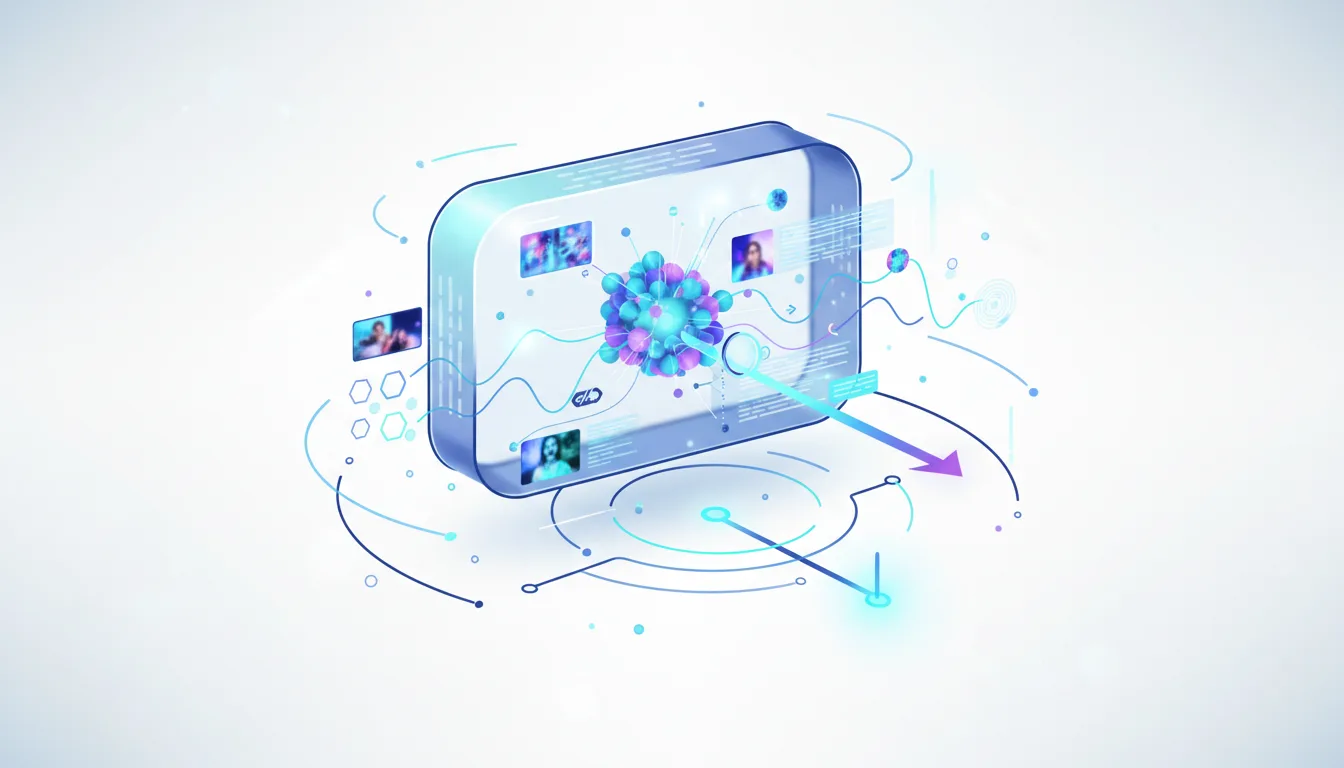
Google has essentially placed a multimodal model inside the biggest video player on the planet. The system pulls from the transcript, on-screen visuals, and metadata in real time, turning what used to be a straight play-through into something closer to an interactive search session. It is video-level retrieval-augmented generation in practice.
The timing matters. We are watching video shift from a format you consume end-to-end to one you can query at will. That move highlights how valuable proprietary, high-quality multimodal data has become for any company hoping to lead in consumer AI.
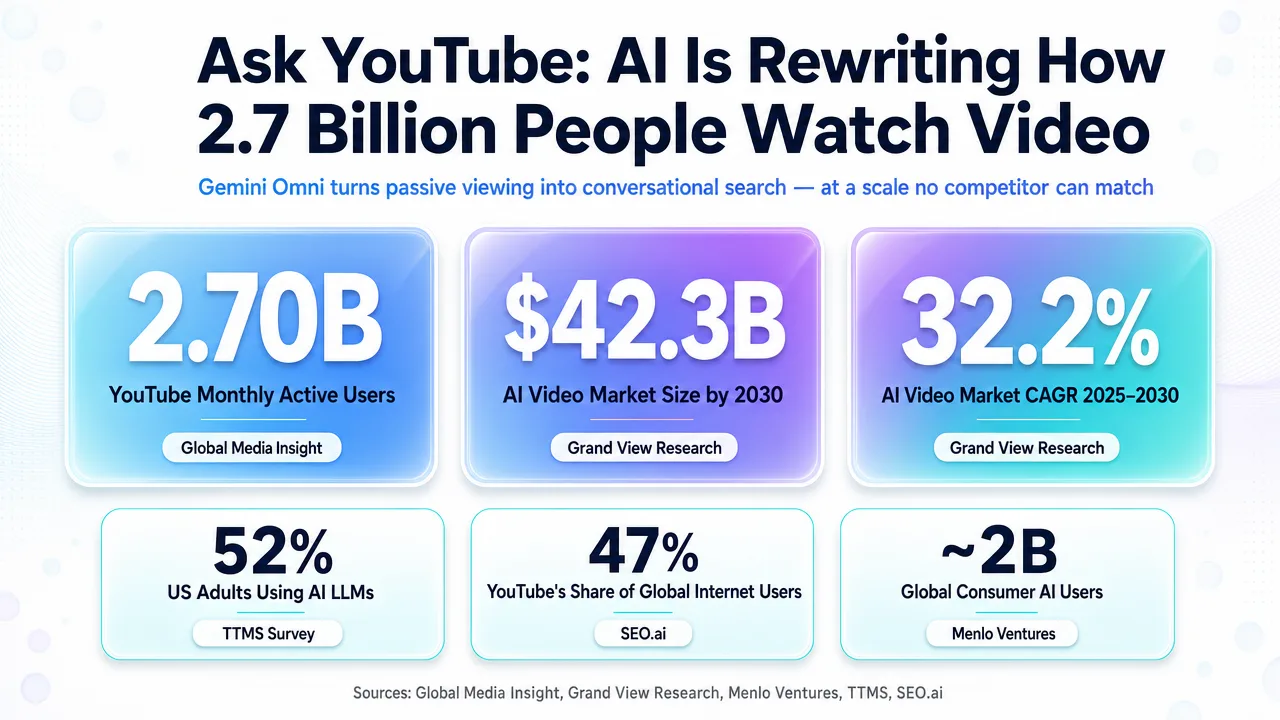
Creators, advertisers, and engineering teams will feel the change most. Watch-time calculations, mid-roll placements, and the way content is structured for discovery all face pressure once users can skip straight to the useful part.
One angle that has received less attention is the monetization friction. When viewers jump directly to the moment that answers their question, traditional ad placement models lose ground. It is a tension worth watching closely.
Deep Dive
For years the largest store of practical knowledge on the internet has sat inside videos that were difficult to search in any useful way. With “Ask YouTube,” Google is pushing Gemini Omni into the player itself so users can ask natural questions and receive grounded, time-stamped results. A thirty-minute tutorial no longer requires scrubbing; you simply ask and move to the relevant section.
Most coverage treats this as a convenience feature for viewers and a creative helper for Shorts producers. Stepping back, though, the bigger story is infrastructure. Delivering low-latency, multimodal answers across millions of streams at once is a serious test of Google’s custom TPUs and the Gemini stack.
That convenience also creates friction for creators. From what I have seen in earlier platform shifts, sudden changes to discovery often force a full rethink of optimization habits. When AI can surface minute 8:12 directly, the value of minutes three and six drops for anyone relying on mid-roll ads. Expect content to be written and segmented with the model in mind: tighter chapters, clearer descriptions, and dialogue that the underlying system can parse reliably.
The addition of Gemini Omni inside Shorts and YouTube Create serves another purpose. As outside tools make video production easier, Google is pulling prompt-based editing and storyboarding back into its own environment. That keeps creators working within the platform’s ecosystem rather than drifting elsewhere.
In the longer run, “Ask YouTube” looks more like a behavioral nudge than a simple feature. It trains people to treat video as something they can talk with, not just watch. The data advantage here is hard for anyone else to match.