The AI industry is quietly pivoting from conversational chat interfaces to autonomous, stateful AI agents, triggering a massive infrastructure race among cloud giants.
Quick Take
- Summary: Major cloud players and hardware vendors are aggressively rolling out enterprise platforms designed to build and deploy autonomous AI agents. This marks a definitive industry shift away from text-generation bots toward systems that can plan, remember, and independently execute complex, multi-step workflows.
- What happened: Companies including NVIDIA, Google, AWS, and Microsoft have released comprehensive full-stack agent builders—prioritizing tool bindings, API execution, and memory management over simple model intelligence. Meanwhile, open-source communities are realizing that early architectural patterns are failing under the weight of real-world deployment.
- Why it matters now: As LLMs are increasingly tasked with autonomous operations, the compute and inference paradigms are changing. Agentic workflows require continuous, asynchronous planning loops that multiply token usage and shift the bottleneck from raw model reasoning to scalable, latency-optimized orchestration.
- Who is most affected: Platform engineers, AI solution architects, and enterprise IT leaders who must now bridge the gap between basic API wrappers and production-grade reliability, dealing with new vectors of security, cost, and compliance.
- The under-reported angle: The true bottleneck for AI agents isn’t model intelligence; it’s stateful orchestration. Developers are finding that “chat-first” infrastructure fundamentally breaks down for unattended agents, necessitating a completely new operational playbook built around durable queues, strict economic constraints, and sandbox permissions.
Deep Dive
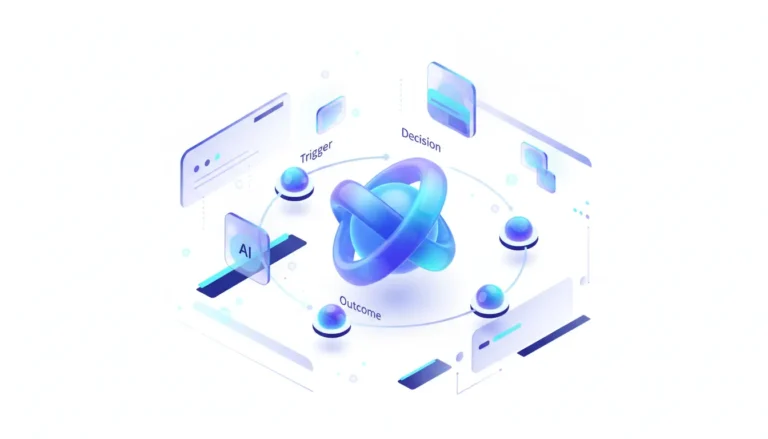
Have you noticed how the familiar chat window starts to feel like a straightjacket once you step beyond simple prompts? The AI landscape has hit the structural limits of the chatbot wrapper. While the public remains transfixed by the conversational abilities of large language models, enterprise infrastructure providers—from AWS and Google Cloud to NVIDIA and Databricks—are aggressively charting the next paradigm: autonomous AI agents. Unlike standard LLMs that generate text in response to a user, agents are durable software entities equipped with planning algorithms (like ReAct or Plan-and-Execute), episodic memory, and the explicitly granted permission to call external tools autonomously.
Yet this transition is exposing severe cracks in current AI infrastructure. A growing consensus among developers—highlighted in trenchant community discussions and engineering backchannels—reveals that chat-first AI architectures break down the moment they are forced into agentic roles. A chat UI inherently lacks state management, durable scheduling, and the rigorous telemetry required to let an AI operate without human intervention. When an agent hallucinates a tool call or encounters a timeout, basic chat loops crash; they lack the retries, dead-letter queues, and idempotency required of production software.
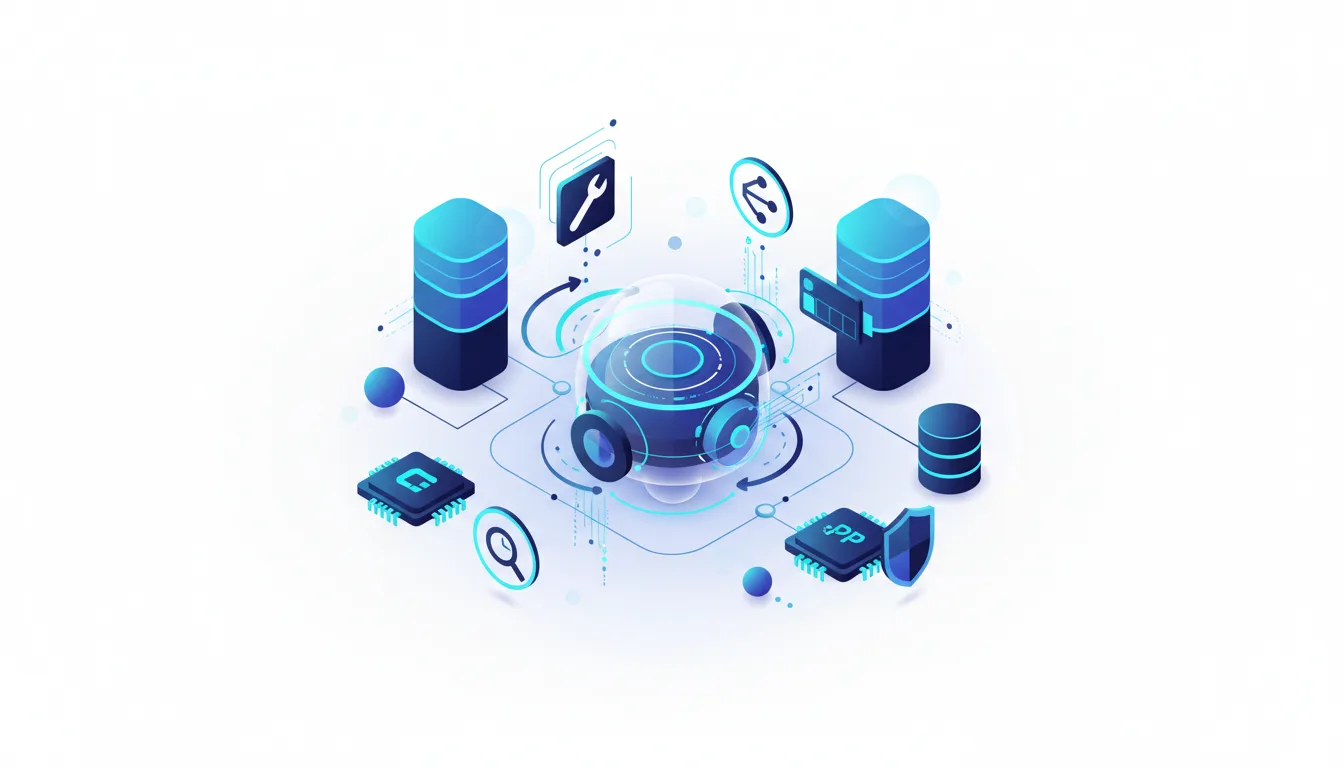
The cloud vendor ecosystem is scrambling to supply this missing scaffolding. Google’s Vertex AI and Amazon Bedrock are pushing managed services heavily centered on enterprise integrations, guardrails, and secure API bindings. Meanwhile, NVIDIA is positioning its NIM microservices and NeMo framework as the necessary latency-optimized execution layer. They recognize that continuous agent planning loops will dramatically multiply inference demands on GPUs, favoring architectures that can process thousands of background tokens in fractions of a second.
For companies like IBM and Microsoft, the enterprise pitch is grounded in risk management and governance. Giving an LLM the ability to read internal databases and execute actions—like writing code or sending automated emails—demands a radically different security model. The conversation is rapidly shifting away from prompt engineering toward strict Role-Based Access Control (RBAC), sandboxed execution, and Agent Reliability Engineering, ensuring human-in-the-loop escalation paths are built into the workflow via policy engines rather than ad-hoc chat handoffs.
What remains consistently overlooked in the hype cycle is the economic reality of deploying these systems. Running multi-agent graph orchestrations, where models repeatedly pull from vector databases and self-correct, chews through compute budgets exponentially. From what I’ve seen, the next frontier for intelligence infrastructure won’t just be releasing smarter frontier models; it will require robust control planes handling telemetry, evaluation run catalogs, and dynamic caching protocols to ensure these autonomous intelligence units don’t quietly bankrupt the enterprises deploying them.
Stakeholders & Impact
| Stakeholder / Aspect | Impact | Insight |
|---|---|---|
| LLM & Inference Providers | High | The shift to autonomous loops transforms inference profiles: fewer human-paced streaming text bursts, vastly more asynchronous, background token crunching. |
| Cloud Platforms & MLOps | High | Orchestration, state management, and integration guardrails are becoming the new competitive moats, shifting value from the base model to the tooling layer. |
| Enterprise IT & Security | Significant | Teams must evolve from securing conversational portals to governing autonomous software that has live write-access to enterprise systems and APIs. |
| Platform Engineers & Devs | High | Must abandon lightweight chat scripts for stateful, durable workflow architectures, leaning heavily into observability, tracing, and task sandboxing. |
About the analysis
Researched and written with AI assistance under the editorial responsibility of the i10X News team. The title image is an AI-generated illustration. Read our AI Use Policy. Spotted an error? Request a correction.
This independent analysis synthesizes the evolving discourse across major vendor documentation (NVIDIA, AWS, Google, MSFT), open-source framework patterns, and on-the-ground developer sentiment regarding AI agent deployment. It is designed for CTOs, AI platform engineers, and ecosystem observers tracking the enterprise shift from conversational wrappers to autonomous infrastructure.
i10x Perspective
The transition from humans typing in chat boxes to autonomous agents negotiating in the background signals a fundamental transformation in how intelligence compute is consumed. Over the next five years, AI inference will decouple from human reaction times, sparking massive demand for continuous, asynchronous GPU allocation in data centers. The winners in the LLM ecosystem will not just be those training the smartest frontier models, but those who master the unglamorous infrastructure of agent reliability, state management, and operational economics.