Braiin Limited is moving into the $56.9 billion customer experience software market with a significant upgrade to its RADIUS platform. The centerpiece is Force AI, a new LLM-agnostic orchestration layer that shifts the system from basic generative chatbots toward autonomous, goal-oriented agents. The change reflects a wider enterprise trend: companies want multi-model setups that can plan, reason, and carry out complex workflows with minimal human oversight.
Quick Take
- The launch: Braiin has integrated “Force AI,” a unified AI orchestration layer, into its RADIUS Contact Center as a Service (CCaaS) platform to power autonomous agents and human copilots.
- Why it matters now: The enterprise software market is rapidly abandoning static generative AI in favor of “agentic AI”—systems that can autonomously plan, access external APIs, and self-correct to resolve real business goals.
- The LLM-agnostic play: Instead of locking into a single provider, Force AI supports OpenAI, Anthropic’s Claude, Google’s Gemini, and custom open-source models, mitigating vendor dependency risks.
- The under-reported angle: While the company claims 99.9% uptime and 4.5 million interactions processed over the last year, the real test for agentic CX is how securely these orchestration layers handle hallucination risks and manage seamless escalations to human agents in live environments.
What happened
Braiin announced a major overhaul of its RADIUS contact-center platform, built around a new multi-model orchestration engine called Force AI. The update lets the platform run autonomous AI agents and human-agent copilots across voice, chat, email, messaging, social, and video channels. The company points to research projecting the global CX software market will reach $56.9 billion by 2026.
The system breaks into three modules. AI Engage serves as the autonomous frontline, handling routine inquiries through goal-oriented agents. AI Assist works as a real-time copilot for human staff, surfacing next-best actions and context during complex escalations. AI Insight reviews every multi-channel interaction for sentiment, compliance, and quality, replacing the old approach of manual sampling.
Why it matters now
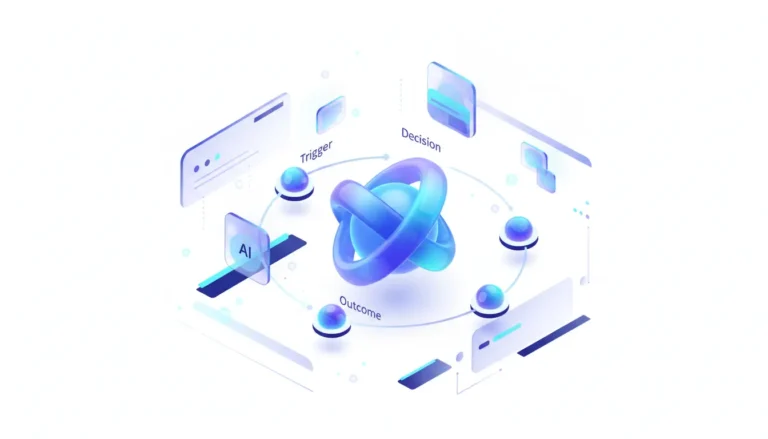
The move marks a clear shift in enterprise AI adoption, from generative tools that mainly produce text to agentic systems that operate with more independence. These newer setups follow a “perceive, reason, act, and learn” loop: they can break down a customer issue, pull data from CRM APIs, run a multi-step workflow, and check the result. That capability pushes contact-center teams to rethink how intelligence fits into older platforms.
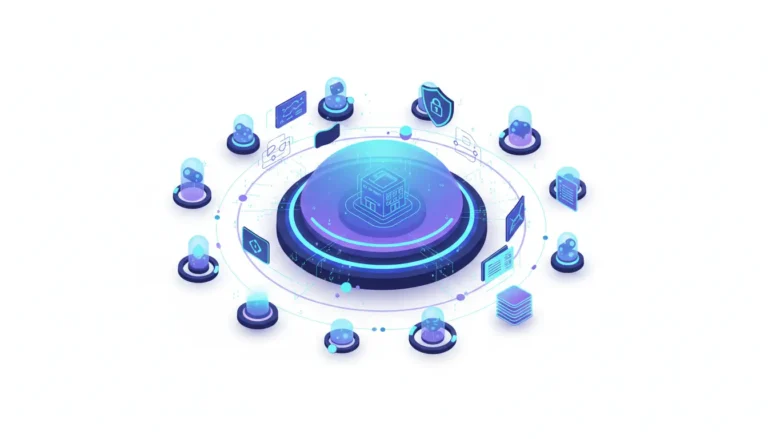
Braiin’s decision to keep the architecture open across models also speaks to a real concern about vendor lock-in. Force AI works with OpenAI, Anthropic, Google, and Azure, plus custom on-premises models. This flexibility lets teams route tasks to the model that fits best—using a large frontier model for tough reasoning and a lighter open-weight model for simple classification.
Who is most affected
| Stakeholder | Impact | Why |
|---|---|---|
| CX Leaders & CTOs | Reduced lock-in, shifted governance | LLM-agnostic orchestration allows model swapping, but demands stricter oversight on agentic tool-use and security guardrails. |
| Human Agents | Transition to exception managers | Autonomous modules contain high-volume, repetitive tasks, leaving human agents to handle complex, emotionally nuanced escalations via AI copilots. |
| Legacy CCaaS Vendors | Intense pressure to rebuild architectures | Traditional rules-based IVR and basic chatbot providers risk obsolescence against goal-seeking, multi-modal autonomous systems. |
The Agentic Edge: Execution vs. Generation
Educational explainers from cloud giants like AWS, Google Cloud, and Salesforce still shape much of the conversation around “agentic AI,” which shows how much the industry needs clearer distinctions between simple chat tools and true agents. The key difference is autonomy. Generative models predict the next token; agentic systems work toward defined business goals.
For CX platforms, that means moving from conversational interfaces to systems that can take action. Still, handing workflows to autonomous agents brings new risks. Buyers need tight access controls, clear audit trails for how the AI reaches decisions, and reliable handoffs when confidence drops.
About the analysis
Researched and written with AI assistance under the editorial responsibility of the i10X News team. The title image is an AI-generated illustration. Read our AI Use Policy. Spotted an error? Request a correction.
This is an independent, research-based i10x analysis intended for enterprise AI buyers, CTOs, and founders navigating the transition toward autonomous intelligent systems. It synthesizes company announcements with broader industry positioning on agentic AI architectures and LLM orchestration.
i10x Perspective
Braiin’s launch shows the copilot era giving way to the agentic era in enterprise software. As intelligence layers turn LLM-agnostic, the real advantage for AI companies will come from the orchestration layer that safely ties models to proprietary workflows. The market will be worth watching as it tries to match ambitious performance claims with the strict security, compliance, and governance demands of enterprise IT.