Claude 3.5 Sonnet: Quick Take & Analysis
⚡ Quick Take
Claude 3.5 Sonnet has shifted the AI model landscape with a mid-tier release that blends strong reasoning and vision with low-latency execution.
Summary: Anthropic has released Claude 3.5 Sonnet as the middle option between lightweight Haiku and flagship Opus. Benchmarks and early developer feedback show Sonnet outperforming larger models on reasoning, coding, and vision tasks, resetting expectations for what a middleweight enterprise model can deliver.
What happened: Sonnet arrived as the middle option between Haiku and Opus, yet early results show it punching above its weight on reasoning, coding, and vision.
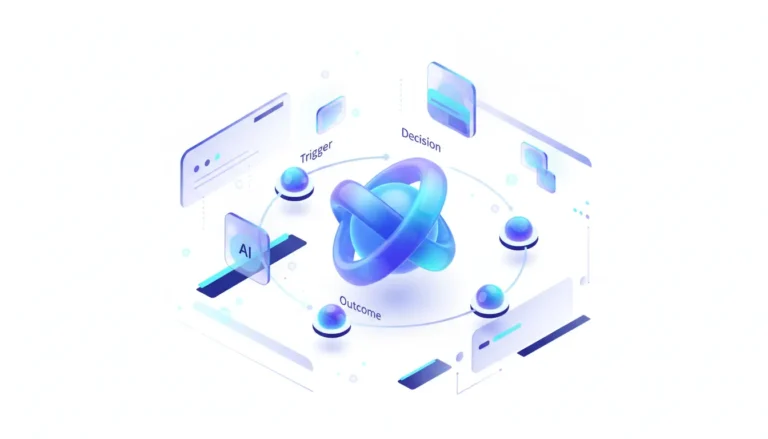
Why it matters now: The LLM race has moved past raw parameter counts and into “agentic reliability.” Sonnet’s speed and structured tool-use schemas let developers build perception-action pipelines where the model sees, plans, and acts in one flow, making viable agents possible without flagship-level inference budgets.
Who is most affected: AI integration developers, enterprise IT architects looking for scalable automation, and rival labs now feeling price-to-performance pressure in the commercial API market.
The under-reported angle: Beyond benchmark comparisons to models like GPT-4o, the more important story is closed-loop control systems. Hobbyists wiring the model to play DOOM frame-by-frame are stress-testing a future where LLMs act as real-time controllers for robotics and software navigation, constrained mainly by API latency and rate limits.
🧠 Deep Dive
The launch of Claude 3.5 Sonnet marks an inflection point in AI infrastructure: mid-tier models are becoming capable autonomous engines. Anthropic positioned Sonnet as a balanced, cost-effective option for enterprise work, but developers treat it as a leap in agentic AI. By cutting latency on vision inputs and function calling, Sonnet does more than answer questions faster; it closes the loop between perception and action.
This shift shows up clearest in experimental developer projects. Using Sonnet’s multimodal vision and structured tool-use schemas, teams have connected the model to classic FPS game DOOM. They feed it a frame, summarize the state, and constrain the action schema to move, shoot, or turn. The setup prototypes the perception-action pipelines needed for future agents and is a tough test of latency, token costs, and hallucination controls. Running a game frame-by-frame means every extra millisecond or wasted token quickly adds up to failure.
This focus on agentic behavior highlights a gap in how the industry evaluates LLMs. Standard benchmarks like MMLU or HumanEval miss the real friction of deploying models in live environments. Teams scaling Sonnet for production want clear latency and cost playbooks: when to stream versus batch, how to shape function-calling schemas for tight action spaces, and how to stay inside rate limits that cap continuous control loops.
For enterprises, the model forces a fresh look at the AI supply chain. Complex workflows that once required routing prompts through large, expensive flagships can now run on a mid-tier model. Sonnet brings that capability down in cost, but it also raises governance questions. As models move from chatbots to agents that can execute code or navigate interfaces, IT teams need to update security practices and map Constitutional AI guardrails against SOC2 rules and data retention policies.
Claude 3.5 Sonnet is accelerating a broader shift from text generation to sequential decision-making. Inference volumes will rise sharply: writing an email takes one API call, while navigating a GUI or playing DOOM requires hundreds of continuous calls. That pattern will change how cloud providers provision GPUs, cache context, and handle edge latency to support the next wave of autonomous agents.
📊 Stakeholders & Impact
| Stakeholder / Aspect | Impact | Insight |
|---|---|---|
| AI / LLM Providers | High | Forces competitors to defend flagship pricing as mid-tier models now dominate complex reasoning and tool-use tasks. |
| Developers & Engineers | High | Enables deployment of reliable, closed-loop agents (Plan-Act-Reflect) at a fraction of previous latency and token costs. |
| Infrastructure & Cloud | Significant | The rise of agentic, continuous-loop API calls (like frame-by-frame game control) will drastically alter inference scaling and GPU caching demands. |
| Enterprise IT & Security | Medium–High | Requires urgent updates to governance playbooks to handle models taking autonomous actions in live software environments. |
✍️ About the analysis
Researched and written with AI assistance under the editorial responsibility of the i10X News team. The title image is an AI-generated illustration. Read our AI Use Policy. Spotted an error? Request a correction.
This independent analysis combines market positioning, developer experiments, and competitive benchmarks to assess the structural impact of Anthropic’s Claude 3.5 Sonnet. It is written for technical product managers, AI architects, and infrastructure strategists who need to connect raw model capabilities to emerging compute and deployment trends.
🔭 i10x Perspective
Claude 3.5 Sonnet shows the LLM market will be won less by parameter counts and more by frictionless execution of agentic loops. When developers can afford to wire a model to play DOOM through continuous visual perception and action schemas, they build the foundation for digital workers that operate software environments directly. Over the next five years, the key signal to watch is how this continuous “frame-by-frame” inference demand strains current cloud pricing models and forces AI infrastructure to adapt to agents that run ongoing decision loops rather than single prompt responses.