Claude Agents Enable Air-Gapped Enterprise AI Workflows
⚡ Quick Take
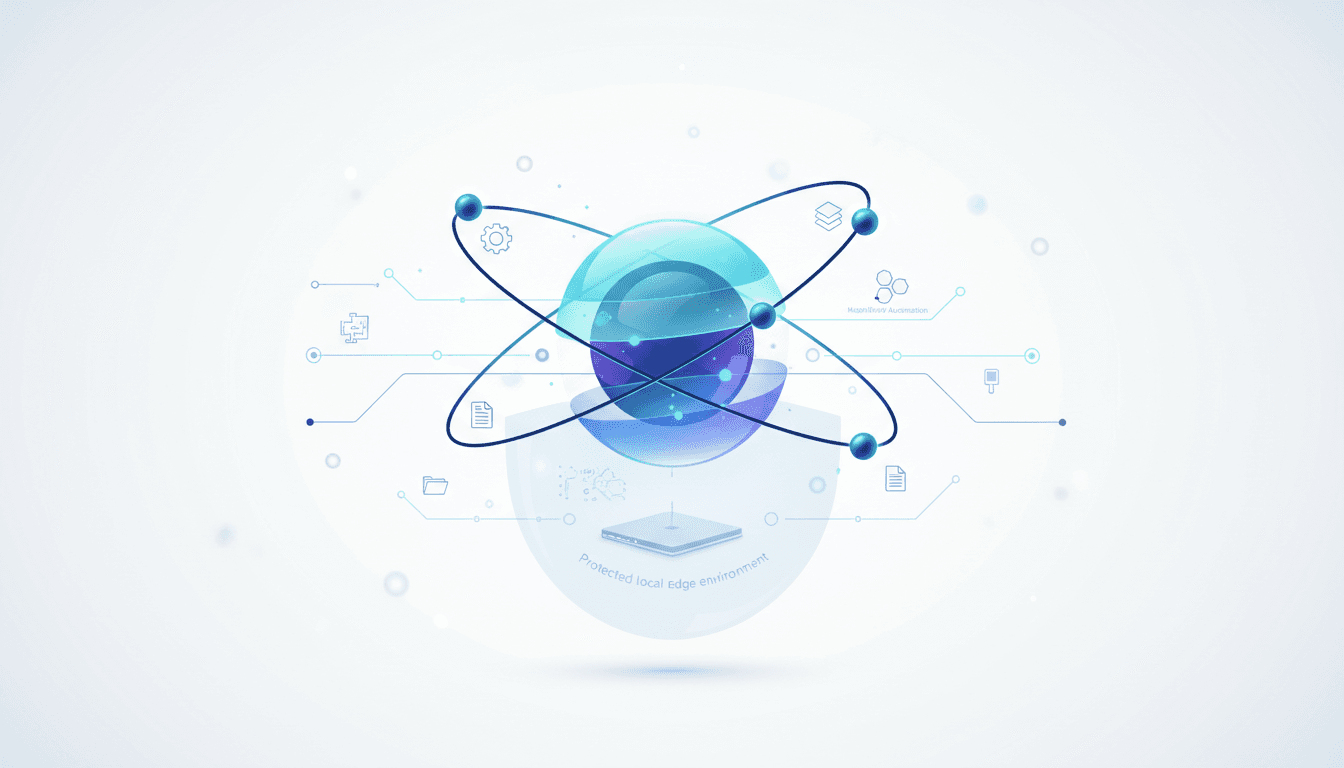
Summary: Anthropic is accelerating the shift from conversational AI to autonomous execution. This positions Claude less as a high-end chatbot and more as an integrated agent that can steer complex, multi-step workflows. By emphasizing tool use, function calling, and localized on-device pathways, the Claude Agent ecosystem is preparing to capture the real prize in enterprise AI: air-gapped deployment.
What happened: Claude’s recent changes focus on agentic setups where the model plans, calls tools, recovers from errors, and works with files across different environments. The bigger move, though, is the groundwork for offline, privacy-first inference that runs closer to the edge and leans on local context stores instead of constant cloud compute.
Why it matters now: The LLM market has largely stopped chasing benchmark scores and is now turning toward reliability plus workflow automation. An agent that can operate locally or inside tightly controlled enterprise environments, with decent error recovery, opens doors in finance, defense, and healthcare—sectors that still won’t send core operational data to centralized APIs.
Who is most affected: Cloud providers face a real shift as inference moves toward the edge. Enterprise engineering managers, CTOs, and developers who once stitched together large API calls will need to rethink architectures around hardware requirements, local NPUs, and managing fleets of deployed agents.
The under-reported angle: The true bottleneck for agent adoption isn’t reasoning ability—it’s observability and failure handling. The industry stays fixated on hype while overlooking background energy use, least-privilege permission models, and the persistent need for human oversight when an agent inevitably loses the thread mid-task.
🧠 Deep Dive
Have you ever watched an agent promise to handle a full workflow only to watch it stall on a single missing permission? That gap between demo and daily reality is exactly where the current conversation around Claude Agents sits. The move from pure cloud generation to local, agentic execution is reshaping infrastructure, and Anthropic’s direction with these agents captures the change most clearly. We’re moving past simple zero-shot summarization into end-to-end automation where the model acts as a localized cognitive engine. Advanced function calling and tool use let a Claude Agent triage APIs, schedule work, and summarize files on local systems. Yet the market still tends to overlook the hardware, operating environments, and energy budgets needed to make any of it practical.
Right now most discussion stays fixed on cloud-tethered agents. Real enterprise value, however, depends on privacy-preserving or air-gapped deployments. Regulated organizations need workflows that never leak context back to a central server, which raises the stakes for on-device inference and local RAG stores. Running a capable agent locally means factoring in CPU or GPU limits, available RAM, and the measurable power and latency costs of sustained background tasks.
From what I’ve seen, the developer conversation still misses how often these agents actually break. A multi-step agent rarely travels cleanly from task A to Z; it hits broken APIs, insufficient calendar access, or context ceilings. The next layer of infrastructure must include proper observability and logging. Deterministic error handling, retry logic, and clear capability boundaries become essential, otherwise agents can spiral into loops that consume resources without delivering results. Without fleet management tools, evaluation harnesses, and reliable human-in-the-loop options, autonomous agents stay expensive liabilities more than genuine assets.
Over time the market will divide between raw cloud intelligence and constrained, secure local execution. As enterprise MDM and EMM policies adapt to these workflows, attention will turn to precise access controls—exactly which files an agent may read and what API boundaries it must respect. For any technical decision-maker, deploying a Claude Agent will come down to measurable benchmarks around speed, compliance posture, and token efficiency before it earns real trust outside controlled test environments.
📊 Stakeholders & Impact
Stakeholder / Aspect | Impact | Insight |
|---|---|---|
AI / LLM Providers | High | Shifting from charging per-API-token to potential enterprise licensing, edge compute frameworks, and on-device agent models. |
Enterprise IT & InfoSec | High | Must pioneer new compliance frameworks, audit logs, and MDM policies to govern localized agents acting on sensitive corporate data. |
Hardware / Silicon | Significant | Increased demand for edge NPU/GPUs to run autonomous inference without draining enterprise device power budgets or latency limits. |
Developers & EMs | Medium–High | Forced to shift paradigms from simple prompt engineering to building evaluation harnesses, error recovery, and observability pipelines. |
✍️ About the analysis
This independent analysis maps the trajectory of agentic AI frameworks against current market gaps in enterprise deployment, infrastructure readiness, and on-device capabilities. Designed for technical decision-makers and engineering managers, it contextualizes how workflow automation is colliding with concrete infrastructure constraints like latency, hardware limits, and data governance.
🔭 i10x Perspective
The push toward autonomous, localized AI agents marks the end of the cloud’s near-monopoly on intelligence and the start of wider edge inference. As models like Claude grow more capable of working safely inside restricted environments, “Agent Fleet Management” is likely to emerge as a substantial new enterprise software category. The lasting competitive advantage in the decade ahead will come less from raw parameter counts and more from safety, steerability, and the capacity for reliable error recovery in fully air-gapped settings.
Related News
Mistral AI Raises $830M for NVIDIA Blackwell Data Center
Mistral AI secured $830 million in debt to build a 44MW data center near Paris with 18,000 NVIDIA Blackwell GPUs. Explore Europe’s push for sovereign AI compute capacity.
AI Agents Observability: Why Safety Matters for Enterprises
Explore the shift to agentic AI and why intent observability plus safety checks are essential for compliance. Insights for CISOs and developers on governing autonomous agents. Discover how.
LLM Integration: The Shift to Multi-Model AI Middleware
LLM integration now extends beyond basic connections to include proxy gateways, observability, and no-code workflows. Discover how enterprises avoid vendor lock-in with multi-model routing and robust AI infrastructure. Explore the analysis.