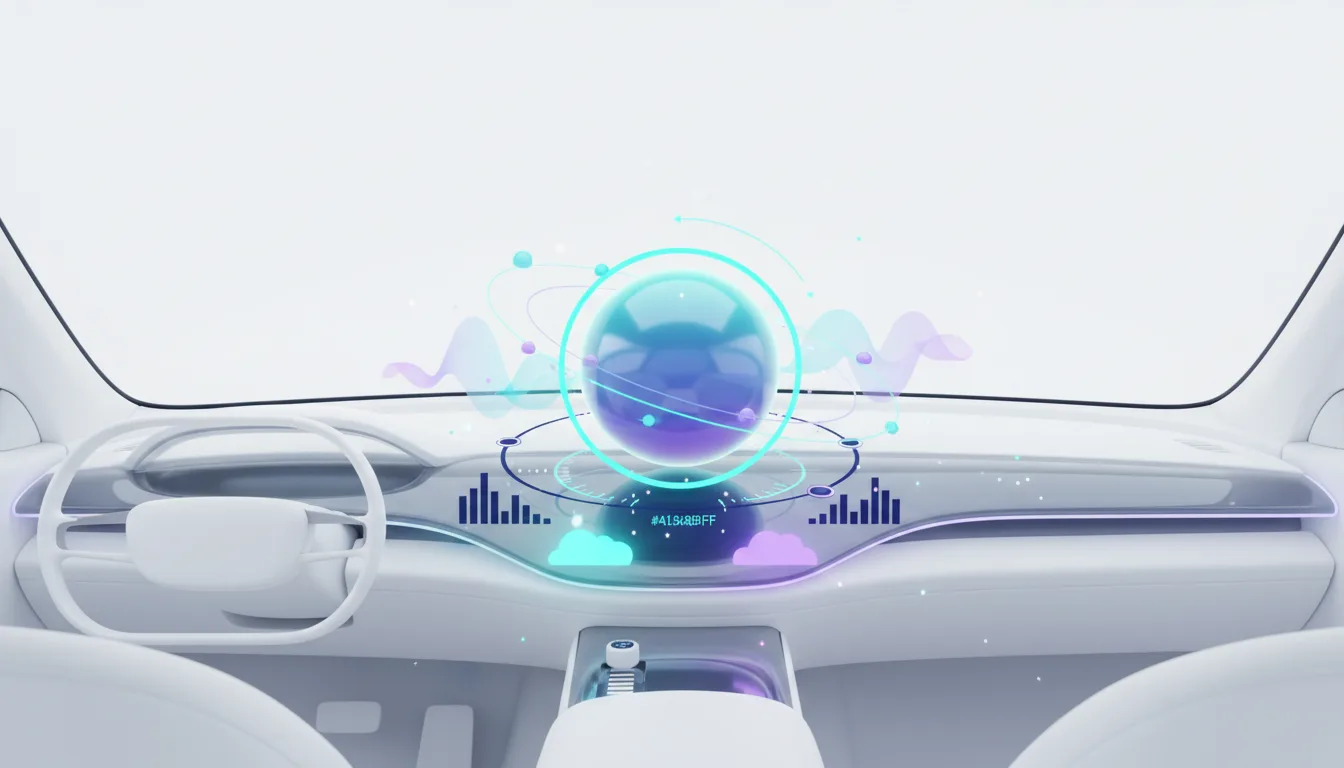
The dashboard is no longer just for navigation; it is becoming the next high-value endpoint in the AI platform war. Anthropic’s push into Apple CarPlay puts frontier models directly into the driver’s seat, testing the limits of cloud-reliant LLMs in mobile environments.
Quick Take
- Summary: Claude has rolled out support for Apple CarPlay, allowing drivers to access the powerful LLM hands-free from their vehicle’s dashboard. This shifts the AI battleground beyond the desktop and smartphone, aiming directly at the highly coveted “in-transit” user context.
- What happened: Through an app update, Anthropic integrated Claude into the CarPlay interface, bringing conversational voice interactions to vehicle screens. This allows users to bypass legacy auto-infotainment systems and use Claude for tasks ranging from drafting messages to complex reasoning on the go.
- Why it matters now: As model parity increases, AI vendors are fighting for distribution and user habits. By integrating with CarPlay, Anthropic captures users during long, uninterrupted stretches of time—a critical frontier for ambient AI computing—while simultaneously highlighting the latency and connectivity bottlenecks of cloud-dependent inference.
- Who is most affected: Auto OEMs whose native voice assistants are being rapidly outclassed, Apple (whose Siri faces direct competition on its own turf), and enterprise fleet managers who now must grapple with the data privacy implications of employees utilizing cloud LLMs during work transit.
- The under-reported angle: The integration surfaces a glaring enterprise and infrastructure tension: fleet Mobile Device Management (MDM) policies and cellular dead zones. While consumer tech coverage focuses on app convenience, the real story is how continuous in-car LLM usage will force the industry toward on-device Small Language Models (SLMs) to solve 5G latency and privacy risks.
Deep Dive
Have you ever wondered what happens when your daily commute turns into an extension of the cloud? Anthropic’s quiet expansion of Claude into Apple CarPlay is much more than a routine app update; it is a strategic land grab for user context. Mainstream tech outlets like 9to5Mac and The Verge have largely framed this as a convenience play—a safer way for iPhone users to query an AI while keeping their eyes on the road. But viewed through the lens of intelligence infrastructure, CarPlay acts as a Trojan horse. It allows frontier LLM providers to bypass the slow-moving, heavily regulated development cycles of automotive OEMs, injecting cutting-edge reasoning directly into the dashboard.
From what I’ve seen in similar rollouts, this turns the vehicle into a mobile edge node, which immediately exposes the physical limits of current AI infrastructure. A 100-billion parameter model is only as smart as its network connection. When a vehicle transitions through cellular dead zones, the illusion of a seamless AI co-pilot breaks down. This dependency on continuous 5G uplinks for cloud inference underscores a critical industry gap: the urgent need for hybrid architectures where smaller, quantized models (SLMs) handle localized reasoning in the car, while complex queries are routed to the cloud only when bandwidth permits.
Furthermore, the introduction of Claude to the vehicle introduces complex data flow and privacy vectors that consumer coverage ignores. For enterprise users and fleet operators, an employee brainstorming corporate strategy with Claude at 70 mph presents a novel compliance headache. Unlike traditional infotainment, which processes simple commands locally, sending continuous, in-car audio streams to Anthropic’s servers triggers questions around data retention, microphone permissions, and enterprise MDM controls. Fleet managers currently lack granular policy templates to govern third-party AI assistants on corporate-provisioned CarPlay setups.
Finally, this development turns up the heat on Apple itself. By allowing Claude—and increasingly ChatGPT—to colonize CarPlay, Apple is effectively outsourcing vehicle intelligence. While Siri struggles to maintain relevance pending the full rollout of “Apple Intelligence,” third-party LLMs are establishing the baseline for what drivers expect. The dashboard is rapidly transforming from a simple app-mirroring surface into an ambient AI battleground, where Anthropic’s logical reasoning and OpenAI’s voice modes vie to become the default operating system for the human commute.
Stakeholders & Impact
| Stakeholder / Aspect | Impact | Insight |
|---|---|---|
| AI / LLM Providers | High | Captures high-retention, “in-transit” user context; acts as a new vector for multimodal (voice) data gathering. |
| Auto OEMs & Legacy Dashboards | High | Accelerates disintermediation. Native car voice assistants are rendered obsolete by CarPlay-enabled frontier models. |
| Enterprise / Fleet Managers | Medium | Introduces new data leakage risks. Requires updated MDM policies to govern audio data flows from corporate vehicles to AI clouds. |
| Apple / Siri ecosystem | High | Increases pressure on Apple Intelligence to deliver local, low-latency reasoning before users permanently default to Claude or ChatGPT on the road. |
About the analysis
Researched and written with AI assistance under the editorial responsibility of the i10X News team. The title image is an AI-generated illustration. Read our AI Use Policy. Spotted an error? Request a correction.
This independent, research-based analysis maps Anthropic’s latest product expansion against the broader AI infrastructure and enterprise ecosystem. Designed for CTOs, product strategists, and AI developers, it evaluates market coverage gaps to separate consumer app features from the underlying shifts in ambient computing and edge inference.
i10x Perspective
The arrival of Claude on CarPlay is an early signal of how intelligence will decouple from traditional screens and become an ambient layer over our physical mobility. Over the next five years, the “in-car AI” race will not be won simply by having the smartest cloud model, but by mastering the infrastructure of transient connectivity—seamlessly handing off inference between the vehicle’s edge compute and the cloud. As models become hyper-accessible in our most private spaces, watch for a fierce regulatory and enterprise backlash regarding who actually owns the audio data generated during the daily commute.