Quick Take
Anthropic has launched Claude Haiku 5.5, positioning it as their fastest and most cost-effective small model designed explicitly for high-volume, latency-sensitive workloads.
Available immediately across the Claude API, AWS Bedrock, and Microsoft Foundry, Haiku 5.5 delivers a massive 75% cost reduction compared to Haiku 4.5, alongside improved coding and tool-use capabilities.
As enterprise AI architectures mature into multi-agent systems, the primary bottleneck is no longer peak intelligence, but the unit economics of running thousands of routine background tasks like routing, classification, and database querying.
AI application developers, enterprise cloud architects, FinOps teams managing LLM compute costs, and builders of complex multi-agent workflows are the most affected.
The under-reported angle: Anthropic’s bifurcated pricing structure aggressively discounts prompts under 100K tokens ($0.10/M input) but penalizes massive context dumps, effectively using economics to force developers toward leaner, more modular subagent architectures.
Deep Dive
Have you ever watched a high-end model grind through something as simple as sorting a batch of support tickets? The AI industry is realizing that you don’t need a frontier supercomputer to sort emails or write SQL queries. Claude Haiku 5.5 is Anthropic’s aggressive response to the scaling problem, designed specifically for high-volume, cost-sensitive inference. By stripping away the bloat and focusing on speed, Haiku 5.5 acts as the lightweight workhorse for the unglamorous but essential plumbing of AI applications.
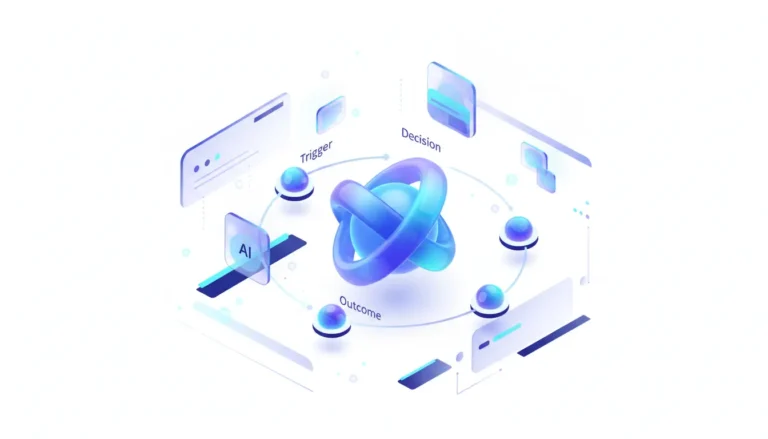
What stands out in this launch isn’t just the steep price cut, but the structural shift in how Anthropic and its cloud partners want developers to build. AWS and Microsoft Foundry aren’t pitching Haiku 5.5 as a standalone chatbot; they are explicitly framing it as a subagent. In modern compound AI systems, Haiku 5.5 is positioned as the fast, parallel worker that handles data extraction and summarization, escalating to heavier models like Sonnet 5.5 or Opus only when deep reasoning is strictly required.
Microsoft Foundry’s deployment of the model introduces a fascinating operational lever: effort control. Enterprise developers can now toggle between low, medium, high, xhigh, and max effort settings. This allows them to dynamically trade off latency and cost against reasoning depth on a per-query basis. This level of granular control is a direct response to a massive enterprise pain point—one-size-fits-all inference is simply too rigid and expensive for real-time production environments like live customer support.
From what I’ve seen, the developer ecosystem is already stress-testing the model’s creative boundaries. Bypassing the polished enterprise marketing, independent hackers like Simon Willison have been using CLI tools like llm-anthropic to prompt Haiku 5.5 for on-the-fly SVG generation. These independent tests prove that despite its “small model” classification and enterprise routing focus, Haiku retains a surprisingly sharp capability for zero-shot coding and visual logic.
But there is a catch that broad news coverage glosses over: the two-tiered pricing model. While prompts under 100K tokens enjoy the headline-grabbing 75% discount, Anthropic intentionally spikes the cost for prompts exceeding that threshold. This is behavioral engineering disguised as a pricing update. By penalizing massive, unoptimized context windows, Anthropic is using market economics to push developers away from lazy mega-prompts and toward efficient, cache-optimized, and highly modular subagent designs.
Stakeholders & Impact
- AI Developers & Architects — Impact: High. Unlocks the financial viability of “swarm” architectures, allowing hundreds of parallel subagents to operate without blowing up inference budgets.
- Cloud Providers (AWS, Azure) — Impact: High. Gives cloud vendors a highly competitive, low-latency primitive to integrate deeply into enterprise platforms like Bedrock and Foundry.
- Enterprise FinOps — Impact: High. The bifurcated context pricing forces teams to audit their prompt lengths; those relying on massive 100K+ context dumps will face cost penalties.
- Frontier AI Competitors — Impact: Significant. Puts immediate pressure on OpenAI (GPT-4o mini) and Google (Gemini Flash) to further slash prices and improve subagent-specific tooling.
About the analysis
Researched and written with AI assistance under the editorial responsibility of the i10X News team. The title image is an AI-generated illustration. Read our AI Use Policy. Spotted an error? Request a correction.
This independent, research-based analysis synthesizes official model documentation, cloud provider deployment specs, and independent developer benchmarks to provide strategic clarity for CTOs, engineering managers, and AI product teams.
i10x Perspective
Claude Haiku 5.5 signals the maturation of the “compound AI system,” proving that the future belongs not just to monolithic super-models, but to orchestrated swarms of cheap, specialized subagents. As Anthropic, Google, and OpenAI race to drive inference costs to near-zero for lightweight tasks, the competitive moat is shifting from raw model intelligence to routing infrastructure and effort control.
Over the next five years, expect the true AI market winners to be the teams that master this granular arbitrage between latency, context size, and dynamic reasoning costs.