Summary
A growing developer debate inside the DeepSeek GitHub repository has highlighted a critical governance issue in AI infrastructure: the need to decouple the “agentic harness” from underlying LLM subscriptions.
What happened: During the public preview of DeepSeek Harness—an open-source, plugin-based environment for AI agents—a highly visible GitHub discussion surfaced arguing that the orchestration layer (the harness) must remain completely independent from model billing and subscriptions to prevent provider bias.
Why it matters now: As the industry transitions from simple chatbots to autonomous agents, the software layer that handles memory, tool execution, and routing is becoming the new operating system. If LLM providers control this layer and tie it to their own subscriptions, they gain monopolistic control over how inference compute is routed and billed.
Who is most affected: AI developers, enterprise architects, and engineering leaders (CTOs) building autonomous workflows who must choose between the convenience of vendor-integrated ecosystems and the flexibility of multi-model, Bring-Your-Own-Key (BYOK) architectures.
The under-reported angle: This isn’t just a technical debate about open-source modularity; it is a fundamental conflict of interest. An LLM vendor controlling the agentic harness has a financial incentive to route sub-tasks to its own models, obscuring switching costs and stifling data portability.
🧠 Deep Dive
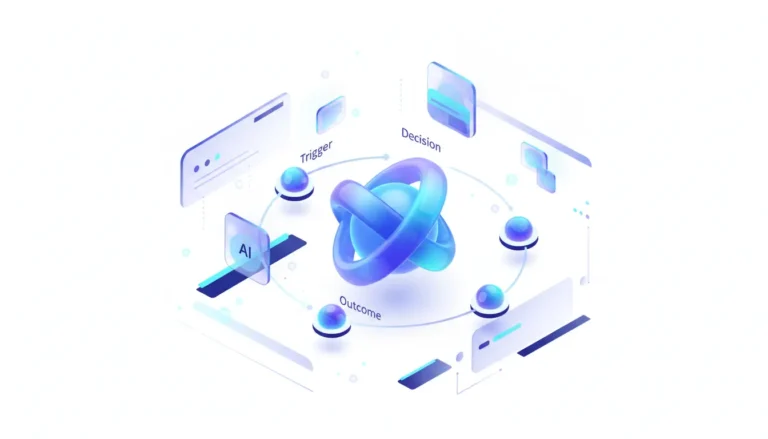
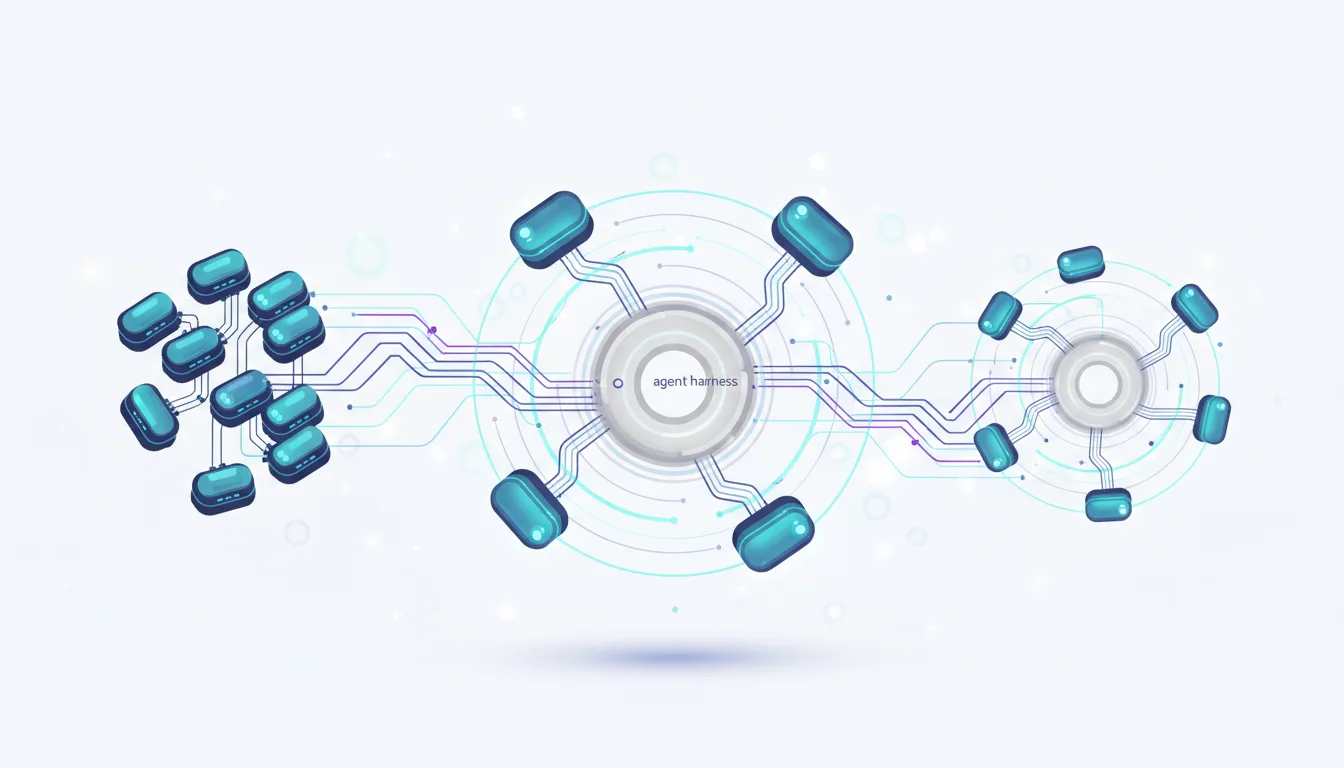
The AI industry is quietly fighting a turf war over the “agentic harness,” and the frontlines are currently visible in the GitHub discussions of DeepSeek’s open-source repositories. A harness is essentially the runtime environment for an AI agent—it handles memory management, tool execution, plugin integration, and model routing. DeepSeek recently launched “DeepSeek Harness” in public preview, promoting a “minimal core” architecture where “everything is a plugin.” From what I’ve seen, though, the community’s reaction has pushed a much larger, industry-wide governance issue into the spotlight: the inherent conflict of interest when the company selling you the LLM subscription is the same company building your agent’s orchestration layer.
The core tension, heavily debated by open-source contributors evaluating early release candidates (like v0.1.0-rc.5), centers on provider incentives. If an agentic harness is inextricably linked to a specific LLM subscription, the provider is incentivized to lock users into their ecosystem. In a truly autonomous workflow, an agent might need to call a massive frontier model for complex reasoning, but route simpler, repetitive tool-use tasks to a cheaper, faster model. A vendor-integrated harness naturally resists this multi-model reality, creating a “walled garden” that obscures pricing transparency and limits Bring-Your-Own-Key (BYOK) architectures.
By contrast, the DeepSeek community discussions (specifically thread #2992 exploring on-demand capabilities) highlight a growing developer demand for an independent, provider-neutral architecture. This approach treats the LLM purely as a commoditized reasoning engine. In this decoupled model, the harness acts as an impartial router, allowing developers to swap out model providers at will without ripping out their entire agentic infrastructure, memory layers, or plugin integrations.
This technical debate signals a major shift in the AI infrastructure stack. Until now, the primary buyer focus has been on foundational model benchmarks. Moving forward, the focus is shifting to agent orchestration. Open-source initiatives pushing for a separation of concerns are directly challenging the integrated product strategies of dominant players. If the harness remains minimal and independent—relying on standard plugin interfaces rather than proprietary subscription bundles—enterprises can maintain control over their data portability, auditability, and ultimately, their compute budgets.
📊 Stakeholders & Impact
| Stakeholder / Aspect | Impact | Insight |
|---|---|---|
| AI / LLM Providers | High | Integrated harnesses increase user retention but face backlash from developers demanding modular, BYOK architectures. |
| Enterprise AI Architects | High | Must evaluate the trade-off between the lower setup friction of integrated solutions and the vendor lock-in risks of unified billing. |
| Agent Framework Builders | Significant | Massive opportunity for third-party, provider-neutral orchestration layers that prioritize transparent model routing and auditability. |
| Cloud Infrastructure | Medium | A decoupled harness accelerates multi-cloud AI adoption, as agents dynamically route workloads across different hardware backends. |
✍️ About the analysis
Researched and written with AI assistance under the editorial responsibility of the i10X News team. The title image is an AI-generated illustration. Read our AI Use Policy. Spotted an error? Request a correction.
This independent, research-based analysis synthesizes current SERP data, official product positioning, and public GitHub repository discussions (specifically within the DeepSeek ecosystem) regarding agentic architectures. It is written for engineering leaders, AI product managers, and CTOs who are actively designing scalable, governance-aware agent infrastructures.
🔭 i10x Perspective
The battle for AI dominance is moving up the stack. While the world obsesses over raw model parameters and GPU clusters, the quiet orchestration of the “agentic harness” is poised to become the most valuable real estate in the AI ecosystem. If we allow foundational model providers to bundle their LLM subscriptions with the very software that routes their tasks, we risk recreating the worst vendor lock-ins of the cloud era. The winning AI infrastructure of the next decade won’t just be the smartest model; it will be the most neutral, transparent, and modular routing layer that successfully commoditizes intelligence.