“By stepping into the code agent arena, DeepSeek is signaling that building world-class foundation models was just step one. The real endgame is owning the autonomous developer workflow.”
Quick Take
- Summary: DeepSeek has quietly launched a WeChat official account to recruit beta testers for a new autonomous code agent project dubbed “DeepSeek Harness.”
- What happened: The team behind the highly efficient DeepSeek models initiated a closed beta recruitment drive via WeChat, targeting developers to stress-test an upcoming agentic coding framework.
- Why it matters now: DeepSeek has already disrupted the foundation model ecosystem with extreme cost-efficiency and top-tier reasoning capabilities. Entering the code agent space puts them in direct competition with western equivalents like Devin or Claude Code, potentially driving down the cost of autonomous software engineering.
- Who is most affected: Software developers, AI tooling startups, and enterprise engineering leaders who are evaluating the ROI of AI-assisted development tools.
- The under-reported angle: While the announcement looks like a localized beta test for the Chinese market, it represents a major strategic shift up the AI stack: DeepSeek is transitioning from a pure LLM provider to a workflow orchestrator capable of repository analysis and autonomous tool-use.
Deep Dive
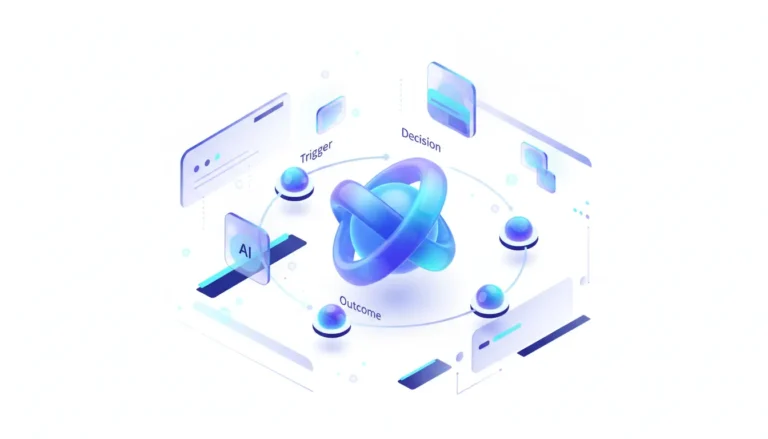
The launch of beta recruitment for “DeepSeek Harness” marks a critical evolution in the AI coding assistant landscape. Up until now, DeepSeek has primarily operated at the foundation model layer, releasing highly capable, open-weight models like DeepSeek-Coder and DeepSeek-R1. Yet a model that can write a function is fundamentally different from an agent that can navigate a repository, run unit tests, and debug errors. Harness appears to be DeepSeek’s bridge from raw intelligence to autonomous execution, aiming to bundle RAG for complex codebases and workflow orchestration into a single developer tool.
By choosing to recruit exclusively through a WeChat official account, DeepSeek is leaning heavily on its domestic advantage. This strategy grants them immediate access to a massive, highly active Chinese developer community, creating a rapid feedback loop for early telemetry. Testing an agent requires immense amounts of edge-case data – handling broken dependencies, obscure frameworks, and conflicting environments. A localized, dense beta test allows the Harness team to refine their workflow orchestration before exposing the tool to the broader global market.
That said, the initial announcement is notably barebones, leaving major technical gaps that enterprise users will eventually need answered. The current web footprint lacks a clear architectural overview, failing to detail native IDE integrations (such as VS Code or JetBrains compatibility) or how the agent handles data privacy and security when accessing proprietary codebases. For CTOs and engineering managers, these opt-out protocols and local deployment capabilities will dictate whether DeepSeek Harness can be safely integrated into corporate environments.
From what I’ve seen in similar rollouts, this project is really a stress-test for the economics of AI agents. Current agentic tools often rely on expensive API calls to GPT-4o or Claude 3.5 Sonnet to function effectively. If DeepSeek can power an autonomous coding assistant using its notoriously compute-efficient architectures, it could radically lower the barrier to entry for agentic software development, forcing incumbents to rethink their pricing models and capabilities.
Stakeholders & Impact
| Stakeholder / Aspect | Impact | Insight |
|---|---|---|
| AI Tooling Startups | High | DeepSeek entering the agent space threatens the margins of wrappers and bespoke agent startups that rely on expensive western APIs. |
| Software Developers | High | Early testers gain access to next-gen RAG and code orchestration, potentially reshaping how they interact with complex repositories. |
| Enterprise Engineering | Medium | Will watch closely for privacy protocols, telemetry opt-outs, and SWE-bench performance before adopting over established tools like Copilot. |
| AI Infrastructure & Cloud | Medium | Agentic workflows generate significantly more inference tokens than standard autocomplete, driving up compute demand for whatever infrastructure hosts the Harness backend. |
About the analysis
Researched and written with AI assistance under the editorial responsibility of the i10X News team. The title image is an AI-generated illustration. Read our AI Use Policy. Spotted an error? Request a correction.
This is an independent, research-based analysis designed for CTOs, engineering managers, and AI developers. It synthesizes current search intent, beta recruitment metadata, and the broader semantic landscape of autonomous coding to contextualize DeepSeek’s latest tooling initiative.
i10x Perspective
DeepSeek Harness signals that the AI arms race is moving decisively from the model layer to the application and execution layer. As intelligence becomes cheaper and more commoditized, the ultimate moat is no longer just generating the best code, but orchestrating the environment where that code lives, compiles, and deploys. Observers should watch closely over the next 12 to 18 months: if DeepSeek proves they can deliver an ultra-efficient, highly capable code agent, they will force a structural repricing of developer tools worldwide, accelerating the arrival of truly autonomous software engineering.