Quick Take
Summary: As enterprise AI shifts from single-prompt chatbots to complex autonomous agents, the true cost of an LLM is being defined by its scaffolding. A recent benchmark evaluating DeepSeek V4 Flash across eight different agent “harnesses” reveals that the choice of framework dictates task success and inference costs as much as the model itself.
What happened: Developer tooling platform Composio ran DeepSeek V4 Flash through 30 distinct agent tasks across eight different framework harnesses (the orchestration layers like LangChain, CrewAI, or AutoGen). The resulting data mapped out the critical trade-offs between task success rates and the actual dollar cost of executing multi-step agentic workflows.
Why it matters now: Base model pricing (cost per 1M tokens) is becoming a deceptive metric. In agentic workflows, an inefficient harness might trigger endless tool-call loops or require heavy prompt retries, blowing up costs and latency. Figuring out which framework pairs best with a high-speed, low-cost model like DeepSeek V4 Flash is the current frontier of AI cost engineering.
Who is most affected: AI engineering teams, CTOs, and developers evaluating agent frameworks. Teams attempting to run high-volume agentic workloads on tight budgets are directly impacted by these orchestration choices.
The under-reported angle: The industry is hyper-fixated on model leaderboards, but almost completely ignoring “cost-per-success” metrics and orchestration overhead. Standard coverage rarely details the safety constraints, tool-call failure rates, or latency penalties (like time-to-first-token in a multi-step loop) that occur when a model and its harness misalign.
Deep Dive
Have you ever built what looked like a solid agent on paper, only to watch token spend spiral once it hit real tasks? The release of DeepSeek V4 Flash signals an aggressive push into the high-speed, cost-efficient inference tier—directly targeting workloads where low latency and tight budgets are non-negotiable. But raw model speed means very little if the scaffolding around it is broken. Recent testing by Composio, which forced DeepSeek V4 Flash through 30 distinct agent tasks using eight different framework harnesses, exposes a growing truth in AI infrastructure: intelligence is becoming a commodity, but autonomous execution remains a deep systems engineering problem.
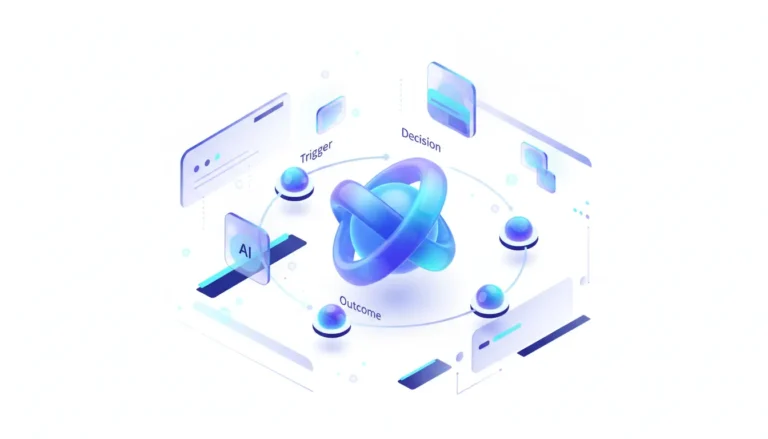
Currently, most industry coverage treats LLMs in isolation. Official PR and standard developer blogs focus on raw benchmarks, but practitioners evaluating agent frameworks face a more complex reality. When building autonomous agents, the “harness”—whether it’s a popular framework like LangChain, CrewAI, LlamaIndex, or AutoGen—manages memory, retry policies, and tool execution. If the harness isn’t optimized for DeepSeek V4 Flash’s specific reasoning patterns, engineers end up paying for redundant tool calls, hallucinated API requests, and degraded success rates.
This friction highlights massive gaps in how the AI ecosystem evaluates agent readiness. While basic win-rate charts offer a superficial glance at performance, production environments require a deeper taxonomy of errors. To make viable deployment decisions, engineering teams desperately need standardized “cost-per-success” modeling. Knowing that a specific harness achieves an 80% success rate on coding tasks is useless without knowing if it burned through three times the token budget via inefficient retries to get there.
Furthermore, the operational metrics of these model-harness pairings are severely under-reported. As the semantic expansion of AI infrastructure shifts from model hosting to workflow orchestration, variables like latency percentiles, cold vs. warm start deltas, and multi-turn stability become critical. A lightweight speed-tier model like V4 Flash is designed to minimize end-to-end task time, but an overly complex planner/executor harness can introduce bottleneck latency that negates the model’s speed advantage entirely.
Ultimately, this benchmark points to a maturing phase in AI integration. As developers migrate away from expensive, heavy-duty frontier models for routine autonomous tasks, the focus is shifting toward rigorous cost-optimization playbooks. Selecting the right orchestration layer for models like DeepSeek V4 Flash is no longer a matter of developer preference—it is a core economic calculation that will dictate the viability of scaled AI agent deployments over the next year.
Stakeholders & Impact
| Stakeholder / Aspect | Impact | Insight |
|---|---|---|
| AI Engineers & Developers | High | Must pivot from choosing models based on raw intelligence to optimizing model-framework pairings for acceptable cost-per-success ratios. |
| Agent Framework Builders | High | Frameworks (harnesses) are now effectively competing on how efficiently they route, format, and constrain specific LLMs like DeepSeek V4 Flash. |
| Enterprise AI & CTOs | High | Budget projections for AI agents are highly vulnerable to inefficient orchestration. Standardizing on the wrong harness can multiply token costs exponentially. |
| Infrastructure Providers | Medium | A shift toward agentic workloads means compute demand becomes less bursty and more sustained (looping inference), changing API rate limit strategies. |
About the analysis
Researched and written with AI assistance under the editorial responsibility of the i10X News team. The title image is an AI-generated illustration. Read our AI Use Policy. Spotted an error? Request a correction.
This independent, research-based analysis maps the intersection of LLM benchmarking and agent framework performance, utilizing insights from Composio’s multi-harness evaluation. It is designed for CTOs, AI architects, and engineering leads attempting to operationalize high-volume autonomous workflows while navigating cost and latency constraints.
i10x Perspective
The evaluation of DeepSeek V4 Flash across multiple agent harnesses reveals that the battleground for AI supremacy is migrating up the stack. It is no longer enough to offer the fastest or cheapest base model; success now hinges on how elegantly a model interacts with the broader ecosystem of orchestration tools. As agentic AI drives the next massive wave of compute demand, the winners will be the organizations that master “cost-per-success” engineering—treating the model, the tools, and the harness as a single, aggressively optimized loop. Watching how major players like OpenAI and DeepSeek adapt their APIs to better natively support these orchestration layers will be the defining infrastructure story of the next three years.