Summary
The AI ecosystem is rapidly shifting from passive, conversational LLMs to autonomous, tool-using AI agents, sparking a massive infrastructure and orchestration race. Enterprise clouds and open-source frameworks are now battling over who will control the middleware that allows these agents to securely execute tasks.
What happened
Top-tier cloud providers (AWS Bedrock, Azure AI) and open-source ecosystems (LangChain, CrewAI, AutoGPT) have rolled out competing architectures to build, orchestrate, and govern AI agents capable of planning, using tools, and executing complex workflows.
Why it matters now
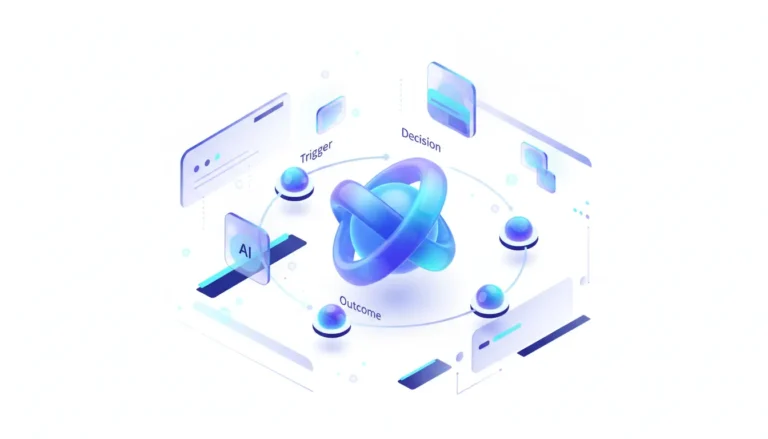
This transition fundamentally changes the AI compute profile. Unlike a one-off chatbot query, an agent utilizing a “plan-and-execute” loop (like ReAct) recursively consumes inference, driving up API costs, latency, and system complexity while increasing the demand for robust function-calling ML models.
Who is most affected
Enterprise integration teams, SecOps professionals, and LLM orchestration developers who must now design advanced agentic workflows that bridge the gap between creative AI reasoning and deterministic corporate databases.
The under-reported angle
While the market is flooded with “how to build” tutorials, the looming enterprise bottleneck is “Agentic SecOps and Observability.” Current deployments lack unified threat modeling, hardware sandboxing, and strict Identity and Access Management (IAM) controls for autonomous entities.
Deep Dive
The pivot from conversational models to autonomous AI agents is forcing a hard look at enterprise AI infrastructure. According to current search intent and AI Overviews, the mainstream is still asking, “What is an AI agent?” encyclopedic sources like Wikipedia or IBM are happy to answer that one. Yet the developer and commercial realities show something sharper: the race has moved past definitions into the tricky ground of production-grade orchestration and multi-agent systems.
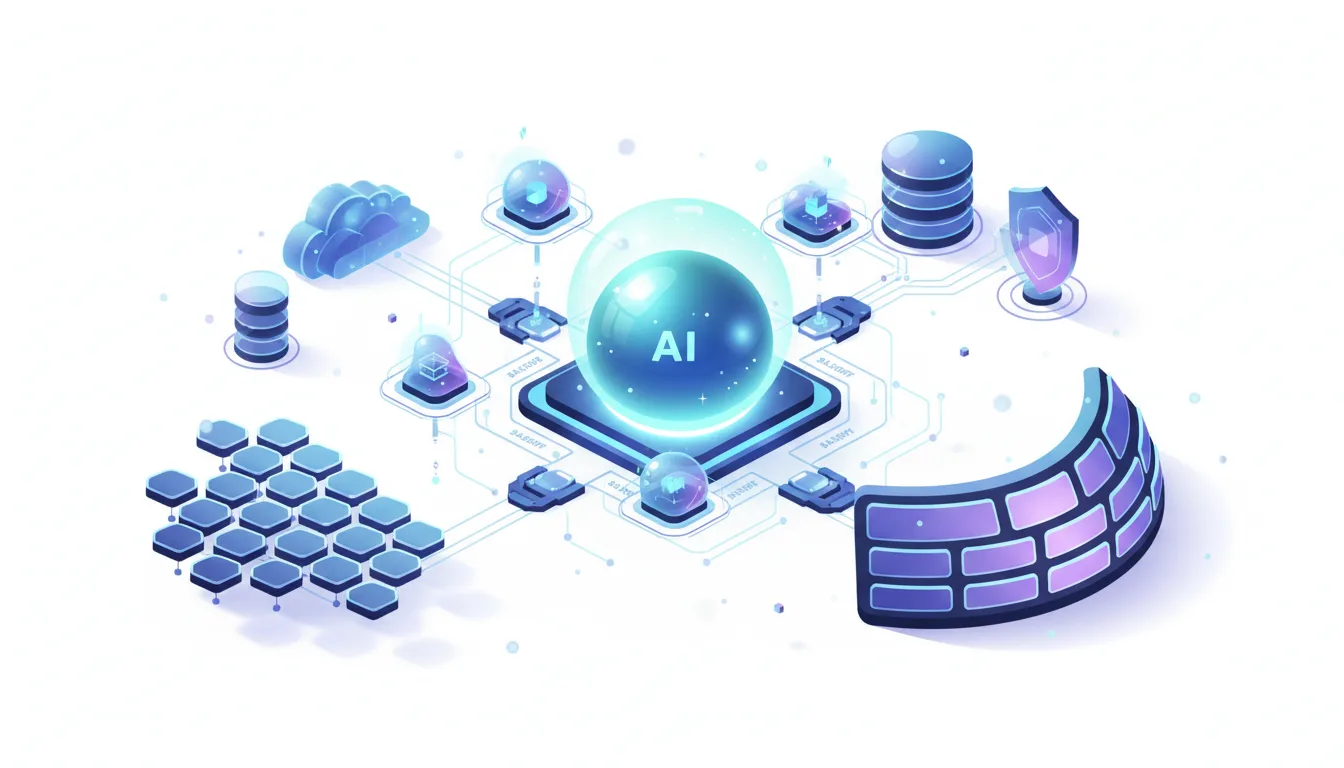
From what I’ve seen, a clear architectural divide is emerging. On one side sit the open-source and developer-first frameworks like LangChain, Hugging Face, and CrewAI, which prioritize rapid prototyping, multi-agent collaboration, and experimental autonomy (echoing the legacy of Auto-GPT). On the other are the cloud providers. AWS and Azure treat agents less as novelties and more as enterprise workloads that need strict Identity and Access Management (IAM), compliance boundaries, and integration with existing cloud billing. Their approach highlights a basic point: giving an LLM the ability to read is one thing; giving it the tools to write, delete, or spend money is another entirely, and it demands serious middleware.
This brings us to a significant gap that still gets little attention: LLMOps for Agents. Most documentation walks through the “happy path” of agentic behavior using architectures like BDI (Belief-Desire-Intention) or ReAct (Reasoning and Acting). The harder operational questions get far less coverage though: How do you trace an agent’s recursive, multi-step failure? If an agent hallucinates a step and triggers a hundred expensive API calls, how do you enforce budget limits? The next wave of tooling will not be new prompt wrappers. It will be evaluation frameworks, vector DB memory management, and deterministic state machines designed to keep non-deterministic models in check.
The hardware side of these workflows also tends to be overlooked. A single user prompt to an agent can trigger a dozen hidden LLM inferences as the agent plans, searches, reflects, and executes. As enterprises move from simple Retrieval-Augmented Generation (RAG) to full multi-agent setups, the volume of inference compute will grow quickly. That shift puts more weight on low-latency inference chips and means AI infrastructure must scale for the number of autonomous loops users create, not just the number of users.
We are moving from an era where AI merely generated content to one where AI directly changes software state. Making these systems safe will require more than prompt engineering. It will mean building human-in-the-loop workflows, zero-trust sandboxing, and solid supply-chain security for the tools agents are allowed to touch.
Stakeholders & Impact
| Stakeholder / Aspect | Impact | Insight |
|---|---|---|
| AI / LLM Providers | High | Pushed to optimize models specifically for structured outputs, function-calling, and reduced latency to support multi-step reasoning. |
| Cloud Infra (AWS, Azure) | High | Capitalizing on the need for secure execution by providing proprietary agent runtimes woven deeply into their IAM and billing ecosystems. |
| Developers & SecOps | Critical | Shifting focus from model building to agent threat modeling, API budget capping, and runtime observability (traces/logs). |
| OSS Ecosystems | Medium–High | Racing to standardize multi-agent orchestration (e.g., CrewAI, LangChain) before cloud providers lock enterprises into proprietary middleware. |
About the analysis
Researched and written with AI assistance under the editorial responsibility of the i10X News team. The title image is an AI-generated illustration. Read our AI Use Policy. Spotted an error? Request a correction.
This analysis is based on independent, structured evaluation of current top-ranking technical documentation, vendor specifications, and open-source repositories regarding AI agents. It is designed for CTOs, AI infrastructure architects, and machine learning engineers navigating the transition from LLM experimentation to autonomous system deployment.
i10x Perspective
The focus on building “smarter” base models tends to overshadow a bigger change: the architecture of how these models interact with the world. AI agents are the early form of a fully autonomous digital workforce, effectively creating a new machine-to-machine networking layer governed by LLM logic.
The companies that will shape the next decade of AI are not necessarily the ones training the largest foundational models. They are the infrastructure providers building the sandboxes, governance, and evaluation protocols that make agentic action reliable at scale.