Quick Take
Summary: The tech industry has decisively pivoted from passive chatbots to autonomous AI agents, triggering a massive platform and infrastructure war among hyperscalers and open-source frameworks. Vendors are racing to provide the ultimate managed ecosystem, while enterprises struggle to operationalize these models securely.
What happened: Major players-including AWS (Bedrock), Google Cloud (Vertex AI), IBM (watsonx), and OpenAI-have rolled out enterprise-grade frameworks that allow LLMs to plan, use tools, and execute workflows. At the same time, open-source orchestration tools like LangChain and Microsoft’s AutoGen are standardizing how developers build multi-agent systems.
Why it matters now: This marks the critical shift from generative AI to “actionable AI,” pushing LLMs out of isolated chat windows and integrating them directly into enterprise APIs, databases, and core infrastructure. It fundamentally changes the computing landscape, driving up inference demands and altering how software interacts.
Who is most affected: Enterprise architects, CTOs, CISOs, and developers who are now tasked with choosing between managed vendor ecosystems and custom orchestration tools, all while managing skyrocketing inference costs and novel security risks.
The under-reported angle: While the market focuses on agent capabilities and multi-step reasoning, the real bottleneck is “Agent Reliability Engineering“-specifically, securing autonomous tool usage via Identity and Access Management (IAM), preventing runaway loop costs, and establishing robust threat models against malicious prompt injection.
Deep Dive
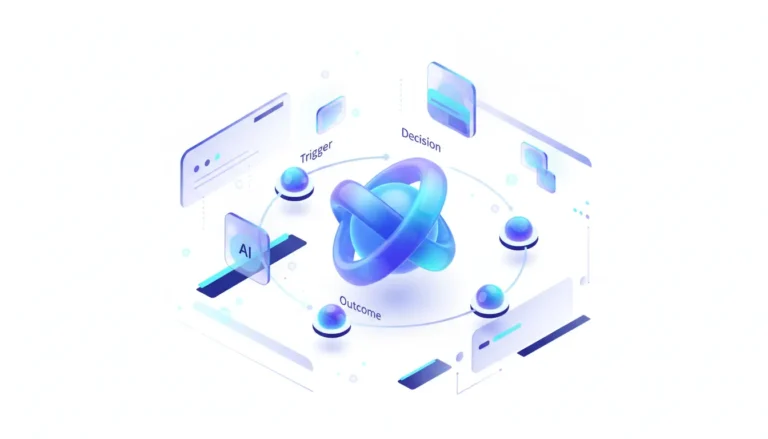
Have you ever noticed how quickly a simple chatbot starts to feel boxed in once real work begins? The era of the standalone LLM is ending, replaced by the perception-action loop of AI agents. Unlike traditional generative models that simply output text, intelligent agents act as planners and executors. By leveraging frameworks like ReAct (Reasoning and Acting), these systems autonomously break down complex goals, invoke external APIs, retrieve grounded enterprise data, and dynamically adjust their behavior based on the results. This evolution transforms AI from an advisory tool into an active participant in enterprise infrastructure.
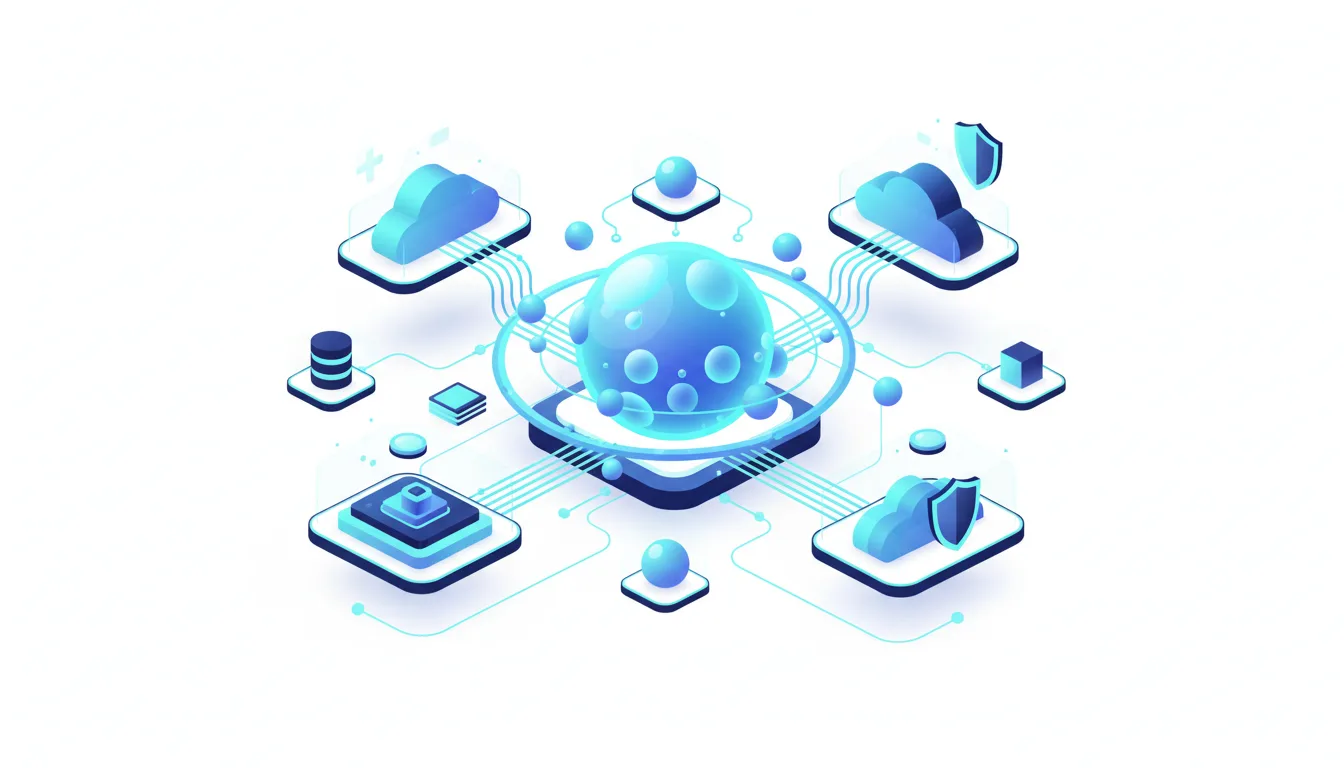
The competitive landscape for hosting and managing these agents has fractured into distinct philosophical camps. Hyperscalers are pushing heavily managed, secure ecosystems: AWS emphasizes deep Identity and Access Management (IAM) guardrails for secure tool invocation, Google Cloud highlights enterprise data grounding via Vertex AI, and IBM positions watsonx as the governance-first solution for risk-averse IT and security operations. Conversely, NVIDIA views the agentic shift as a hardware optimization problem, arguing that multi-step, simulation-heavy agent workflows require massive GPU acceleration and specialized microservices to overcome latency bottlenecks.
Beneath the polished vendor PR, deploying these systems at scale exposes critical operational gaps that the industry is only beginning to solve. The Total Cost of Ownership (TCO) for agents is highly volatile; multi-step reasoning and continuous API calls compound token usage exponentially, making budgeting a nightmare without strict circuit breakers and telemetry. Furthermore, standard Retrieval-Augmented Generation (RAG) is proving insufficient for autonomous workflows. To maintain context over long-running tasks, agents now require advanced memory architectures, splitting state into short-term execution buffers, episodic memory, and long-term semantic knowledge graphs.
Security and observability represent the final, and steepest, hurdle for enterprise adoption. Giving an LLM the autonomy to execute database commands or alter cloud configurations introduces entirely new threat vectors. The enterprise conversation is rapidly shifting toward least-privilege patterns, strict human-in-the-loop checkpoints, and reversible actions. Before these agents can graduate from proof-of-concept to production, organizations are realizing they must build entirely new observability pipelines-tracking traces, execution spans, and tool-call heatmaps-to catch runaway loops and hallucinated tool usage in real time.
Stakeholders & Impact
| Stakeholder / Aspect | Impact | Insight |
|---|---|---|
| Cloud & Platform Vendors | High | Racing to lock enterprises into managed agent ecosystems (Bedrock, Vertex, watsonx) by solving the complex orchestration layer. |
| Enterprise Architects & CISOs | High | Forced to design entirely new threat models, IAM structures, and least-privilege protocols for autonomous tool-use. |
| AI Developers & SREs | High | Shifting focus from pure prompt engineering to Agent Reliability Engineering, telemetry, and workflow orchestration. |
| Hardware & Infra Providers | Medium–High | Multi-step reasoning loops drastically increase inference frequency and duration, driving demand for optimized compute and edge processing. |
About the analysis
Researched and written with AI assistance under the editorial responsibility of the i10X News team. The title image is an AI-generated illustration. Read our AI Use Policy. Spotted an error? Request a correction.
This independent research synthesizes documentation, developer framework paradigms (LangChain, AutoGen), and enterprise cloud positioning (AWS, Google, IBM, OpenAI) to map the current state of AI agents. It is designed for CTOs, enterprise architects, and engineering leaders navigating the complex build-vs.-buy decisions and security realities of the agentic ecosystem.
i10x Perspective
The transition to AI agents is the ultimate stress test for global AI infrastructure, shifting the critical bottleneck from raw model training to inference speed, API orchestration, and systemic security. As OpenAI, Google, and AWS battle to become the default “operating system” for autonomous workflows, the next frontier will not be model size, but standardized evaluation frameworks and multi-agent interoperability. From what I’ve seen, the winners of this infrastructure race will be the platforms that can guarantee the highest reliability and lowest TCO when an unpredictable LLM is unleashed upon corporate data.