Ever wonder if the next big AI breakthrough might come not from sheer brainpower, but from making things run smoother and cheaper? Google’s new Gemini 3.1 Pro isn’t just another model update; it’s a strategic strike on the high-cost, high-latency bottlenecks holding back complex AI agents and workflows. By focusing on economic efficiency rather than raw capability, Google is signaling a fundamental shift in the AI race from who has the biggest model to who provides the most viable engine for autonomous work.
Quick Take
- Summary: Google has launched Gemini 3.1 Pro, a new iteration of its flagship model family. The company claims a significant “77% efficiency” improvement, specifically engineered for handling complex, multi-step tasks that have become a bottleneck for developers and enterprises.
- What happened: Instead of just boosting benchmark scores, Google has optimized Gemini 3.1 Pro for lower latency and higher throughput. This means the model can process more complex jobs—especially those involving tool use, long-context reasoning, and chained commands—more quickly and concurrently, which directly translates to lower cost-per-task. I’ve seen how these kinds of tweaks can quietly transform what feels like a grind into something workable.
- Why it matters now: As the AI industry pivots from simple chatbots to sophisticated agents that can execute workflows, the cost and speed of multi-step inference have become the primary barrier to scale. This release is Google’s direct answer to the market’s demand for economically viable agentic AI, positioning it against efficiency-focused competitors like Anthropic’s Claude 3.5 Sonnet. That said, it’s a reminder—we’re weighing the upsides of speed against the realities of scaling up.
- Who is most affected: Developers building AI agents, enterprises looking to deploy complex AI workflows at scale, and foundation model competitors (OpenAI, Anthropic, Mistral) are most impacted. For builders, this potentially unblocks new applications that were previously too slow or expensive. For competitors, the benchmark for “good” now explicitly includes operational cost. Plenty of reasons, really, why this could ripple out.
- The under-reported angle: The “77% efficiency” headline masks the true story. This isn’t about running simple prompts 77% faster. It’s about drastically reducing the total cost and time for completing a complex job that requires multiple calls to the model, making it a direct play for the next generation of AI-powered autonomous systems—and that’s where things get interesting, from what I’ve noticed in the field.
Deep Dive
Have you caught yourself thinking that AI’s flashy headlines often overlook the nuts-and-bolts stuff keeping it all afloat? Google’s rollout of Gemini 3.1 Pro marks a crucial pivot in the hyper-competitive foundation model landscape. While previous announcements have centered on groundbreaking capabilities or topping leaderboards like MMLU, this release is squarely focused on solving the unglamorous but critical problems of operational efficiency: cost, latency, and throughput. This isn’t about making a smarter AI; it’s about building a harder-working, more affordable one—one that doesn’t break the bank on everyday demands. The core innovation lies in optimizing the model’s architecture for the kind of tasks that define modern AI applications—not single-shot Q&A, but complex, multi-step agentic workflows, you know?
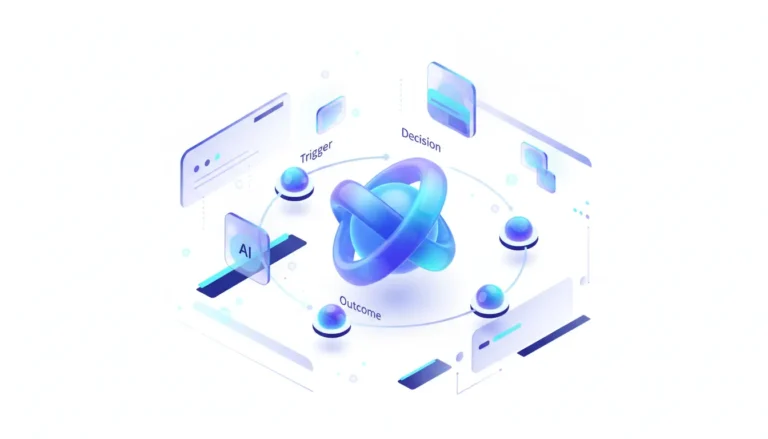
The real target for this efficiency gain is the “agent loop,” the multi-turn process where an AI system must plan, use a tool (like an API or code interpreter), observe the result, and then re-plan its next action. Each step in this loop is a call to the LLM, and each call adds latency and cost—layering up, really, until it feels like treading water. For many startups and enterprises, building sophisticated agents has been technically possible but economically prohibitive. By improving throughput—the number of concurrent complex tasks a set of GPUs can handle—Gemini 3.1 Pro aims to slash the cost-per-job, turning experimental agentic systems into production-ready workflows that don’t keep you up at night worrying about budgets.
This move is also a direct strategic response to the market. Competitors, particularly Anthropic with its fast and cost-effective Claude 3.5 Sonnet, have successfully captured developer attention by prioritizing speed and affordability for workhorse tasks. Google is signaling that its flagship Gemini line can compete not just on raw intelligence but on the very practical metrics that enterprise and developer customers use to calculate ROI. It reframes the competitive narrative from “whose model is strongest?” to “whose model provides the best performance-per-dollar for complex work?”—a shift that’s overdue, if you ask me.
While Google provides its own performance metrics, the true impact will be determined by independent, reproducible benchmarks. The developer community is now looking for transparent data on tokens-per-second, median and 95th-percentile latency on real-world tasks, and—most crucially—cost-per-output comparisons against previous Gemini versions and competing models. The release of Gemini 3.1 Pro is ultimately a challenge to the ecosystem: here is a more efficient engine; now show us the new class of applications you can build with it—and let’s see where that takes us.
Stakeholders & Impact
| Stakeholder / Aspect | Impact | Insight |
|---|---|---|
| AI / LLM Providers | High | The competitive landscape is maturing. The battle is shifting from raw benchmark supremacy to the total cost of ownership (TCO) and performance-per-dollar for complex, agentic tasks. Efficiency is the new competitive moat. |
| Developers & Startups | High | This potentially unblocks the ability to build and scale more sophisticated AI agents that were previously too slow or expensive. Expect a new wave of applications leveraging complex tool-use and multi-step reasoning at a lower cost basis. |
| Enterprises | High | Makes large-scale deployment of custom AI workflows (e.g., advanced RAG, automated analytics, code maintenance) more economically feasible. The conversation now shifts to governance, reliability, and the migration path from older models. |
| AI Infrastructure | Significant | Increased throughput means more efficient use of existing GPU clusters. This could either temper the insatiable demand for new hardware or—more likely—enable even larger and more complex jobs to run, thereby sustaining infra demand. |
About the analysis
Researched and written with AI assistance under the editorial responsibility of the i10X News team. The title image is an AI-generated illustration. Read our AI Use Policy. Spotted an error? Request a correction.
This analysis draws from an independent review of Google’s official announcement, alongside some comparative market positioning and the gaps I’ve spotted in current developer- and enterprise-focused coverage. It’s geared toward engineering managers, CTOs, and AI product leaders sifting through options for the next generation of foundation models in production—practical folks like you, really.
i10x Perspective
What if the real game-changer in AI isn’t the flashiest smarts, but the kind that works tirelessly without draining resources? The launch of Gemini 3.1 Pro signals the end of the “bigger is always better” era for LLMs. The next frontier of AI competition is not just intelligence, but industrialized intelligence—measured in cost-per-task, tasks-per-second, and time-to-value. The critical question is no longer just “what can your model do?” but “what complex work can your model do reliably and affordably at enterprise scale?”
The pivot from raw capability to economic efficiency will determine who powers the coming wave of autonomous AI systems.