Quick Take
- Summary: As early reviews of GPT-5.6 surface, the narrative is rapidly shifting from raw model capabilities to the complex systems developers are building around them. The focus has moved toward “agent harnesses” and 24/7 local AI deployments as solo builders and enterprises alike seek to balance frontier reasoning with the cost and latency benefits of local compute.
- What happened: Developer deep-dives into GPT-5.6 are increasingly highlighting hybrid workflows, contrasting frontier API reliance with the growing trend of running continuous, local AI operations via sophisticated orchestration layers known as “agent harnesses.”
- Why it matters now: The LLM landscape is maturing from prompt-based experimentation into rigorous systems engineering. To control latency, manage Total Cost of Ownership (TCO), and ensure reliability, the market is relying less on the model itself and more on the middleware that wraps it.
- Who is most affected: AI engineers, solo builders, and enterprise CTOs who must transition from simple API calls to managing robust, multi-model architectures and continuous edge deployments.
- The under-reported angle: While the industry fixates on the benchmarking of frontier models like GPT-5.6 against predecessors, the real moat is being dug at the control layer. The “agent harness”—the code that directs, monitors, and restrains an AI agent—is rapidly becoming more valuable than the underlying model it guides.
Deep Dive
Have you ever noticed how a new frontier model like GPT-5.6 tends to spark another round of surface-level benchmarks? From what I’ve seen in builder newsletters and the like, the real story sits deeper: developers are no longer just firing prompts at an API. Instead they’re piecing together resilient, 24/7 local AI setups that weave together top-tier models with open-weight options such as Llama 3.1 and Qwen. The bottleneck has shifted from “how smart is the model” to “how reliably can I keep this running in production without the costs spiraling.”
Mainstream takes still treat GPT-5.6 adoption as a simple yes-or-no decision. Hands-on engineers, though, see it as a latency-versus-quality trade-off that demands careful weighing. They’re building hybrid setups where lighter models handle steady, localized monitoring while reserving frontier models like GPT-5.6 for the heavy reasoning lifts—recalling patterns seen with o3 or R1. That calls for solid cost modeling and TCO-focused architectures that most coverage tends to overlook.
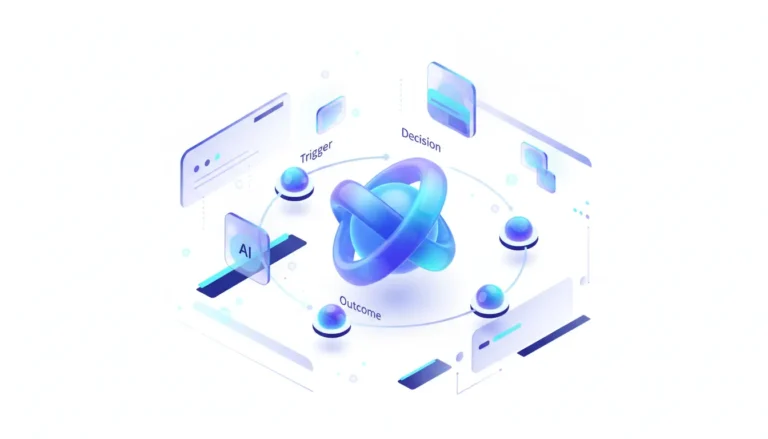
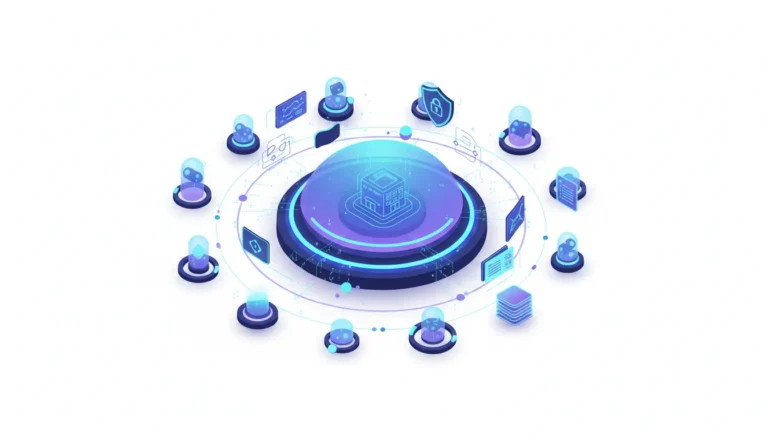
The real linchpin here is the “agent harness.” It functions less like a basic script and more like an operating system for AI agents, managing tool use, safety guardrails, state, and continuous orchestration. While beginner resources lean on frameworks like LangGraph or CrewAI, experienced builders are moving toward custom harnesses built around observability. That means standardizing evals-in-production, drift monitoring, and clear failure playbooks—because an unharnessed agent running 24/7 can quickly become a liability.
Yet documentation around this shift remains thin. Reproducible benchmarks comparing GPT-5.6’s reasoning against optimized local pipelines (with quantization and KV caching) are still hard to find. And as teams push AI toward the edge—on desktop GPUs or Mac MLX setups—security and privacy questions often get sidelined in favor of functional breakdowns alone.
This points to the close of the “API-only” era for serious AI work. The edge now goes to builders who master process supervision for continuous intelligence. By instrumenting agent harnesses with tools like OpenTelemetry and Langfuse, they’re effectively commoditizing the LLM layer and showing that a thoughtful mix of local compute and selective GPT-5.6 calls can deliver enterprise-grade reliability at far lower cost.
Stakeholders & Impact
| Stakeholder / Aspect | Impact | Insight |
|---|---|---|
| AI / LLM Providers | High | Increased pressure to justify API costs as developers successfully offload routine workloads to 24/7 local AI clusters. |
| Solo Builders & Devs | High | Massive efficiency gains, but requires transitioning from prompt engineering to systems orchestration and observability. |
| Tooling & Observability | Very High | Providers of evals-in-prod, monitoring (Langfuse, Arize), and agent frameworks are becoming critical infrastructure. |
| Enterprise CTOs | Significant | TCO models are shifting; the decision matrix now heavily favors hybrid cloud/local deployments managed via custom agent harnesses. |
About the analysis
Researched and written with AI assistance under the editorial responsibility of the i10X News team. The title image is an AI-generated illustration. Read our AI Use Policy. Spotted an error? Request a correction.
This independent analysis synthesizes developer teardowns, deployment frameworks, and emerging benchmark strategies to surface structural shifts in AI usage. It is designed for CTOs, AI engineers, and product leaders navigating the transition from model experimentation to resilient, production-grade intelligence architectures.
i10x Perspective
The focus on model milestones like GPT-5.6 tends to obscure the broader direction: intelligence is turning modular, hybrid, and embedded in daily operations. The rise of the “agent harness” shows that the most valuable ground in the stack is the control layer, not the foundation model itself. Over the next five years, a clear contest is shaping up between cloud providers pushing end-to-end proprietary agents and open-source efforts supplying the tooling for independent, 24/7 local intelligence workloads. Whoever holds the harness will shape how decentralized AI develops from here.