We are crossing the threshold from models that talk to models that do.
SpaceXAI has launched Grok Bot, a new multi-agent workplace automation tool designed to independently execute complex, cross-app and web-based tasks across the enterprise environment.
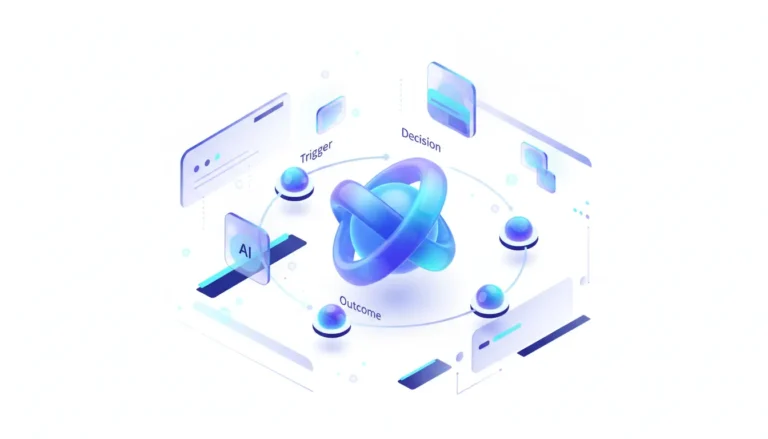
Built on a foundation of coordinated AI agents, Grok Bot moves beyond standard chatbot functionality by dynamically orchestrating end-to-end workflows. It translates natural language intents into multi-step actions, interacting directly with web applications and enterprise software to automate repetitive processes.
The LLM ecosystem is aggressively pivoting from conversational interfaces to “agentic” execution. Tools like Grok Bot signal a paradigm shift where AI operates as an active software layer, threatening to disrupt legacy Robotic Process Automation (RPA) by substituting rigid scripts with semantic reasoning and adaptive problem-solving.
IT decision-makers, enterprise operations leaders, and traditional automation vendors (like UiPath or Zapier) must adapt rapidly as the market transitions toward multi-agent AI capable of autonomously scaling operational throughput without increasing headcount.
Mainstream coverage is treating this as just another productivity assistant, entirely missing the complex multi-agent orchestration under the hood. The real battlefield will be task planning logic, error recovery loops, and the strict “human-in-the-loop” guardrails required to safely deploy autonomous actors inside secured corporate networks.
Deep Dive
Have you ever watched an enterprise team lose hours just shuttling data between half a dozen apps? The enterprise software landscape is highly fragmented, resulting in extreme context-switching and a reliance on manual, repetitive data moving. While early generative AI solved the “blank page” problem, it failed to bridge the gap between generating text and executing workflows. SpaceXAI’s Grok Bot is an explicit attempt to cross that chasm, utilizing a multi-agent architecture to orchestrate tasks across web and app environments. Rather than relying on a single omnipotent LLM, multi-agent systems divide labor: one agent acts as the planner decomposing the task, others act as executors interacting with specific APIs or web DOMs, and another manages semantic memory.
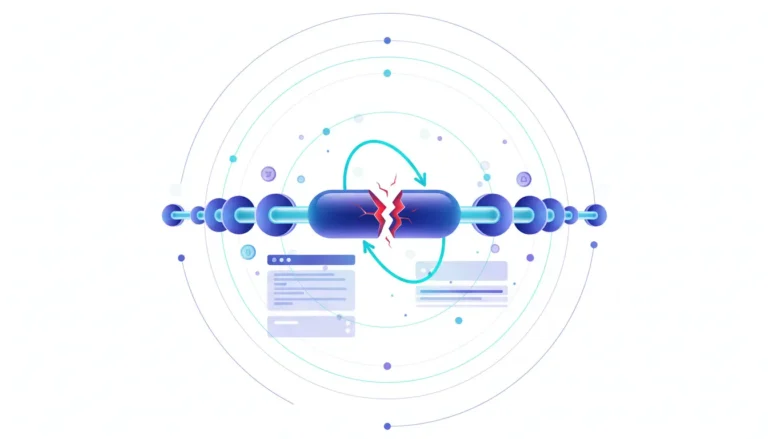
This approach represents a structural threat to the legacy Robotic Process Automation (RPA) industry. Traditional RPA relies on brittle, deterministic rules – if a web interface changes by a few pixels, the automation breaks. Agentic AI, however, leverages the semantic reasoning of underlying foundation models to adapt on the fly, process unstructured data, and dynamically select the right tools for the job. Grok Bot is positioning itself as an intelligent connective tissue that can increase enterprise workflow throughput by 50–80% without equivalent headcount growth.
Yet a massive gap remains between product announcements and enterprise readiness. While early reporting focuses on generic workplace use cases, CTOs evaluating agentic AI are looking for robust observability. To replace legacy automation, multi-agent systems must provide deep audit logs, clear human-in-the-loop approval workflows, and SOC 2 / ISO 27001 compliant data handling. The challenge is no longer just prompt engineering; it is implementing rigorous guardrails and policy engines to mitigate hallucinations when AI is given read/write access to mission-critical SaaS apps like Salesforce, Workday, or Jira.
Ultimately, Grok Bot’s success will depend heavily on its connector ecosystem and grounding capabilities. The true differentiator in the next wave of AI tooling won’t just be the underlying model’s intelligence, but the infrastructure that surrounds it: deployment models (cloud vs. VPC), granular admin permissions, and predictable latency and TCO (Total Cost of Ownership) when deploying AI agents at an enterprise scale.
Stakeholders & Impact
| Stakeholder / Aspect | Impact | Insight |
|---|---|---|
| Enterprise IT & CTOs | High | Must shift focus from adopting conversational AI to governing autonomous agents, demanding new frameworks for API security and audit trails. |
| Legacy RPA Vendors | High | Face an existential threat as semantic, multi-agent AI proves more resilient and adaptable than deterministic, script-based automation. |
| Foundation Model Builders | Medium | Agentic workflows drive massive background inference demand, shifting the focus toward models optimized for tool-use and function calling. |
| Knowledge Workers | Significant | Daily routines will shift from executing fragmented software tasks to reviewing, approving, and managing AI-driven task orchestration. |
About the analysis
Researched and written with AI assistance under the editorial responsibility of the i10X News team. The title image is an AI-generated illustration. Read our AI Use Policy. Spotted an error? Request a correction.
This independent, research-based analysis synthesizes current market coverage and structural capability gaps to contextualize multi-agent AI launches. It is designed for CTOs, engineering managers, and enterprise decision-makers tracking the evolution of agentic automation and LLM infrastructure.
i10x Perspective
The launch of multi-agent systems like Grok Bot reveals a critical inflection point in the AI infrastructure race: the transition to background inference. When AI agents autonomously plan, execute, and verify complex workflows, they consume vastly more compute than human-triggered chat prompts. This shifts the enterprise bottleneck from human interface latency to model orchestration efficiency. Over the next five years, expect a fierce battle between OpenAI, Google, Anthropic, and disruptors to provide the definitive “Agentic OS” – a foundational layer where models don’t just generate knowledge, but natively control the software infrastructure of the modern enterprise. From what I’ve seen, that layer will decide who actually scales and who gets left patching brittle scripts.