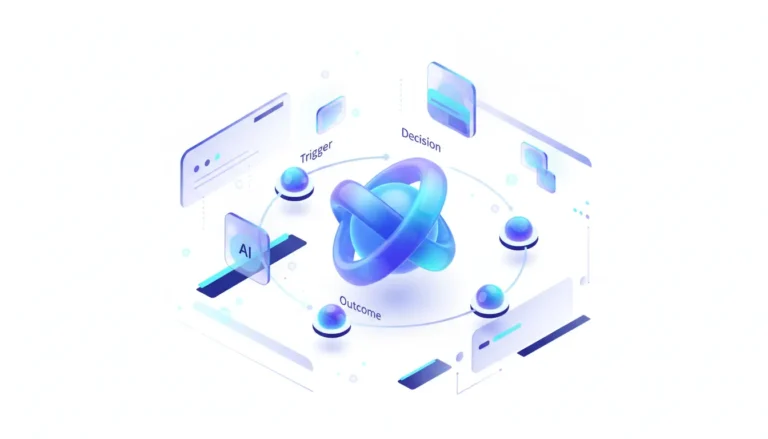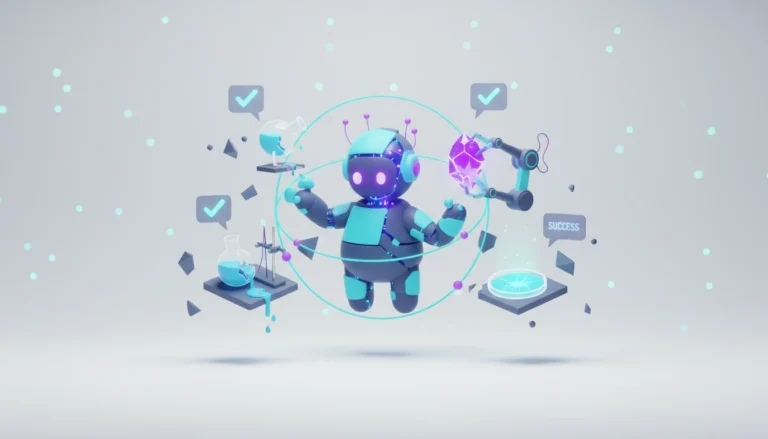
xAI is breaking Grok out of the chat window, launching an autonomous “Grok Bot” designed to navigate interfaces and execute multi-step workflows across disparate applications. This shift signals a major escalation in the AI race – moving from conversational retrieval to true computer-use agency.
Quick Take
- What happened: SpaceX/xAI has introduced Grok Bot, an “OpenClaw-style” autonomous agent capable of orchestrating complex, multi-step tasks across different desktop and web applications without requiring custom API scripts.
- Why it matters now: The LLM market is hitting a wall with pure text generation. By moving to cross-app control (perception to action), xAI is joining a fierce new front in the AI wars, where models don’t just answer questions – they actively drive software interfaces to reduce context-switching and automate mundane workflows.
- Who is most affected: Power users, enterprise IT admins, and developers evaluating agentic tools. While consumers get immediate access via X Premium+, enterprise decision-makers must now weigh the productivity gains against entirely new security and governance risks.
- The under-reported angle: While public coverage obsesses over demo videos and X Premium integration, the massive gap lies in enterprise readiness. Running autonomous cross-app agents requires a radically different security posture – including Role-Based Access Control (RBAC), transparent audit logs, and hardware-level rollback – which consumer-grade bots currently lack.
Deep Dive
Have you ever found yourself bouncing between half a dozen apps just to finish one straightforward task? For the past year, Grok has been positioned primarily as a slightly rebellious, real-time conversationalist tethered to X’s data hose. With the introduction of the autonomous Grok Bot, xAI is pivoting toward one of the most lucrative and technically demanding frontiers in AI: “computer-use” agents. Likened to academic frameworks like OpenClaw, Grok Bot uses a combination of visual perception and planning to “see” a screen, click, type, and navigate between entirely different applications to complete multi-step goals.
Current mainstream coverage reveals a split personality in how this technology is being received. Official xAI positioning leans heavily into product-led growth, pushing Premium+ subscriptions by promising an always-on assistant that cures the pain of manual, repetitive digital chores. Meanwhile, technical outlets and researchers are highlighting the raw, often fragile mechanics of UI-driven task execution. When an AI skips the API and attempts to drive the user interface directly, issues like latency, error recovery, and the bot’s ability to gracefully fail become the true benchmarks of success.
The immediate promise is enticing: reducing repetitive cross-app work by an estimated 50–70% and centralizing task delegation so users avoid massive context-switching penalties. But here’s the thing – a deeper analysis reveals significant content and market gaps around enterprise integration. Automating a workflow is one thing; securing it is another. IT admins evaluating Grok Bot against emerging tools like OpenAI’s Operator or Anthropic’s computer-use Claude are searching for missing pieces: SOC 2 compliance, precise permissioning models, sandbox boundaries, and SDK extensibility.
From what I’ve seen, this shift from chat to agentic workflows completely alters the infrastructure demands on the backend. A traditional LLM request is a stateless burst of inference. An autonomous agent running multi-step tasks requires long-running, continuous reasoning loops, real-time environment validation, and persistent memory. This means xAI’s GPU clusters aren’t just processing text anymore; they are running continuous simulations of desktop environments and action-spaces.
Ultimately, Grok Bot tests a critical thesis in AI deployment: can a consumer-first bot safely scale into high-stakes enterprise environments? Until xAI delivers transparent guardrails, clear audit trails, and concrete reliability metrics for cross-app task completion, Grok Bot remains a highly advanced, slightly risky power tool rather than a fully trusted enterprise employee.
Stakeholders & Impact
| Stakeholder / Aspect | Impact | Insight |
|---|---|---|
| AI / LLM Providers | High | Shifts competitive focus from context windows to “Time-to-Completion” for autonomous tasks; alters inference compute profiles. |
| Enterprise IT & Security | Significant | Demands entirely new frameworks for auditing AI actions. Unmanaged cross-app bots present massive data exfiltration risks. |
| Power Users & Developers | High | Unlocks the ability to automate complex workflows without writing custom Python scripts or relying on rigid Zapier integrations. |
| SaaS & App Developers | Medium | May disrupt traditional API usage. If agents can navigate standard UIs perfectly, the necessity of building robust integrations decreases. |
About the analysis
Researched and written with AI assistance under the editorial responsibility of the i10X News team. The title image is an AI-generated illustration. Read our AI Use Policy. Spotted an error? Request a correction.
This independent analysis synthesizes market positioning, technical benchmarks, and competitor coverage surrounding the launch of xAI’s Grok Bot. It is designed for CTOs, product managers, and AI infrastructure builders evaluating the shift toward computer-use agents and its implications for both enterprise security and compute scaling.
i10x Perspective
The arrival of Grok Bot cements the reality that the next decade of AI isn’t about better text generation; it’s about reliable digital actuation. As models learn to pilot operating systems directly, the bottleneck shifts from the intelligence of the model to the speed, latency, and permission structures of the underlying infrastructure. If xAI, OpenAI, and Anthropic successfully commoditize cross-app orchestration, the very concept of the “Graphical User Interface” may become a legacy layer – built not for humans to click, but for agents to navigate.