Quick Take
xAI is preparing to drop Grok V9-Medium this mid-June, drastically tripling its parameter count in an aggressive bid to capture the developer ecosystem. By pivoting hard toward code-generation and software reasoning, Grok is directly challenging the dominance of incumbent coding assistants in the AI landscape.
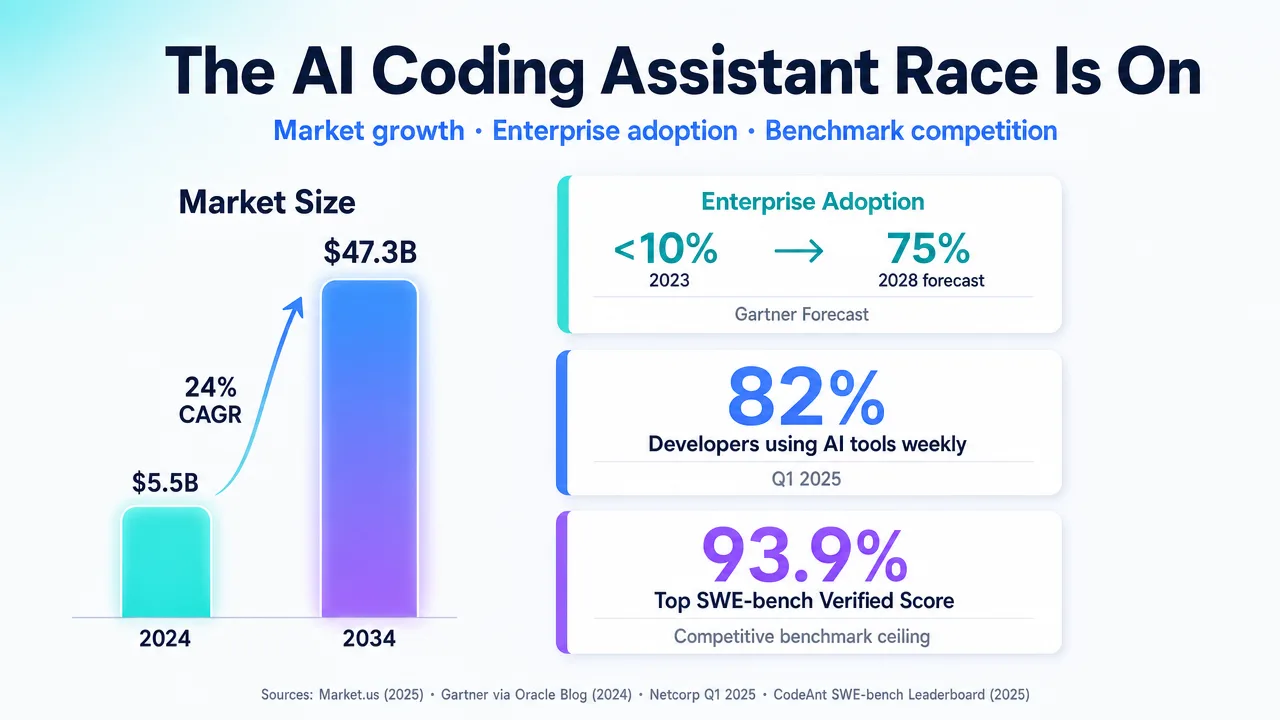
- Summary: xAI’s upcoming Grok V9-Medium expands its mathematical and logical footprint to focus specifically on software development, prioritizing coding accuracy over generalized conversational tasks.
- What happened: News has surfaced that Grok V9-Medium will deploy with triple the parameter count of its predecessors, marking a targeted architectural pivot to win over engineers and CTOs evaluating coding LLMs.
- Why it matters now: Coding capability is the true crucible for frontier LLMs. If Grok can match or exceed the reasoning baselines of Claude 3.5 Sonnet or GPT-4o on standard developer benchmarks, it gives enterprise engineering teams a viable third ecosystem in a highly consolidated market.
- Who is most affected: Enterprise software teams evaluating code-assist tools, AI infrastructure providers tasked with hosting significantly heavier workloads, and competing ecosystem giants like OpenAI and Anthropic.
- The under-reported angle: Parameter scale does not automatically equate to coding supremacy. The real test is the underlying infrastructure calculus—specifically the architectural trade-offs between Dense and Mixture-of-Experts (MoE) designs—and whether this larger model can maintain low-latency inference at a scalable cost-per-token.
Deep Dive
Have you noticed how the AI development space keeps circling back to synthetic coding capacity as the real test of systemic reasoning? With the mid-June rollout of Grok V9-Medium, xAI isn’t simply tweaking its conversational model. It is tripling the parameter count outright, zeroing in on developer workflows. Most coverage treats this as a straightforward scale play, where bigger just means better. Yet that framing glosses over what actually decides winners here: inference economics and token-generation latency.
For software developers, the sticking point has never been model availability. It is accuracy on complex tasks, deterministic debugging, and the ceiling on context handling. While announcements emphasize raw parameter growth, engineering leads want something more practical—predictable SWE-bench-lite scores, reliable function calling, and built-in protections for proprietary code. Grok V9-Medium aims to deliver that, but turning extra scale into day-to-day utility still means closing the distance between theoretical compute power and smooth integration inside tools like VS Code or JetBrains.
Tripling a model’s size brings its own hard math. Inference throughput takes a beating unless a highly optimized routing scheme offsets the load. For xAI, keeping this much larger V9-Medium responsive across GPU clusters—while lining up next-generation hardware—amounts to a delicate balancing act. If latency or cost-per-token ends up out of line, teams will simply move on, no matter how strong the benchmark numbers look on paper.
Enterprise buyers also expect clearer commitments than early releases usually provide. They want explicit SLAs, SOC2-level data handling, and migration paths away from tools like GitHub Copilot. Widespread adoption for Grok V9-Medium will depend less on curated benchmark charts and more on whether xAI offers clean API access, honest latency projections, and the guardrails needed for secure production use.
In short, xAI is trying to carve space in a market still split between OpenAI and Anthropic. By shifting emphasis from a “rebellious API” posture toward a serious software-engineering platform, the company is signaling a more mature approach. If V9-Medium delivers competitive, low-error output without steep cost premiums, it could reorder how automated coding tools—and the infrastructure behind them—are evaluated.
Stakeholders & Impact
| Stakeholder / Aspect | Impact | Insight |
|---|---|---|
| AI / LLM Providers | High | xAI’s shift pressures competitors to defend their enterprise coding-assistant market share, driving a tighter race on SWE-bench metrics. |
| Enterprise Engineering | High | Provides a potential new backend for massive refactoring tasks and CI/CD pipelines, provided latency and SOC2 compliance run parallel. |
| Infrastructure / Cloud | Medium–High | Tripling parameter counts forces data center operators to optimize GPU routing and memory bandwidth to maintain profitable inference margins. |
| Developers / Users | Medium | More options for reliable code-generation, but adoption will rely entirely on the slickness of SDK and IDE integrations available at launch. |
About the analysis
Researched and written with AI assistance under the editorial responsibility of the i10X News team. The title image is an AI-generated illustration. Read our AI Use Policy. Spotted an error? Request a correction.
This is an independent, research-driven analysis tailored for CTOs, engineering managers, and AI developers navigating the rapidly shifting LLM ecosystem. Our synthesis bridges public benchmark reporting, model architectural metadata, and market gap analysis to clarify how emerging models impact systemic AI deployment.
i10x Perspective
The upcoming launch of Grok V9-Medium highlights how quickly the field is moving toward specialized intelligence infrastructure. General-purpose models are giving way to ones tuned for narrow, high-value domains. From what I have seen, lasting advantage will come less from sheer parameter counts and more from the ability to keep those larger systems economical and responsive under real developer workloads. The next twelve months should show us which teams can actually deliver on that balance.