Quick Take
The era of artisanal AI research is over; the field has rapidly transformed into an industrialized, compute-intensive infrastructure race where artificial intelligence is increasingly used to automate its own development.
Summary
Right now the public face of AI research comes mostly from those sleek corporate sites run by Google, OpenAI, and DeepMind. They highlight AGI milestones and responsible-AI principles. Underneath, though, the actual work has shifted toward agent-assisted pipelines, scaling that respects real compute limits, and benchmarks that keep changing.
What happened
The big labs still release papers on multimodal models and scaling laws, yet they often hold back the data and weights. That has pushed everyone else toward open-source stacks, quantization tricks, and reproducibility guides so they can approximate frontier results without the same hardware budgets.
Why it matters now
Scaling laws still demand enormous GPU clusters, so independent teams and companies have turned to “lean AI” moves—faster inference, distillation, data-centric tweaks—just to keep up. At the same time the real constraint has moved from architecture to evaluation; old static tests like MMLU are filling up and getting easier to game.
Who is most affected
Academic groups, enterprise ML engineers, and CTOs feel the split between closed frontier models and the open-weight world most directly. Compute providers feel it too, since they now have to support experiment systems that run themselves.
The under-reported angle
The quiet automation of the researcher. The bigger change is the spread of agentic workflows—LLMs that sort papers, turn theory into code, and log experiments—so the pace of discovery itself is speeding up.
🧠 Deep Dive
If you search for “AI research” today you mostly land on those polished corporate overviews. Google Research, OpenAI, and DeepMind pages lay out clean categories for new models, reinforcement-learning wins, and governance ideas. They do a good job signaling credibility and drawing talent, yet they hide how messy the day-to-day work actually is once you get past the press releases.
Behind those narratives, progress is now tightly bound to available compute. The big players can still follow the scaling laws and throw thousands of GPUs at giant datasets. Everyone else has to practice what some call compute-aware research—leaning on quantization, distillation, and sparsity just to stay in the game. The distance between teams that can train at full scale and those limited to parameter-efficient fine-tuning is turning into a clear dividing line.
Evaluation has become another choke point. As models improve, the usual fixed benchmarks lose their edge and researchers spend more time building fresh test harnesses than exploring new architectures. Attention is moving toward dynamic, agent-driven checks and human oversight so we can actually measure reasoning and tool use.
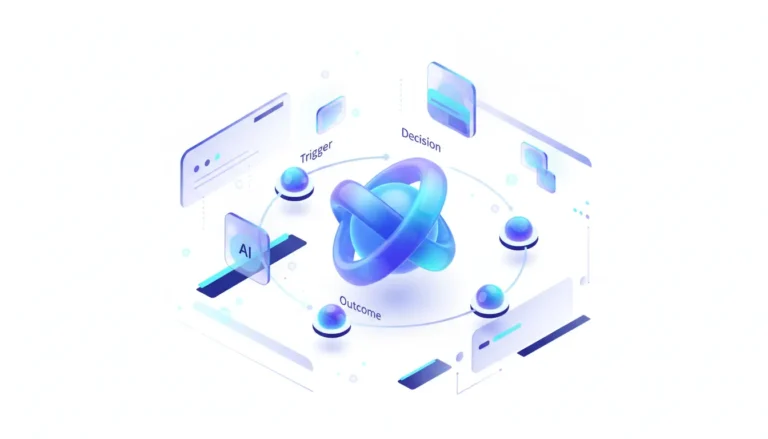
From what I’ve seen, the least discussed shift is the arrival of the agentic researcher. In a couple of years the tooling will look nothing like it did in 2022. Instead of manual literature sweeps and hand-written scripts, teams are setting up loops where models pull relevant papers, convert ideas into PyTorch or JAX, and track runs on platforms like Weights & Biases. AI is literally being used to speed up AI work.
There’s also growing pressure around reproducibility. Frontier labs often publish without code or data, so the open-source community ends up rebuilding the results. That has encouraged a more deliberate culture of shared artifacts, preregistration, and safety checklists. For companies that need to trust what they deploy, those practices are becoming practical requirements rather than academic niceties.
📊 Stakeholders & Impact
| Stakeholder / Aspect | Impact | Insight |
|---|---|---|
| AI / LLM Providers (Google, OpenAI, Meta) | High | They have to balance secrecy around safety and AGI goals with enough openness to keep recruiting strong researchers. |
| Independent & Academic Researchers | High | They face real compute shortages and are leaning harder on agentic tools, open-source stacks, and efficiency techniques. |
| Enterprise ML Teams & CTOs | Medium–High | Focus has moved from training base models to vetting, adapting, and integrating open-weight ones with solid reproducibility steps. |
| Infrastructure & Compute Vendors | Significant | Demand is shifting from raw hardware to platforms that handle experiment tracking, automated evaluation, and ML pipelines. |
✍️ About the analysis
Researched and written with AI assistance under the editorial responsibility of the i10X News team. The title image is an AI-generated illustration. Read our AI Use Policy. Spotted an error? Request a correction.
This independent review pulls together search patterns, topic maps, and gaps across major lab sites and academic sources. It’s meant for CTOs, engineering leads, and ML practitioners who need a clear picture of how tooling, evaluation, and compute are changing.
🔭 i10x Perspective
The industrialization of AI research shows that compute sets the ceiling, but the ability to move quickly decides who stays ahead. Over the next five to ten years the real advantage will come from whoever builds the strongest autonomous research setup. As agentic systems take over more of the literature work, hypothesis testing, and benchmarking, we’re moving into a phase where the rate of discovery can outrun what any single person can code by hand.