LLM Wiki: From Productivity Hack to Foundational AI Infrastructure
Executive Summary
The concept of the “LLM Wiki” is rapidly transitioning from a niche productivity hack for journalists to a foundational piece of personal and enterprise AI infrastructure. By merging traditional note-taking with Retrieval-Augmented Generation and semantic search, knowledge workers are abandoning static folders for dynamic, conversant “Second Brains.”
What happened: High-profile experiential accounts—such as those circulating in tech journalism—have demonstrated how wiring an LLM to a personal wiki drastically reduces context switching, synthesizes raw research, and resurfaces forgotten insights.
Why it matters now: This signals a major shift in how intellectual property is managed. We are moving from keyword-based retrieval to semantic reasoning, creating a surge in demand for the underlying infrastructure: embedding models, vector databases, and localized AI agents.
Who is most affected: Knowledge workers (researchers, journalists, developers), enterprise software vendors (Notion, Atlassian), and developers building the next generation of privacy-first RAG pipelines.
The under-reported angle: While the mainstream narrative focuses on productivity gains via cloud APIs, the real battleground is privacy. For investigative journalists, legal teams, and executives, the future of the LLM Wiki relies entirely on on-device, local, open-source stacks capable of safeguarding sensitive data from cloud-based model ingestion.
🧠 Deep Dive
Have you ever watched your own notes pile up until finding anything feels like digging through last year’s files? The traditional wiki is dying under that weight, slowed further by the limits of keyword search. The emerging solution is the “LLM Wiki“—a system that layers large language models over a personal or team knowledge base. Recent first-person accounts from tech journalists highlight the immediate, visceral benefits: beating context switching, synthesizing massive piles of research, and using AI to automatically surface semantic links between previously disconnected notes. But viewing this merely as a clever writing workflow misses the massive architectural shift happening beneath the surface.
Under the hood, an LLM Wiki is a localized deployment of Retrieval-Augmented Generation (RAG). It requires a specific, maturing stack: document ingestion pipelines (parsing PDFs, web clips, transcripts), embedding models to vectorize the text, a vector database (like FAISS, Chroma, or Milvus) for storage, and an LLM to synthesize the retrieved data. This architecture transforms a static archive into a highly capable Second Brain that can answer complex queries like, “Summarize all the conflicting statements this source made over the last three years.”
That said, the current discourse—dominated by consumer tools like Notion Q&A or Mem—leaves a gaping hole regarding security, privacy, and architectural control. For high-stakes users such as investigative journalists, academic researchers, and legal teams, piping sensitive, unredacted sources through OpenAI’s or Anthropic’s APIs is a non-starter. This pain point is carving out a massive opportunity for open-source, privacy-first deployments. I’ve noticed how quickly teams are moving toward entirely local stacks, where users combine frameworks like Obsidian with local vector databases and on-device models via Ollama to ensure complete data sovereignty.
Furthermore, as these systems scale from personal knowledge management (PKM) to enterprise team hubs, the engineering challenges multiply. Organizations attempting to build team-wide LLM wikis are quickly running into the realities of RAG maintenance: handling multi-user permissions, preventing “knowledge decay,” mitigating hallucinations, and modeling the cost of token usage and storage. The next wave of LLM wiki development will not be about basic chat interfaces, but about implementing rigorous evaluation frameworks for retrieval accuracy, automated citation tracking (provenance), and agentic workflows that update the wiki in the background.
Ultimately, the rise of the LLM Wiki forces a re-evaluation of how we build intelligence infrastructure. It highlights the growing divide between generic, foundational models and highly contextualized, grounded systems. The value is moving away from the models themselves and toward the curation, embedding, and semantic linking of the proprietary data that feeds them.
📊 Stakeholders & Impact
| Stakeholder / Aspect | Impact | Insight |
|---|---|---|
| Knowledge Workers | High | Shifts daily workflows from manual filing and keyword search to semantic querying and automated synthesis, reducing retrieval time significantly. |
| SaaS & Productivity Vendors | High | Platforms (Notion, Obsidian, Confluence) are racing to natively integrate RAG or risk being entirely bypassed by custom-built local workflows. |
| AI Infrastructure | Medium–High | Drives mainstream adoption of vector databases, embedding models, and orchestration frameworks (LangChain, LlamaIndex) outside of pure developer circles. |
| Privacy & Security Teams | Significant | Creates urgent demand for on-device AI capabilities and governance frameworks to prevent sensitive IP from leaking via cloud-based LLM APIs. |
✍️ About the analysis
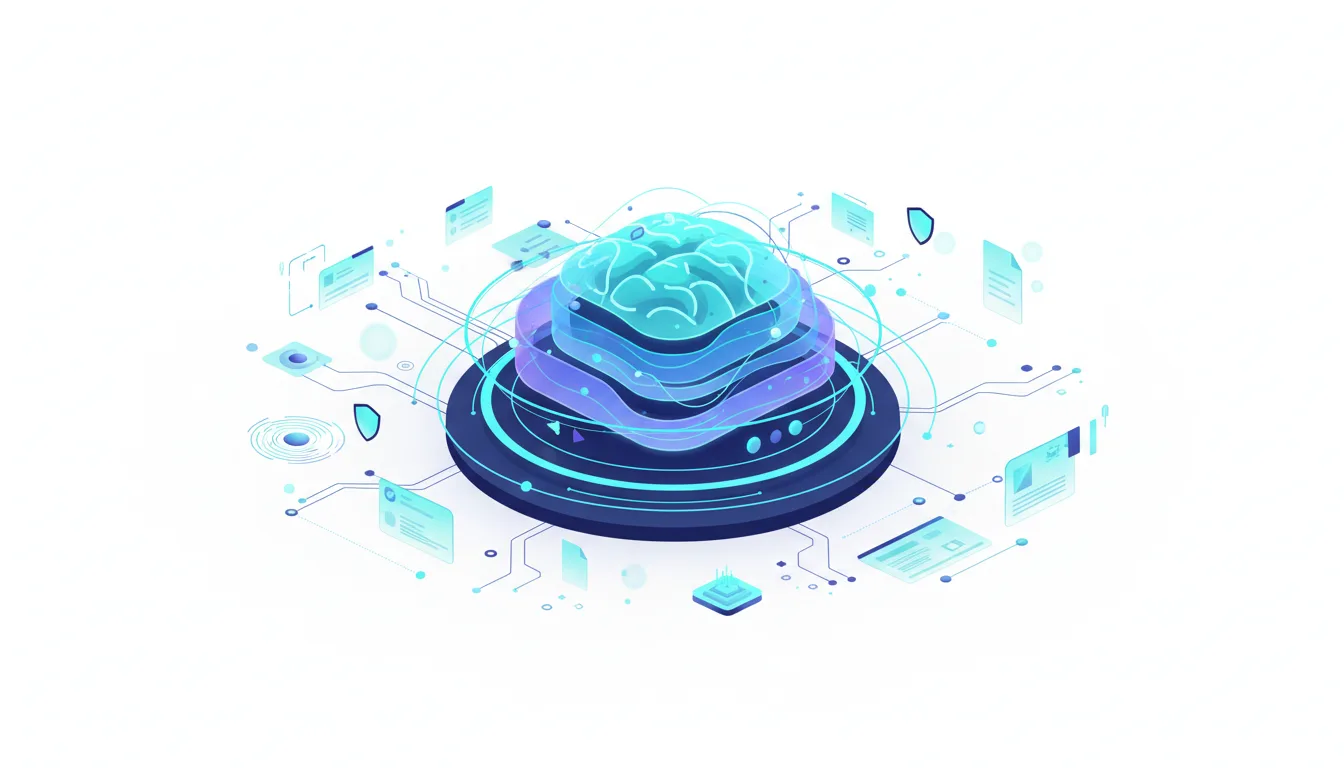
Researched and written with AI assistance under the editorial responsibility of the i10X News team. The title image is an AI-generated illustration. Read our AI Use Policy. Spotted an error? Request a correction.
This analysis is an independent, research-based synthesis of the evolving LLM Wiki landscape, examining the gap between experiential productivity narratives and the technical realities of RAG deployments. It is designed for developers, CTOs, and technical knowledge workers evaluating the architecture, cost, and security implications of integrating AI into personal and enterprise knowledge bases.
🔭 i10x Perspective
The LLM Wiki is merely the prototype for the autonomous personal agent. Today, these systems wait for a user’s prompt to retrieve and synthesize information; tomorrow, they will proactively curate research, draft outlines, and highlight data conflicts in the background as you work. This evolution poses an existential threat to legacy enterprise knowledge hubs that cannot make the leap from static text to interactive intelligence. As the tooling for local, privacy-safe RAG becomes commoditized, the ultimate competitive moat for any organization—or individual—will be the sheer density and quality of the personal data index they manage to build.