Local LLMs Pull Workflows to the Edge: Qwen 3.8-27B Builds a Playable Shooter Offline
It feels like we’re watching generative workflows pull away from the cloud faster than most expected. A 27-billion parameter open-weight model running on consumer hardware can now sketch out a playable 3D environment in an afternoon. The bottleneck isn’t intelligence anymore – it’s integration.
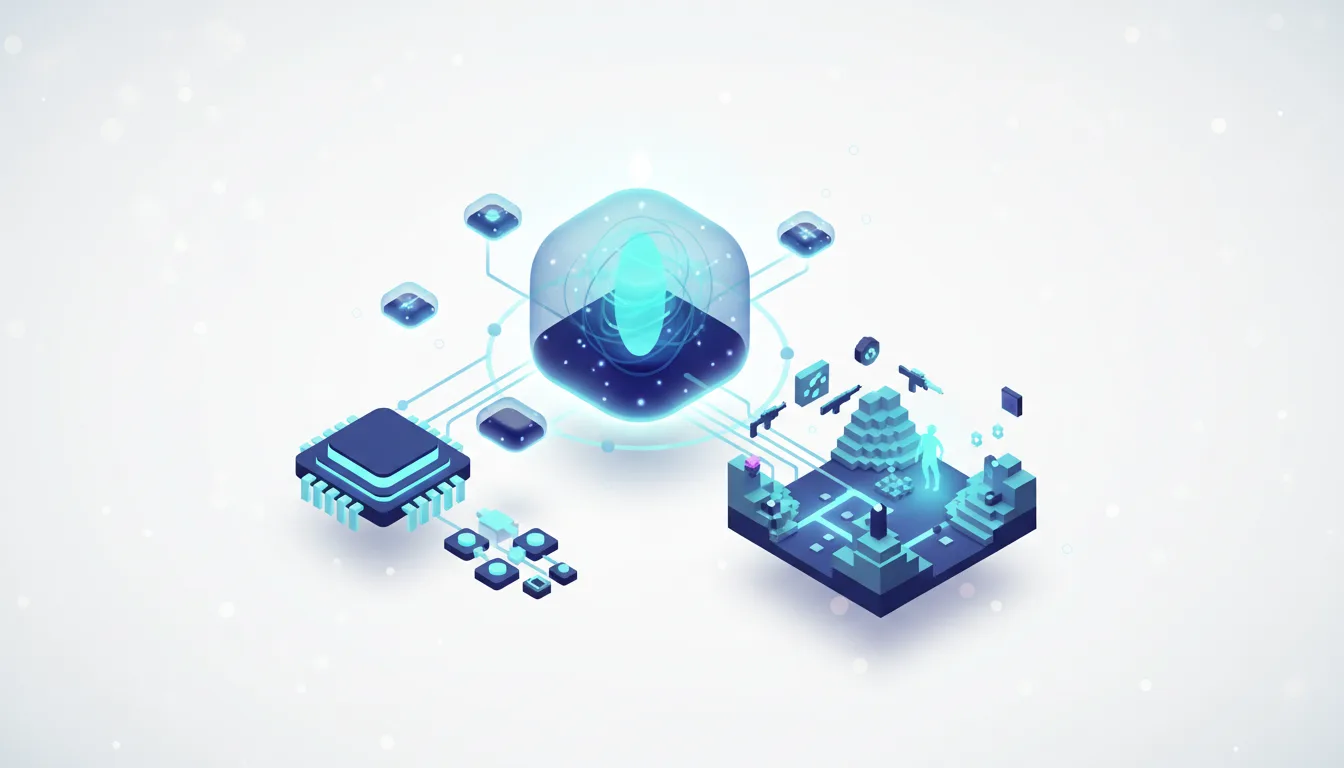
The open-weight Qwen 3.8-27B model was recently used to build a fully playable first-person zombie shooter in roughly five hours, all running locally. This shows that mid-sized, heavily quantized local models can now handle complex, multi-step code generation tasks that once required frontier cloud models.
A developer pulled it off with Alibaba’s Qwen 3.8-27B by combining local inference tools and iterative prompting. The LLM managed core logic, asset integration, and debugging without any calls to OpenAI or Anthropic.
This matters because edge AI infrastructure is finally maturing. Quantization methods such as Q4_K_M, paired with runtimes like Ollama or LM Studio, let developers skip cloud latency, cut API costs, and keep proprietary data on-device without losing much reasoning power.
Independent game developers, technical directors at mid-sized studios, and consumer GPU makers like Nvidia and AMD feel it first. Their hardware is shifting toward local developer workloads rather than pure rendering.
Most headlines fixate on the “game in five hours” angle. The quieter breakthrough is workflow sovereignty. Running 27B models locally changes how teams handle VRAM and opens the door to agentic chains that self-correct engine-specific code for Unity, Unreal, or Godot – all offline.
Deep Dive
Have you ever watched a flashy demo and wondered what actually breaks when you try to repeat it? The Qwen zombie-shooter example looks simple on the surface, yet it tests the limits of local compute. Until recently, LLM-assisted game dev stayed tied to cloud models like GPT-4 or Claude 3.5 Sonnet. Now mid-weight open-source models (7B–30B) are proving that solid reasoning has reached consumer hardware, which shifts the economics of quick prototyping.
Under the hood it is rarely one model spitting out a single script. Agentic workflows and local inference bridges do the heavy lifting. Quantization techniques like AWQ or GGUF keep a 27B model inside typical GPU VRAM. Tools such as vLLM or LM Studio serve as the local layer, letting the model talk directly to engine bridges for C# in Unity or GDScript in Godot. The result is near-instant iteration on controllers, physics, and enemy behavior without waiting on cloud round-trips.
That said, the friction rarely makes the headlines. Context management remains an engineering problem, not a magic trick. Gaps still exist around robust RAG pipelines for engine docs and automatic test harnesses for generated physics or UI code. When the model hallucinates a collision matrix, someone still has to open the engine and fix the state by hand.
Security, licensing, and infrastructure questions surface as well. Model outputs carry their own terms (Qwen’s commercial rules, for instance) alongside engine licenses. The clear upside is privacy: studios no longer need to send unreleased IP through external APIs just to get AI help.
In the end the demo points to a maturing local stack. As teams refine prompt templates and task graphs for procedural content and NPC behavior, dependence on the biggest cloud models for coding work should keep shrinking. The tooling is moving toward integrated, on-device copilots that already understand the spatial and logical rules of the engine they sit inside.
Stakeholders & Impact
| Stakeholder / Aspect | Impact | Insight |
|---|---|---|
| AI / LLM Providers | High | Open-weight models (Qwen, Llama, Mistral) are taking developer share that once went to closed cloud APIs. |
| Edge Compute & GPU Vendors | High | Demand is rising for high-VRAM cards (RTX 4090s, Mac Studio) tuned for local inference and quantization. |
| Game Developers / Studios | Significant | Prototyping gets faster and cheaper, yet prompt engineering and LLM-specific QA become new requirements. |
| Cloud Service Providers | Medium | AWS, Azure, and GCP risk losing iterative coding workloads as teams move them local. |
About the analysis
Researched and written with AI assistance under the editorial responsibility of the i10X News team. The title image is an AI-generated illustration. Read our AI Use Policy. Spotted an error? Request a correction.
This independent analysis draws from cross-industry reports, local LLM trends, and developer discussions around the Qwen 3.8-27B deployment. It is meant for CTOs, infrastructure engineers, and technical leads weighing the move from cloud-heavy AI to edge workflows.
i10x Perspective
From what I’ve seen, the ability to run complex software environments through local LLMs marks a real redistribution of intelligence infrastructure. We’re shifting from AI as a leased service to AI as an on-device primitive. As these models get better at 3D physics and logic trees, frontier models will compete less on raw code generation and more on orchestrating multiple agents across specialized environments. The hardware and inference layers that connect local models cleanly to existing IDEs are the ones worth watching.