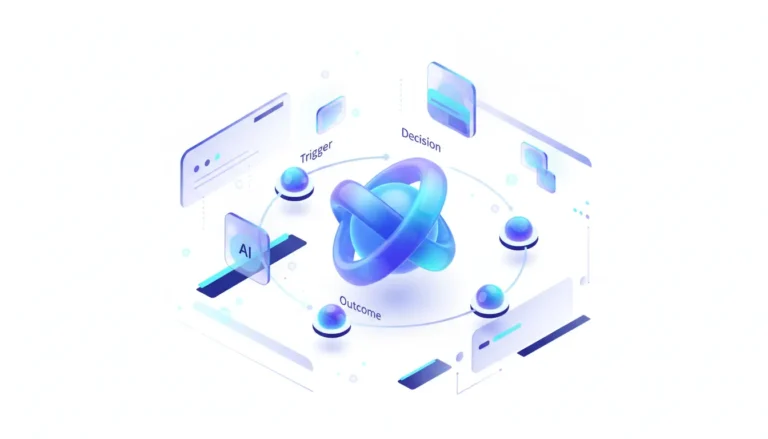
Cybercriminals are no longer just poisoning open-source repositories with static malware; they are embedding autonomous AI agents capable of planning, adapting, and executing multi-stage attacks from inside developer ecosystems.
Quick Take
- Summary: Threat actors are utilizing open-source developer platforms to plant malicious AI agents—sophisticated code structures equipped with LLM-driven tool-calling and autonomous reasoning capabilities. Unlike traditional malware, these agents can dynamically adapt to their environments.
- What happened: Security researchers have observed a new trend where cybercriminals embed AI-agent scaffolds into seemingly benign open-source tools. These frameworks come pre-loaded with prompts and tool registries that aim to automate the full kill chain, from reconnaissance straight through to lateral movement, all without constant human oversight via command-and-control servers.
- Why it matters now: This marks a critical transition in the cyber arms race from script-based automation to agentic autonomy. Because the agents can read unexpected environments and chain tools together on the fly, legacy signature-based detection systems simply aren’t built to catch them.
- Who is most affected: DevSecOps engineers, enterprise SOC teams, and open-source maintainers. AI framework builders (like those developing LangGraph or AutoGen) feel the pinch too, since their own paradigms are being turned into malicious execution loops.
- The under-reported angle: While mainstream infosec coverage focuses on the shock value of “AI hackers,” the real vulnerability lies in tool-calling abuse. The industry still lacks granular code-level detection playbooks—think specific YARA rules or heuristic telemetry—to surface hidden AI-agent logic, ReAct task loops, and credential harvesting tucked inside ordinary developer dependencies.
Deep Dive
Have you ever watched a familiar tool suddenly behave in ways its creators never intended? The integration of LLMs into the software supply chain has triggered a fundamental shift in how adversaries operate. We are moving away from rigid, hardcoded attack scripts that break the moment a target environment changes. Instead, cybercriminals are slipping lightweight AI agent scaffolds into open-source repositories. These malicious modules lean on LLM reasoning loops—often riding alongside legitimate frameworks like LangChain or AutoGen—to navigate target networks without further direction.
At a technical level, this works through advanced tool-calling and function injection. Once an infected open-source package lands in a corporate environment, the dormant agent wakes up. It acts as a localized LLM client, pulling internal or external API keys to map network topologies, spot high-value data, and execute commands to pull it out. What makes this especially thorny for AI infrastructure is the obfuscation: the malicious logic isn’t written in recognizable malware signatures. It lives in natural language prompts and JSON-based function definitions that look identical to legitimate AI application code.
Mainstream coverage of this threat leans heavily on high-level risk warnings and vendor PR, but it consistently misses the structural, pipeline-level failures that let it happen. The actual pain point for defenders is separating benign agentic behavior from malicious autonomous action. When every modern application is busy building internal AI agents to automate workflows, SOC analysts face a flood of false positives. Traditional metrics of compromise are failing because an AI agent moving through a network mimics an authorized administrative tool far more convincingly than a standard trojan.
To bridge this gap, the AI community needs to aggressively expand the MITRE ATLAS and OWASP Data for LLM Applications frameworks. The focus must shift toward runtime egress controls and capability scoping. If a developer downloads a package, its underlying LLM agent shouldn’t have unrestricted cloud IAM rights or the ability to chain arbitrary developer tools. Defensive engineering now includes sandboxing for LLM tool usage and applying policy-as-code to enforce rigid allowlists on what external APIs an embedded model can touch.
From what I’ve seen, this represents a stress-test for the enterprise AI ecosystem. As both builders and attackers lean into agentic design patterns, the infrastructure hosting these models—cloud environments, Kubernetes clusters, and local dev environments—must evolve to inspect intent rather than just code. If we fail to establish supply-chain safeguards like AI-specific SBOMs and strict cryptographic signing for model dependencies, the open-source ecosystem risks becoming a breeding ground for autonomous adversaries.
Stakeholders & Impact
| Stakeholder / Aspect | Impact | Insight |
|---|---|---|
| AI / LLM Providers | High | Increased pressure to implement stronger API guardrails and model-level refusal behaviors against generating malicious tool-calling schemas. |
| Enterprise SOC & DevSecOps | High | Complete overhaul needed for detection engineering. SOCs must pivot to hunting behavioral telemetry related to localized agent task loops. |
| Open-Source Maintainers | Medium–High | Forced to adopt rigorous PR reviews and identity verification to prevent malicious agent logic from being merged into popular repos. |
| Cloud & Infra Builders | Significant | Urgent need for zero-trust architectures designed specifically to sandbox LLM environments and aggressively throttle outbound API requests. |
About the analysis
Researched and written with AI assistance under the editorial responsibility of the i10X News team. The title image is an AI-generated illustration. Read our AI Use Policy. Spotted an error? Request a correction.
This independent, research-based analysis bridges current cybersecurity alerts with core AI infrastructure concepts, drawing on frameworks like MITRE ATLAS and OWASP guidelines. It is specifically designed to give CTOs, DevSecOps engineers, and AI platform builders actionable context on the shift from static supply-chain attacks to autonomous agentic threats.
i10x Perspective
The weaponization of open-source ecosystems via malicious AI agents is a grim but predictable evolution of scaling laws applied to cyber warfare. It signals that the barrier to entry for highly adaptive, persistent threats has functionally collapsed. Over the next five years, the tension between open-weight model proliferation and secure enterprise infrastructure will become the defining conflict of the AI era. As AI agents increasingly build, audit, and deploy software, we are rapidly approaching a paradigm where the only effective defense against an autonomous malicious agent is an equally autonomous defensive agent monitoring the network pipeline.