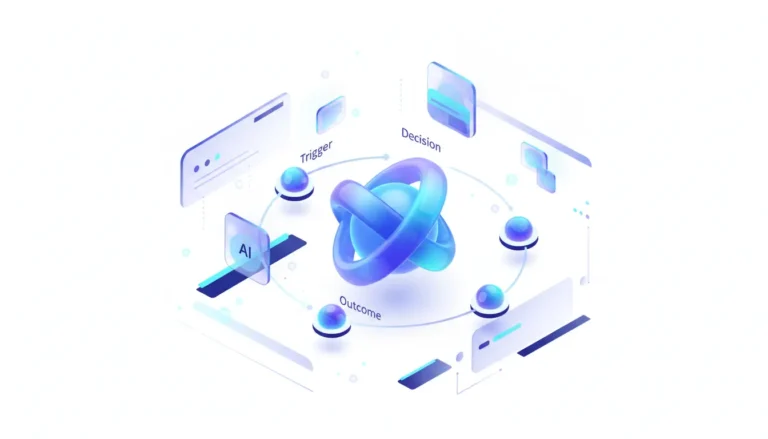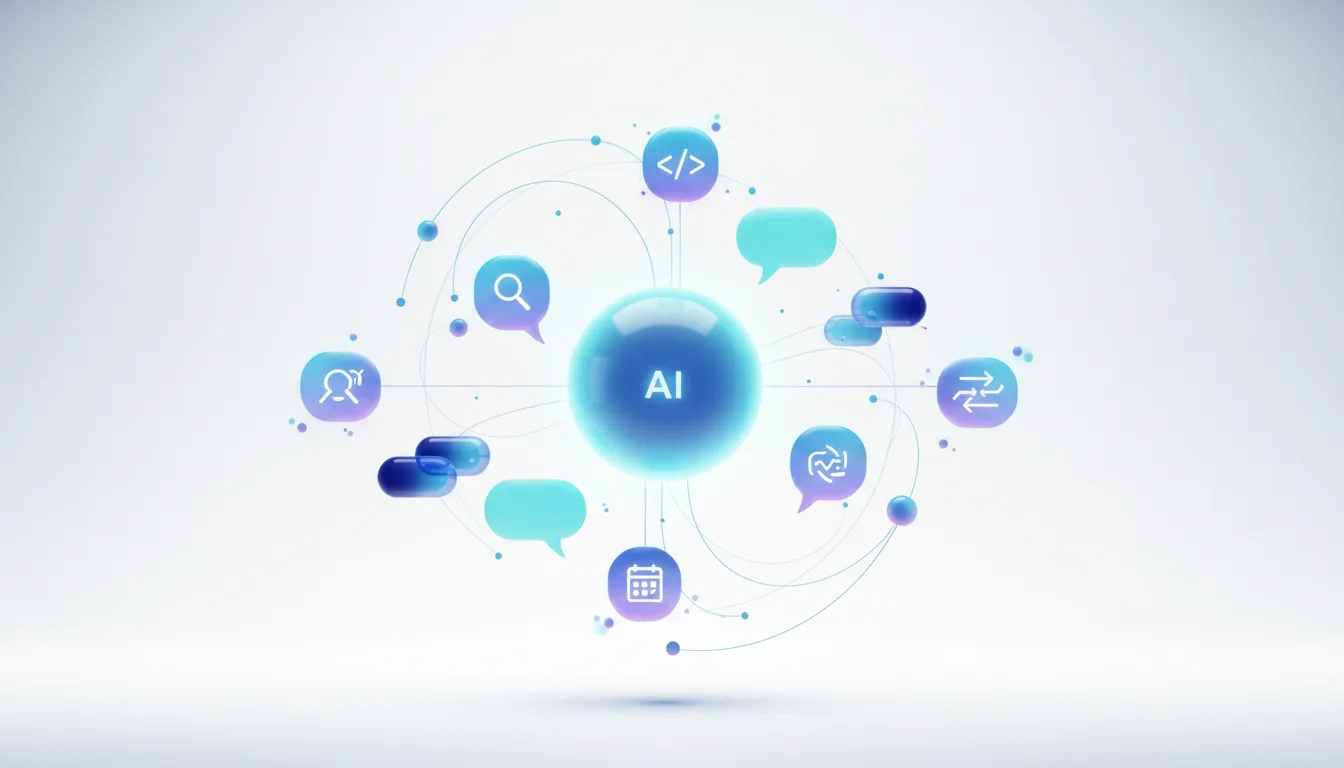
Manus Agents has launched, embedding its multi-step, autonomous AI execution engine natively into messaging apps like Telegram and WhatsApp Business, shifting the UI of agentic AI from destination websites to ambient chat.
Quick Take
- Summary: Manus is rolling out a major update that brings its full agentic AI capabilities directly into messaging apps across all subscription tiers. Users can now initiate multi-step tasks like research, coding, or booking directly via direct messages, starting with Telegram and expanding to WhatsApp, Slack, and Discord.
- What happened: Instead of releasing a lightweight chatbot, Manus deployed an integration—activated via QR code—that connects external messaging platforms to its backend action engine. At the same time, the company updated its API so developers can create custom AI entities with persistent conversation threads. In effect, the chat interface becomes an asynchronous command line for complex tasks.
- Why it matters now: This marks a critical evolution in how users interact with AI infrastructure. We’re moving from synchronous Q&A in web browsers to asynchronous, heavy-compute task delegation in ambient communication channels. It signals that the future of System 2 “thinking” models and agentic workflows requires a UI where users don’t have to wait on a webpage while the AI works.
- Who is most affected: AI infrastructure providers, consumer tech ecosystem managers, and enterprise workflow developers. Platform operators like Meta (WhatsApp) and Telegram must now adapt to third-party AI agents orchestrating high-compute sub-tasks directly within their walled gardens.
- The under-reported angle: While consumer coverage focuses on the novelty of Telegram integration, the real infrastructure shift is happening at the API layer. Manus is shifting from stateless API calls to “persistent main tasks” and custom agent identities, laying the groundwork for AI agents that maintain long-term memory and state across fragmented enterprise tools.
Deep Dive
Have you ever found yourself staring at a loading screen while an AI “thinks” through a multi-step request? The release of Manus Agents feels like a geographic relocation of AI capability more than a simple product update. Until now, the industry has largely required users to visit destination platforms—like the ChatGPT or Claude web apps—to handle complex work. By dropping full reasoning, multi-step execution, and connected-tool access straight into Telegram and WhatsApp Business, Manus is proving that messaging apps are the most logical front-end for agentic AI. You send a single text, and the agent orchestrates a cascading series of sub-tasks in the background.
This integration deliberately avoids the usual “wrapper” chatbots that fill messaging app stores. Coverage from outlets like SiliconANGLE and Silicon Republic notes that Manus delivers finished work products—websites, travel bookings, deep research—rather than just conversational text. Because agentic workflows take time, embedding them in ambient chat channels (where asynchronous communication is already normal) solves the UX problem of waiting on a standalone webpage.
Beneath the consumer-friendly QR-code setup lies a bigger shift in developer tooling. Manus’s V2 API documentation shows a clear commitment to stateful AI. Developers can now generate custom AI entities with specific nicknames, descriptions, and a persistent conversation thread. By anchoring an agent around a persistent main task instead of a single prompt-completion cycle, Manus supplies the missing infrastructure for long-term agent memory. External apps can hook into a continuous workflow without building their own state-management systems from scratch.
That said, the rollout also reveals friction between autonomous AI and walled-garden platforms. The Telegram integration is smooth for regular users, yet Manus has drawn a hard line for Meta’s ecosystem: integration requires a WhatsApp Business account. This limitation, paired with the company’s privacy claims that the agent only accesses direct messages sent to it, underscores the regulatory and data-governance tightrope AI vendors must walk. Enterprise concerns about data scraping mean autonomous agents need heavy sandboxing before they enter professional environments like Slack or WhatsApp.
Ultimately, Manus is positioning itself as an omnipresent execution layer. By moving into Telegram, LINE, Discord, and Slack, it challenges the user-retention strategies of foundational model builders like OpenAI and Anthropic. If users interact with AI only through a Telegram DM, Manus controls the orchestration, memory, and tooling access—effectively commoditizing the underlying LLM.
Stakeholders & Impact
| Stakeholder / Aspect | Impact | Insight |
|---|---|---|
| AI / LLM Providers | High | Shifts user interaction away from proprietary web apps to third-party messaging interfaces, increasing the risk of LLM commoditization. |
| API Developers & Integrators | High | Access to stateful API endpoints and persistent conversation threads reduces the engineering overhead needed to build long-term memory into custom AI tools. |
| Messaging Platforms (Meta, Telegram) | Medium–High | Chat apps transition from social tools to compute-heavy task execution hubs, raising new questions about bot traffic and API limits. |
| Enterprise Operations & Security | Significant | The strict requirement for WhatsApp Business and clear privacy boundaries signals a need for enterprise-grade governance over what chat-based agents can access and execute. |
About the analysis
Researched and written with AI assistance under the editorial responsibility of the i10X News team. The title image is an AI-generated illustration. Read our AI Use Policy. Spotted an error? Request a correction.
This independent, research-based analysis synthesizes official API documentation, product launch data, and technology journalism to evaluate the market impact of Manus Agents. It is designed for CTOs, product managers, and AI ecosystem developers seeking to understand the shift from conversational chatbots to asynchronous, stateful AI orchestration.
i10x Perspective
The launch of Manus Agents signals the inevitable collision between agentic AI and asynchronous communication. As models evolve to handle deep, multi-step reasoning tasks that take minutes or hours, the web browser will become an obsolete UI for AI interaction; messaging apps are the natural home for delegating complex work. Moving forward, watch for major players like OpenAI and Google to aggressively push their own native, persistent agents into enterprise and consumer chat platforms to prevent middle-layer orchestrators from owning the most valuable asset in the AI ecosystem: the end-user workflow. From what I’ve seen, that control over daily workflows is where the real leverage will settle.