The era of bespoke, fragmented AI integrations is ending. By introducing a standardized ‘USB-C for AI,’ the ecosystem is shifting the battleground from proprietary tool-calling to open, interoperable agentic infrastructure.
Quick Take
- Summary: The open-source release of the Model Context Protocol (MCP), spearheaded by Anthropic, establishes a universal standard for connecting AI assistants to external data sources and tools. By defining a clear client-server architecture with explicit permissions, MCP aims to eliminate the heavily fragmented, vendor-specific integration layers that currently bottleneck enterprise AI development.
- What happened: The AI ecosystem has officially been handed a normative specification—complete with SDKs and GitHub repositories—that dictates how AI models (clients) access external APIs, local databases, and enterprise systems (servers) over standardized transports like stdio and Server-Sent Events (SSE).
- Why it matters now: Until now, developers had to write bespoke glue code to connect an LLM to a database or a file system, often locking them into a specific model provider’s API. A universal protocol commoditizes the tool-calling layer, rapidly accelerating how fast autonomous agents can be deployed across heterogeneous environments.
- Who is most affected: AI application developers, enterprise infrastructure architects, and CTOs are the primary beneficiaries, as this massively reduces time-to-first-integration. Meanwhile, model providers relying on proprietary plugin ecosystems face a sudden push toward interoperability.
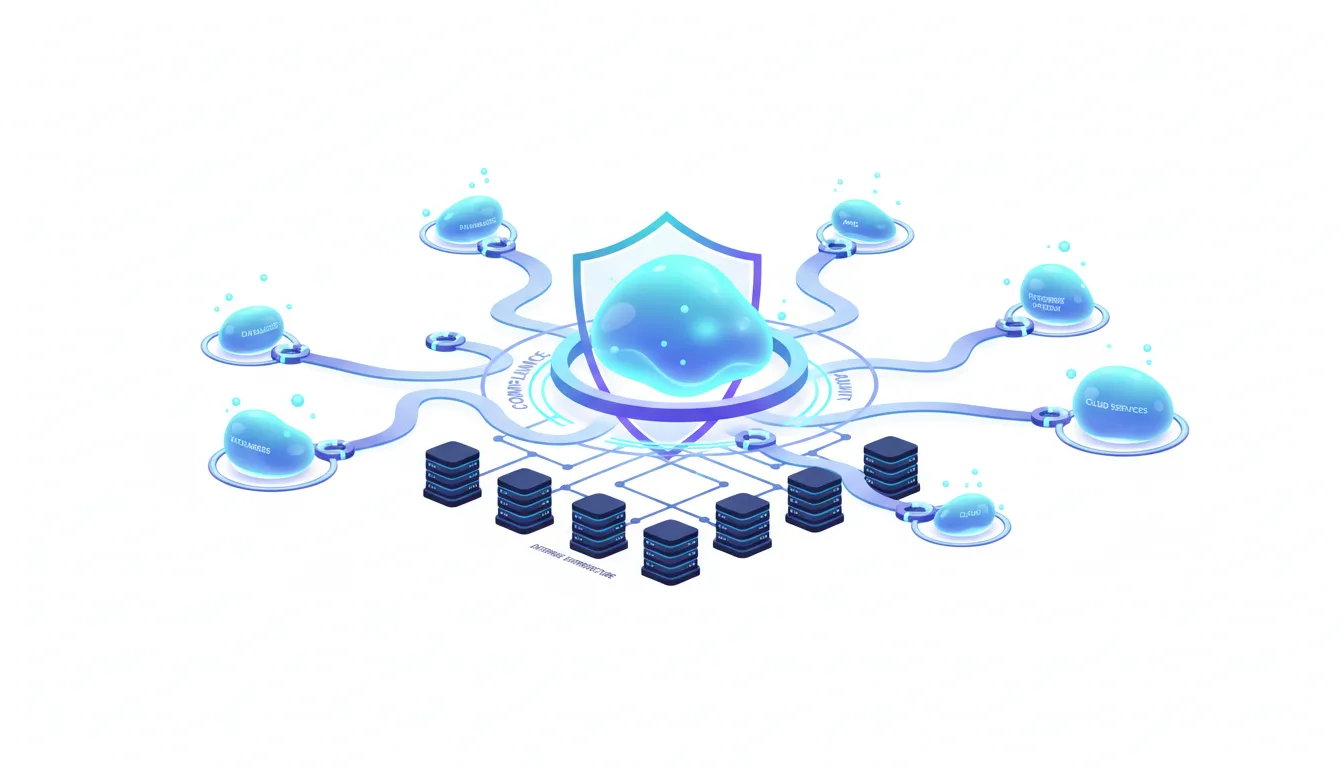
- The under-reported angle: While current launch coverage heavily focuses on local testing with tools like Claude Desktop, the real shockwave is in enterprise compliance. Standardizing on MCP creates a unified choke-point for audit logging, sandboxing, and SOC2/HIPAA compliance—solving the “black box” security nightmare of agentic AI.
🧠 Deep Dive
Ever spent weeks wrestling an LLM into your company’s internal systems only to end up with fragile, one-off connections? For the past two years, the AI infrastructure layer has suffered from acute fragmentation. Every time an enterprise wanted to connect a Large Language Model to a proprietary database or internal API, they were forced into vendor-specific paradigms. Whether it was wrangling bespoke JSON schemas or hardcoding proprietary tool-calling protocols, developers burned cycles maintaining brittle integrations. The Model Context Protocol (MCP) changes this dynamic entirely, proposing a standardized client-server architecture where AI models and data sources communicate through a unified dialect.
At its core, MCP abstracts the integration layer. It defines explicit capabilities—tools, resources, and prompts—and dictates how clients (like chat assistants or IDEs) request access from servers (which wrap external services like web search, local filesystems, or cloud databases). To achieve this, the specification leans on proven transport layers like stdio for local interactions and SSE for remote execution. The result is a decoupling of the intelligence engine (the LLM) from the action engine (the enterprise data stack).
That said, a unified protocol introduces new tensions, particularly in security and enterprise deployment. While official documentation highlights beginner-friendly tutorials, corporate IT relies on entirely different primitives. The current ecosystem chatter largely overlooks the mechanics of deploying MCP servers in air-gapped environments, mapping integrations through Virtual Private Clouds (VPCs), or generating strict threat models. From what I’ve seen, for CTOs the real value of MCP isn’t just that it works—it is that a standardized protocol allows for centralized security policies, explicitly managed consent flows, and unified audit logs across all AI agents.
Furthermore, MCP forces a subtle but profound shift in the AI competitive landscape. When proprietary tool-calling mechanisms are replaced by an open-source, version-negotiated protocol, the barrier to swapping out the underlying foundation model drops to near zero. If OpenAI, Google, and Anthropic clients all eventually speak MCP natively, enterprises will route requests dynamically based on cost and compute availability, accelerating the commoditization of the model layer itself.
Ultimately, we are witnessing the infrastructure layer of AI mature from a “build-it-yourself” frontier to a standardized stack. Just as HTTP enabled the web by standardizing document retrieval, MCP aims to enable the “Agentic Web” by standardizing how intelligence interfaces with digital environments. Plenty of reasons to pay attention here—the next race will not be about who can build the best bespoke integration, but who can deploy the most robust, compliant, and highly available fleet of MCP servers.
📊 Stakeholders & Impact
| Stakeholder / Aspect | Impact | Insight |
|---|---|---|
| AI Model Providers | High | Pushes the market toward open interoperability, reducing vendor lock-in for enterprise customers via unified tool-calling. |
| Enterprise IT & Security | High | Provides a desperately needed standard for auditing AI actions, mapping explicit permissions, and enforcing SOC2/HIPAA compliance. |
| DevOps & Infrastructure | Medium–High | Shifts workloads toward hosting, scaling, and monitoring fleets of containerized MCP servers in VPC or Kubernetes environments. |
| AI App Developers | High | Drastically reduces integration maintenance; enables “write once, connect anywhere” capabilities across multiple chat assistants and agents. |
✍️ About the analysis
Researched and written with AI assistance under the editorial responsibility of the i10X News team. The title image is an AI-generated illustration. Read our AI Use Policy. Spotted an error? Request a correction.
This independent, research-based analysis synthesizes official specification documents, developer sentiment, and open-source GitHub repositories surrounding the Model Context Protocol. It is designed for CTOs, Engineering Managers, and AI infrastructure builders navigating the transition toward standardized agentic ecosystems.
🔭 i10x Perspective
The launch of the Model Context Protocol signals a critical maturation point in AI infrastructure: the transition from walled gardens to open networks. By standardizing the “hands and eyes” of LLMs, the industry is laying the groundwork for a truly interoperable agentic economy where data, not just raw compute, drives value. Over the next 5-10 years, observers should watch whether a fierce standards war erupts, or if MCP forces major players like OpenAI and Google to fully abandon proprietary plugin ecosystems in favor of an open, extensible intelligence web.
Standardizing the “hands and eyes” of LLMs will likely be the single most consequential shift as enterprises seek interoperable, auditable, and secure ways to operationalize agentic AI.