Neural Computers — i10x Analysis
⚡ Quick Take
Have you ever wondered if AI could evolve beyond its current patchwork setup? Meta AI and KAUST researchers are proposing “Neural Computers,” a fresh AI architecture that steps away from the usual habit of slapping external memory and tools onto large language models. Instead, it weaves computation, memory, and I/O right into one seamless, learned system—think of it as a conceptual jump from DeepMind’s earlier Differentiable Neural Computers (DNCs), and a real shot across the bow at the go-to Transformer+RAG setup. From what I’ve seen in the field, this isn’t mere theory; it could sketch out the path for tomorrow’s sleeker, more independent AI agents, along with the custom hardware to power them.
Summary:
Researchers from Meta AI and King Abdullah University of Science and Technology (KAUST) have rolled out a research idea dubbed “Neural Computers.” This setup pulls computation, memory, and input/output (I/O) into a single, fully trainable model—aiming for a self-sufficient system that handles intricate reasoning and interactions without the usual crutches.
What happened:
The proposal shakes up how we think about AI structure. Rather than keeping memory—like a DNC’s external matrix or RAG’s vector database—and computation (that neural network core) as distinct pieces, this approach trains the model to handle all three—computing, accessing memory, communicating—as baked-in essentials. It’s a tidy rethink, really.
Why it matters now:
Right now, the AI world is wrestling with the shortcomings of LLMs that lean on awkward, slow links to outside tools and databases just to seem smart. A Neural Computer points to a smoother future, where AI agents fold in tough jobs like planning and tool handling internally—making them quicker, leaner, and more on their own. That said, it’s the kind of shift that could redefine efficiency in ways we’re only starting to grasp.
Who is most affected:
This hits home for AI architects and folks digging into designs beyond Transformers. On a bigger scale, it’s a wake-up call for hardware teams at NVIDIA, Intel, and those neuromorphic startups—hinting that coming AI might need chips where memory and processing melt together, dodging the old von Neumann roadblock.
The under-reported angle:
Sure, headlines might peg this as just the next wave after memory-boosted networks, but the deeper tale is how it upends the whole system blueprint. We’re not talking a lone model tweak here—it’s a push for hardware and software designed hand-in-hand, steering us toward real in-memory or neuromorphic setups that could transform the game.
🧠 Deep Dive
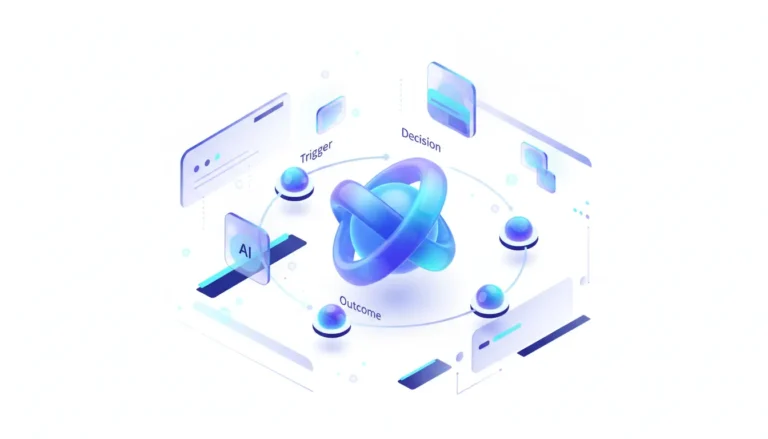
Ever feel like today’s top AI setups are a bit like a brilliant mind stuck calling out for help every few steps? The architecture behind our most cutting-edge AI is oddly disjointed. A Large Language Model sits as the main “brain,” but for any real action, it’s always reaching out—querying a vector database for facts via RAG, firing up a calculator, or hitting an API. The “Neural Computers” idea from Meta AI and KAUST researchers tackles this jumble head-on, crafting a more unified AI “organism.” At its heart, it’s one neural network that doesn’t just crunch data; it builds its own smooth, trainable internal memory and tailored I/O paths. Basically, it figures out how to act like a full computer, not merely a spotter of patterns that borrows tools.
I’ve noticed how this builds on trailblazing efforts from the past, especially DeepMind’s Differentiable Neural Computers (DNCs) and the Neural Turing Machines (NTMs) that came before. Those were game-changers, linking a neural “controller” to an external memory pool through learnable read/write mechanisms—letting the system store and pull info for things like navigating graphs. But the Neural Computer pushes boundaries by blending memory and compute into the same fabric, arguing that handling data and keeping it don’t have to stay apart, physically or in logic.
The timing feels spot-on, doesn’t it? With everyone hustling to craft sharper AI agents, the drags and fragility of the “LLM-as-controller” way are showing up more. An agent juggling several outside API hits to puzzle out a multi-step plan? It’s sluggish, prone to glitches. Internalizing memory and I/O in a Neural Computer might let it tackle chained tasks—like plotting a trip or coding something up— all in one fluid mental stream. This echoes a core AI dream: shifting from grab-and-retrieve machines to ones that truly mull things over.
Maybe the boldest ripple is for the guts of AI itself. For years, computing’s been hobbled by the von Neumann bottleneck—that split between processing (CPU/GPU) and memory (RAM) that means endless, power-hungry data hauls. The Neural Computer lays out a software blueprint for beyond-von Neumann gear. It nudges us toward neuromorphic or in-memory chips, where the work happens right amid the data. This isn’t about ramping up today’s GPUs—it’s a call for co-designing hardware around what AI really craves, reshaping the chips from the ground up. Plenty to ponder there, as the industry weighs its next moves.
📊 Stakeholders & Impact
What does this mean for the players in AI’s ecosystem? This research draws a fresh line between yesterday’s builds and tomorrow’s possibilities. Here’s a table breaking down how the Neural Computer stacks up against the reigning Transformer+RAG approach and its DNC forebear.
| Feature / Architecture | Transformer + RAG/Tools | Differentiable Neural Computer (DNC) | Neural Computer (Meta/KAUST) |
|---|---|---|---|
| Memory Locus | External & non-differentiable (Vector DB) | External & differentiable (Memory Matrix) | Internalized & Learned within the model itself |
| I/O Mechanism | External API Calls / Function Calling | Differentiable read/write heads to memory | Internalized as dedicated I/O channels |
| Architectural Model | Dis-integrated: Separate Brain + Tools | Semi-integrated: Controller + Ext. Memory | Fully Integrated: Compute, Memory, I/O are one |
| Target Application | Open-ended Q&A, Task Augmentation | Algorithmic & Reasoning Tasks | Self-contained Agentic Systems, Program Synthesis |
| Implied Hardware | Scale-up GPUs & Fast Interconnects | General-purpose Accelerators | Points toward In-Memory / Neuromorphic Computing |
✍️ About the analysis
Researched and written with AI assistance under the editorial responsibility of the i10X News team. The title image is an AI-generated illustration. Read our AI Use Policy. Spotted an error? Request a correction.
Ever sift through a paper that sparks big-picture thoughts? This piece stems from an independent i10x breakdown of the Meta AI and KAUST paper, woven with insights from DeepMind’s Differentiable Neural Computers roots and today’s AI landscape. It’s geared toward AI developers, system architects, and CTOs sizing up the architectures and hardware on the horizon—sharing the kind of notes that might shape their strategies.
🔭 i10x Perspective
Here’s the thing: the Neural Computer idea wagers on grace in design rather than sheer muscle. As the field fixates on ballooning Transformers to trillion-parameter sizes, this work poses a sharper query—what if we crafted a “wiser,” more organized mind over just a bulkier one? It stirs up real intrigue for AI’s coming years. Will the mysterious strengths of huge, straightforward models carry the day, or will something more intentional, like the Neural Computer, shine for efficient, standalone agents? Keep an eye out—not only on fresh models, but the innovative chips built to bring them alive.