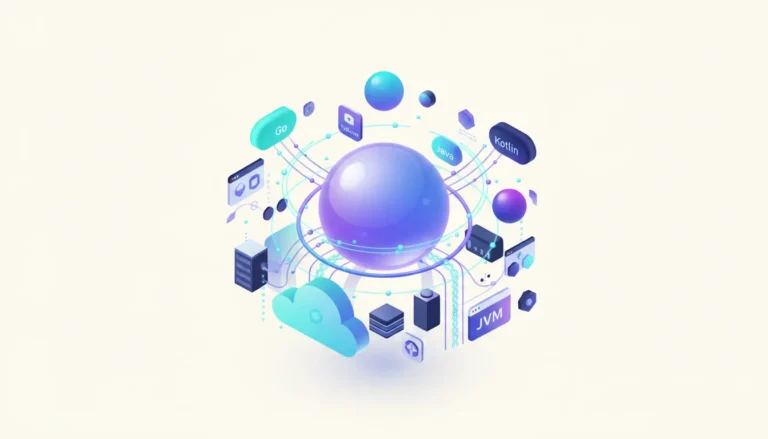
The era of the proprietary LLM monopoly is officially fracturing, giving way to an open-weight ecosystem that fundamentally alters the economics and geography of AI deployment.
Quick Take
- Summary: A wave of strong open-weight models—led by Meta’s Llama 3, Google’s Gemma, Mistral’s MoE architectures, and Microsoft’s Phi-3—is shifting the balance of power. Enterprises can now skip pricey proprietary APIs and run their own fine-tuned versions, often at the edge.
- What happened: In recent months, both big tech and smaller AI labs have released state-of-the-art models under open-weight licenses. At the same time, inference tools like vLLM have matured quickly, and platforms such as Hugging Face and Together AI have made hosting far simpler.
- Why it matters now: Base intelligence is turning into a commodity. Inference costs keep dropping, on-device deployments are becoming realistic, and hyperscalers must defend margins they once took for granted.
Who is most affected
- Enterprise CTOs and ML teams now optimizing for total cost of ownership and deployment flexibility.
- Cloud giants watching their managed services lose ground to self-hosted stacks and edge deployments.
- Infrastructure vendors racing to supply secure hosting layers, alternative chips, and specialized runtimes.
The under-reported angle
Plenty of “open” claims are really openwashing. Most releases are open-weight only; the training data and full code stay closed. That leaves a thicket of licenses—Apache 2.0 here, restricted commercial terms there—that compliance teams are still sorting out.
Deep Dive
The conversation around open models has moved past purity tests and into hard economics. Meta’s Llama 3, Mistral’s Mixtral 8x7B, and Google’s Gemma are no longer experiments; they are production engines that undercut the pricing power of closed offerings from OpenAI and Anthropic. What we’re seeing is the commoditization of the base LLM, so competition now hinges on inference speed, integration ease, and supporting tools rather than raw capability alone.
That change is driving real infrastructure deflation. When teams can run quantized open-weight models on Together AI or through Hugging Face stacks, the old hyperscaler lock-in starts to loosen. The TCO math flips. For many retrieval-augmented generation (RAG) or data-extraction workloads, paying per token to a closed API simply stops making sense next to a fine-tuned smaller model on owned GPUs.
At the same time, edge and Sovereign AI are gaining real traction. Models like Microsoft’s Phi-3 are built as small language models meant for local hardware. That matters for latency-sensitive work and for sectors under strict data-residency rules—European public services, healthcare, finance. Running these models on-premise gives organizations a path to “Sovereign AI” without third-party exposure.
Yet the picture isn’t clean. The same hyperscalers releasing Phi-3 and Gemma are still pouring money into closed systems. Their support for open weights looks less like generosity and more like a hedge: keep developers inside their clouds while they also sell the GPUs those “free” models need.
One governance gap keeps getting overlooked. Because most releases are open-weight rather than fully open-source, teams inherit hidden risks around IP, prompt injection, and license drift. Moving between Apache 2.0 terms and Meta’s conditional limits is turning into an unexpected operational cost.
Stakeholders & Impact
| Stakeholder / Aspect | Impact | Insight |
|---|---|---|
| AI / LLM Providers | High | Proprietary API margins face real pressure as “good enough” open models take routine workloads. |
| Infrastructure & Utilities | High | Demand rises for alternative clouds, local chips, and runtimes such as vLLM or TensorRT. |
| Enterprise CTOs & Devs | High | TCO drops and vendor lock-in fades, though internal teams must now handle fine-tuning, security, and deployment themselves. |
| Regulators & Policy | Significant | Governance frameworks struggle when capable models can sit on a laptop, complicating IP, copyright, and safety oversight. |
About the analysis
Researched and written with AI assistance under the editorial responsibility of the i10X News team. The title image is an AI-generated illustration. Read our AI Use Policy. Spotted an error? Request a correction.
This independent analysis draws together recent model releases, hyperscaler positioning, and developer-ecosystem signals to give CTOs, engineers, and infrastructure leads a clearer view of the move toward decentralized AI.
i10x Perspective
From what I’ve seen, the flood of open-weight models means the base LLM will soon be treated like basic infrastructure—closer to Linux than to a proprietary crown jewel. Over the next five years the real advantages will sit in proprietary data, efficient silicon, and orchestration layers rather than the model weights themselves. The tension worth watching is between regulators trying to enforce centralized rules and an ecosystem that is rapidly decentralizing onto edge devices; once capable models run locally everywhere, centralized control over safety or copyright becomes far harder to maintain.