Summary
Have you wondered how AI could finally tackle the endless grind of security alerts? OpenAI just launched the Daybreak Initiative—a fresh cybersecurity program powered by Codex Security. It weaves LLMs right into enterprise defenses, automating vulnerability triage and patch validation in ways that feel like a game-changer.
- What happened: They’ve paired their advanced models with third-party security setups—think SIEM, EDR, and CI/CD tools—to create a system that spots high-priority software flaws and then, crucially, generates and runs tests on its own to confirm a patch actually holds up.
- Why it matters now: With the enterprise AI race moving from basic copilots to these specialized, do-it-all agents, Daybreak zeros in on a real pain point in software dev: that Mean Time to Repair (MTTR) for critical vulnerabilities. It’s nudging LLMs even deeper into the heart of mission-critical infrastructure.
- Who is most affected: CISOs and DevSecOps engineers buried under alert fatigue, SOC teams gasping for air, and even the big players like Microsoft and Google scrapping over the same workflow territory.
- The under-reported angle: Everyone’s buzzing about AI hunting exploits, but – from what I’ve seen in these early days – Daybreak’s real edge lies in its validation engine. It uses LLM smarts to set up test environments and verify a fix is solid, without wrecking the rest of the build.
Deep Dive
Ever feel like the software supply chain is stacked against you – scanners spitting out thousands of CVEs in a flash, but your team grinding weeks on false positives and patches? The Daybreak Initiative steps in to even the odds. OpenAI’s placing its Codex Security models smack in the middle of the defensive stack, shifting LLMs from code-spitters to active guardians.
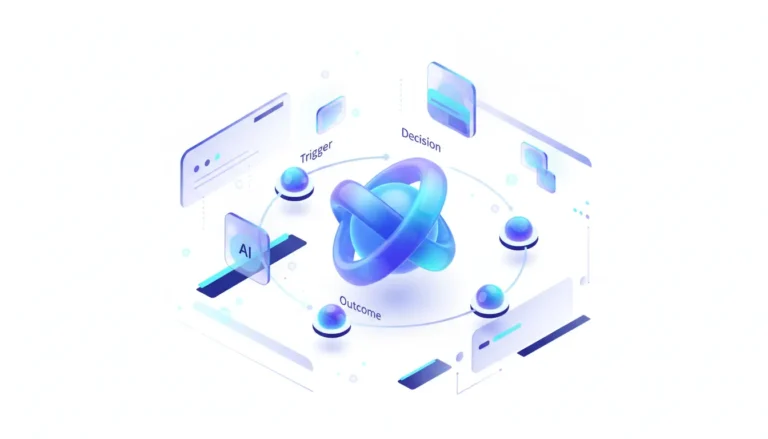
It runs a clean two-step pipeline. Step one: smart filtering. No more flooding SOCs with raw alerts – the model weighs the vulnerability’s context to flag the real threats. Step two: patch validation. A fix comes in? Daybreak spins up tailored test cases, runs them, and checks if the vuln’s gone without side effects elsewhere in the code. That bridges SAST tools and real-time defense nicely, doesn’t it?
Here’s the smart play – OpenAI isn’t out to swap your security stack. They’re aiming to power it. API hooks for CI/CD staples like GitHub Actions and Jenkins, plus major SIEMs, let Daybreak slip into workflows seamlessly. This takes a direct swing at Google’s Sec-PaLM and Microsoft’s Security Copilot, telling enterprises: why lock into one cloud’s extras when you can bolt top-tier LLM reasoning onto what you’ve got?
That said, plugging autonomous LLMs into security stirs up real friction – and rightly so. Analysts flag hallucinations and data leaks as huge risks. When the model’s poking at your proprietary code, you need ironclad privacy: VPCs, on-prem options, the works. CISOs won’t sweat if the AI spots the bug; it’ll be about trust – does its logic square with NIST SSDF or SOC 2, without slurping your code for training?
In the end – and I’ve noticed this shift picking up steam – Daybreak marks AI’s growing up. We’re moving from chatty bots to multi-agent setups handling high-stakes tasks inside enterprise nets. Nail precision, recall against human benchmarks, plus data hygiene? OpenAI could flip software defense economics – making full, ongoing validation practical at last, plenty of reasons to watch closely.
Stakeholders & Impact
| Stakeholder / Aspect | Impact | Insight |
|---|---|---|
| AI / LLM Providers | High | Escalates the enterprise AI arms race, directly pitting OpenAI against Microsoft Security Copilot and Google Sec-PaLM. |
| Enterprise DevSecOps & CISOs | High | Transforms workflows by shifting labor from manual CVE triage to overseeing AI-generated patch validation. |
| Security Tool Vendors | Medium–High | Forces legacy SIEM/EDR providers to integrate natively with LLM reasoning layers to avoid becoming obsolete data-pipes. |
| Regulators & Compliance | Significant | Raises new auditing questions: How do you certify an AI agent’s autonomous patch under strict frameworks like NIS2 or PCI DSS? |
About the analysis
Researched and written with AI assistance under the editorial responsibility of the i10X News team. The title image is an AI-generated illustration. Read our AI Use Policy. Spotted an error? Request a correction.
This independent analysis pulls from official product specs, initial market buzz, and cybersecurity insiders’ takes. Tailored for CTOs, CISOs, and AI architects wrestling where gen AI meets DevSecOps pipelines – straightforward, no fluff.
i10x Perspective
Daybreak’s a telltale sign: LLM battles next head to autonomous enterprise defense. Past text and code gen, into live validation – OpenAI’s prepping “policy-as-agent” setups. But the rub for years ahead? Zero-trust clashing with AI autonomy. How fast will teams greenlight an LLM fix over human eyes, when prod’s hanging in the balance? Worth pondering.