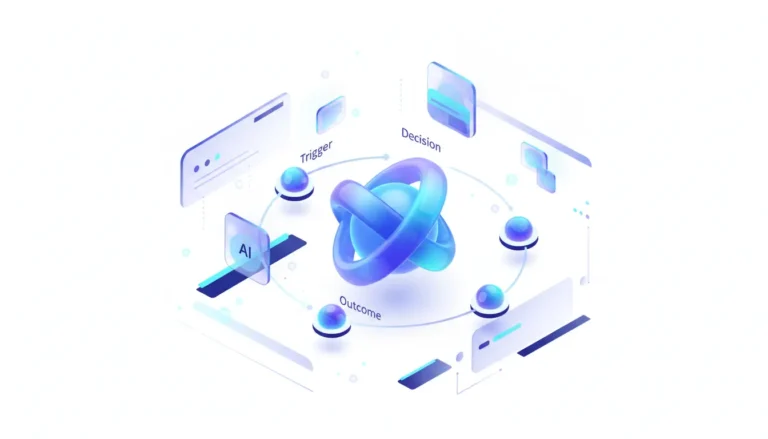
OpenAI’s launch of GPT-5.2-Codex signals a major pivot from AI as a pair programmer to AI as an autonomous engineering agent. While the model’s ability to plan and execute complex, repo-wide tasks promises to accelerate software development, it also introduces a new class of operational, security, and financial risks that enterprises are unprepared to manage.
Quick Take
- Summary: OpenAI has released GPT-5.2-Codex, a highly specialized, agentic version of its GPT-5.2 model designed for professional software engineering and defensive cybersecurity. It’s built to tackle large, complex codebases—going beyond basic code generation to handle multi-step refactoring and analysis tasks that feel almost human in their scope.
- What happened: Have you ever wondered what it would take for an AI to truly grasp an entire codebase? Unlike general-purpose models, GPT-5.2-Codex uses context compaction and advanced tool use to create a mental map of whole repositories. That means it can plan and carry out large-scale changes, sort through tangled dependencies, and automate jobs that used to eat up hours of a developer’s time. It’s rolling out now to paying ChatGPT users, with API access on the horizon.
- Why it matters now: This isn’t just an upgrade—it’s a turning point in how AI fits into the software development lifecycle (SDLC). We’re seeing the shift from AI-assisted coding, like quick completions or function snippets, to AI-driven engineering: think autonomous refactoring, seamless CI/CD integration, even patching security vulnerabilities on the fly. And with strong results on benchmarks like SWE-Bench Pro, it’s clear this could upend workflows in ways teams haven’t fully anticipated yet.
- Who is most affected: Engineering managers, CTOs, and CISOs—they’re the ones feeling the immediate pressure. No longer is it enough to measure simple productivity gains; now they have to grapple with overseeing a potent agent that’s poking around their company’s crown jewels: the source code. For developers, it’s a pivot too—from hands-on coding to more of a directing role, prompting, reviewing, and guiding these AI agents.
- The under-reported angle: Sure, the hype around benchmarks and announcements is everywhere, but from what I’ve seen in the trenches, the real story is about readiness. The web’s short on practical advice right now—guides for migration, ways to govern costs in agentic workflows, security patterns for CI/CD, and compliance setups like SOC2 or ISO to deploy these safely in production. Plenty of reasons to tread carefully there, really.
Deep Dive
Ever feel like AI has been teasing us with big promises, but stumbling on the messy reality of real codebases? OpenAI’s GPT-5.2-Codex changes that—it’s no mere update, but a deliberate push to plant AI right at the heart of the engineering stack as an autonomous player. Positioned as an “agentic coding model,” it zeros in on the big frustration with LLMs in software: struggling to reason across sprawling, linked-up projects. With “context compaction” and tools tuned for repositories, Codex aims to get the full picture of a project’s architecture, sketch out changes spanning multiple files, and actually implement them. Tasks that have clung to human hands for so long? They’re finally in reach.
You can see this jump echoed in OpenAI’s System Card and the buzz from developers. They highlight top scores on tough tests like SWE-Bench Pro and Terminal-Bench 2.0, but if you dig into forums like Hacker News, it’s the everyday stuff that stands out: latency in real scenarios, whether it’s cost-effective for big refactors, and those pesky failure points that could trip things up. The takeaway? The potential is huge—immense, even—but taming it calls for fresh skills in orchestrating agents and double-checking their work.
For leaders in enterprises, though, this brings a governance headache that’s hard to ignore. Tech stories fixate on the features, but our research points to the gaps in execution—the “how” that’s still fuzzy. CTOs and CISOs are hungry for playbooks that aren’t there yet: How do you weave this into a CI/CD pipeline without handing over commit keys willy-nilly? What safeguards keep its “defensive cybersecurity” features from opening backdoors? And how about modeling the finances—FinOps style—for an agent that could burn through token costs refactoring one service? These pieces are what turn a flashy tool into something you can trust in production.
In the end, GPT-5.2-Codex lands every engineering team at a crossroads: cling to versatile models like the base GPT-5.2 for safer, everyday tasks, or lean into the specialized muscle of Codex—with its rewards and risks? But here’s the thing—it’s bigger than API choices. It’s reshaping what developers do, recalibrating how much risk we’re willing to take, and bulking up operations to handle a team that now counts AI agents as members. A reflective spot to pause, no doubt.
Stakeholders & Impact
| Stakeholder / Aspect | Impact | Insight |
|---|---|---|
| AI / LLM Providers (OpenAI) | High | This carves out a fresh category for premium, tailored agentic models—building a real edge that goes past raw smarts in benchmarks. It’s all about weaving into enterprise flows, vertically and deeply. |
| Developers & Eng. Teams | High | The role flips: less “writing code” and more “steering and scrutinizing AI agents.” That sparks need for skills like prompt crafting, agent-tool design, and beefed-up testing to catch AI slip-ups—plenty to learn there. |
| CTOs / CISOs | Significant | Dropping in a potent, somewhat mysterious agent shakes up the SDLC—calling for fresh setups around risk, compliance (think code tracking, SOC2), and budgeting AI costs (FinOps). Governing that independence? That’s the tough nut. |
| DevTool & CI/CD Ecosystem | Medium | Opens doors for tools zeroed on watching AI agents, securing them, and ruling them. Big players like GitHub, GitLab, JetBrains—they’ll have to evolve to bake in support for these agent-driven ways. |
About the analysis
Researched and written with AI assistance under the editorial responsibility of the i10X News team. The title image is an AI-generated illustration. Read our AI Use Policy. Spotted an error? Request a correction.
This piece draws from an independent i10x breakdown—pulling from OpenAI’s product docs, the system safety card, plus a roundup of news bites and dev chats. It’s crafted with engineering managers, CTOs, and tech leads in mind, the folks weighing how to fold cutting-edge AI into their software development lifecycle.
i10x Perspective
What if GPT-5.2-Codex isn’t just a model, but the sketch for software’s next ten years—AI as a true teammate, not some side gadget? It resets the AI contest: less about the smartest all-rounder, and more about delivering controllable, dependable, workflow-savvy specialized agents.
The chatter won’t stick to scores anymore—it’ll turn to governing at enterprise scale. Rivals like Google, Anthropic, and upstarts will need to show not only the agent smarts, but the whole kit: monitoring, security, compliance tools to wrangle it all.
That said, the big question lingers—can we rig up safeguards fast enough as AI grabs more reins? We’re passing the wheel on our vital digital backbone to these agents; the real test will be holding onto the map.