Quick Take
- Summary: Platform engineering has emerged as the definitive enterprise antidote to developer burnout, but the rapid influx of generative AI is forcing this discipline to pivot toward LLM-ready Internal Developer Platforms (IDPs).
- What happened: While tech giants like Microsoft, IBM, and Gartner are formalizing platform engineering as the successor to chaotic DevOps, a critical operational gap is forming around how to build “golden paths” specifically for AI and LLM integrations.
- Why it matters now: As enterprises rush to scale AI applications, the cognitive load on developers is skyrocketing—they now have to manage vector databases, token cost routing, prompt versioning, and model guardrails. Legacy deployment pipelines simply cannot handle these new intelligence workloads.
- Who is most affected: Platform engineering teams, enterprise CTOs, and AI application developers who are transitioning from building standard microservices to maintaining complex, unpredictable AI infrastructure.
- The under-reported angle: The true test of a modern Internal Developer Platform is no longer just how fast it can deploy a Kubernetes cluster, but whether it can govern, observe, and secure LLM workloads without suffocating developer velocity.
Deep Dive
Have you ever watched a team chase the promise of “you build it, you run it” only to watch burnout spread like a slow leak? For the past decade, the software industry championed that DevOps mentality. But as the current tech landscape shows—echoed by guidance from Gartner, Red Hat, and Atlassian—this approach has pushed developer cognitive load past the breaking point. Enter platform engineering: the discipline of treating internal infrastructure as a product. By building Internal Developer Platforms (IDPs), organizations abstract away the messy realities of infrastructure-as-code, offering developers self-service “golden paths” to production.
That said, standard web applications are no longer the primary bottleneck. The explosion of generative AI has fundamentally altered the infrastructure equation. Developers are suddenly tasked with integrating foundation models, managing RAG (Retrieval-Augmented Generation) pipelines, deploying vector databases, and ensuring AI safety guardrails. Without a structured platform engineering approach, teams are forced into ad-hoc scripting, leading to fragmented AI toolchains, invisible cloud spend, and massive security vulnerabilities.
The market coverage from enterprise vendors heavily emphasizes standardizing hybrid cloud environments, governance, and CI/CD pipelines. Yet a massive gap exists around AI Platform Engineering. A modern platform orchestrator (like those championed by Humanitec or Microsoft) must now account for LLM lifecycle management. This means injecting policy-as-code to prevent sensitive data from leaking into public model APIs, and embedding FinOps directly into developer workflows to catch a runaway automated prompt before it generates a $50,000 weekend token bill.
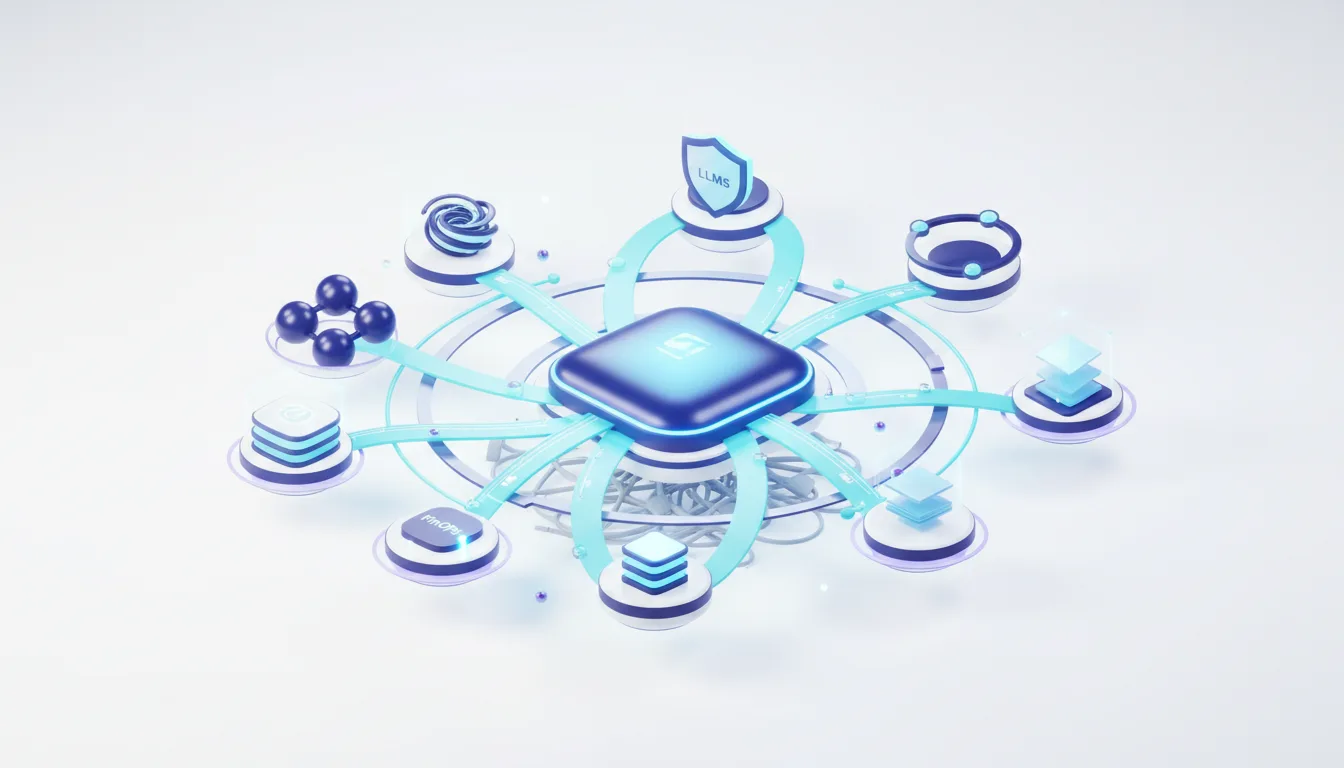
This creates a distinct tension between developer velocity and enterprise control. Developers want frictionless access to the latest Gemini, Claude, or OpenAI endpoints. Security and finance teams demand strict observability and cost control. Platform engineering resolves this by offering LLM capabilities as a self-service module within the IDP. When a developer needs AI, they don’t hunt for API keys; they request an “AI service template” that comes pre-configured with the company’s chosen model routing, telemetry, and rate limits.
From what I’ve seen, the transition from fragmented DevOps to platform engineering is merely a prerequisite for the AI era. You cannot securely scale enterprise intelligence on broken deployment infrastructure. The companies that win the next decade won’t just be those with the best AI models, but those whose internal platforms make building AI applications as boring and reliable as deploying a static webpage.
Stakeholders & Impact
| Stakeholder / Aspect | Impact | Insight |
|---|---|---|
| Platform Engineering Teams | High | Must expand IDP architectures to include AI scaffolding, vector DB provisioning, and LLM telemetry. |
| AI / App Developers | High | Massively reduced cognitive load. Developers can build AI apps using pre-approved “golden paths” instead of fighting infrastructure. |
| Enterprise FinOps & Security | Significant | Gains centralized control over decentralized AI experimentation. API costs and data governance are enforced by the platform itself. |
| Cloud & Tooling Vendors (Microsoft, Atlassian, IBM) | High | A massive commercial opportunity to sell “AI-ready” platform capabilities and orchestrators to overwhelmed IT departments. |
About the analysis
Researched and written with AI assistance under the editorial responsibility of the i10X News team. The title image is an AI-generated illustration. Read our AI Use Policy. Spotted an error? Request a correction.
This independent analysis synthesizes current market definitions, analyst frameworks, and vendor architectures regarding platform engineering, pivoting the data to reveal its critical intersection with AI deployment. It is designed for CTOs, platform architects, and engineering leaders who are building the infrastructure required to support generative AI workloads safely and efficiently at scale.
i10x Perspective
The evolution of platform engineering signals that the bottleneck in AI is shifting from the foundation models themselves to the enterprise infrastructure required to harness them. Over the next five years, the concept of the Internal Developer Platform will evolve into an “Intelligence Delivery Platform.” We expect a fierce arms race among cloud providers and specialized DevOps startups to provide the definitive toolchain for governing AI access. Ultimately, the organizations that fail to treat their AI infrastructure as a tightly managed, self-service product will find their AI initiatives choked by soaring costs, security breaches, and paralyzed engineering teams. The companies that win the next decade will be those whose internal platforms make building AI applications as boring and reliable as deploying a static webpage.