The Rise of MCP and Offline-First Local AI Agents
⚡ Quick Take
The open-source AI ecosystem is rapidly standardizing around the Model Context Protocol (MCP), with a surge of developers combining FastMCP, LangChain v1, and localized models like Alibaba’s Qwen to build independent, offline-first AI agents.
Summary: The AI developer community is shifting from proprietary API endpoints to sovereign, local environments by linking the Anthropic-designed Model Context Protocol (MCP) with tools like FastMCP, Ollama, and LangChain v1.
What happened: Technical guides and developer frameworks are proliferating to make MCP implementations lightweight and accessible, allowing engineering teams to run powerful local LLMs (like Qwen) connected seamlessly to custom local tools. From what I’ve seen, this move feels less like hype and more like a practical response to mounting concerns over data control.
Why it matters now: MCP is effectively becoming the “USB-C” of AI integrations, attempting to standardize how models interface with data safely. Evolving past walled gardens like OpenAI function calling, this stack proves that high-performance agentic workflows can run entirely at the edge without sacrificing context or capability.
Who is most affected: AI application developers, enterprise CTOs seeking offline deployment models, and infrastructure providers building the next generation of local inference servers.
The under-reported angle: While basic “hello world” tutorials are flooding the market, the critical missing links for enterprise adoption are security authorization models, observability (like tracing agent logic), and robust deployment structures (Dockerizing MCP endpoints) for production environments. That gap, if left unaddressed, could slow real-world traction more than most expect.
🧠 Deep Dive
Have you ever built a promising local agent only to realize the security questions multiply the moment it touches real data? The architecture for AI agents is undergoing a quiet but radical decentralization. A new wave of developer tooling has emerged around the Model Context Protocol (MCP) – originally introduced by Anthropic – aiming to unify how large language models interact with external data and tools. Armed with Python frameworks like FastMCP, orchestration layers like LangChain v1, and local inference engines like Ollama, developers are sidestepping cloud-tethered architectures to run sophisticated models, such as Alibaba’s Qwen, entirely locally.
Official documentation and popular tutorials still lean heavily on quickstart guides and simple tool definitions. Yet they tend to gloss over the day-two friction. Exposing local filesystems or databases to an LLM via a FastMCP server works impressively well in demos, but it quickly becomes risky without a strict security and permissions model. The current discussion still lacks standardized approaches to authentication, token scopes, and sandboxing – leaving room for security-first MCP microservice architectures to fill the void.
The distance between a local script and a production-grade node remains wide. Most guides stop at localhost. Looking ahead, though, the direction points toward MCP servers deployed through Dockerized containers across local networks, secured with mTLS for microservice communication. It’s not merely about pulling Qwen with one command; it’s about handling concurrency, streaming, and cancellation when local hardware reaches its limits.
From an infrastructure perspective, this stack collides directly with proprietary ecosystems. An agent built in LangChain can already swap between Claude 3.5 Sonnet in the cloud and a quantized Qwen 2.5 on a local workstation using the same MCP schema. When that flexibility becomes standard, the pull of proprietary function-calling frameworks weakens considerably.
To move beyond hobbyist experiments, the ecosystem needs stronger observability tooling. Future deployments will call for end-to-end testing harnesses built around MCP tool contracts, plus performance benchmarks that compare how local LLMs manage complex schema resolutions against cloud frontier models.
📊 Stakeholders & Impact
| Stakeholder / Aspect | Impact | Insight |
|---|---|---|
| AI / LLM Providers | High | Standardized tool schemas commoditize model integration, reducing friction for developers to swap between proprietary and open-weight models. |
| Developer Ecosystem (LangChain, etc.) | High | Cementing MCP as a baseline standard forces orchestration platforms to rethink their tool abstractions and agent architectures. |
| Enterprise / CTOs | Medium–High | Enables highly secure, offline-first agentic deployments that never transmit sensitive corporate data over public APIs. |
| Infra & Cloud Edge | Significant | Increased demand for performant local inference hardware and distributed edge containerization to support standalone MCP environments. |
✍️ About the analysis
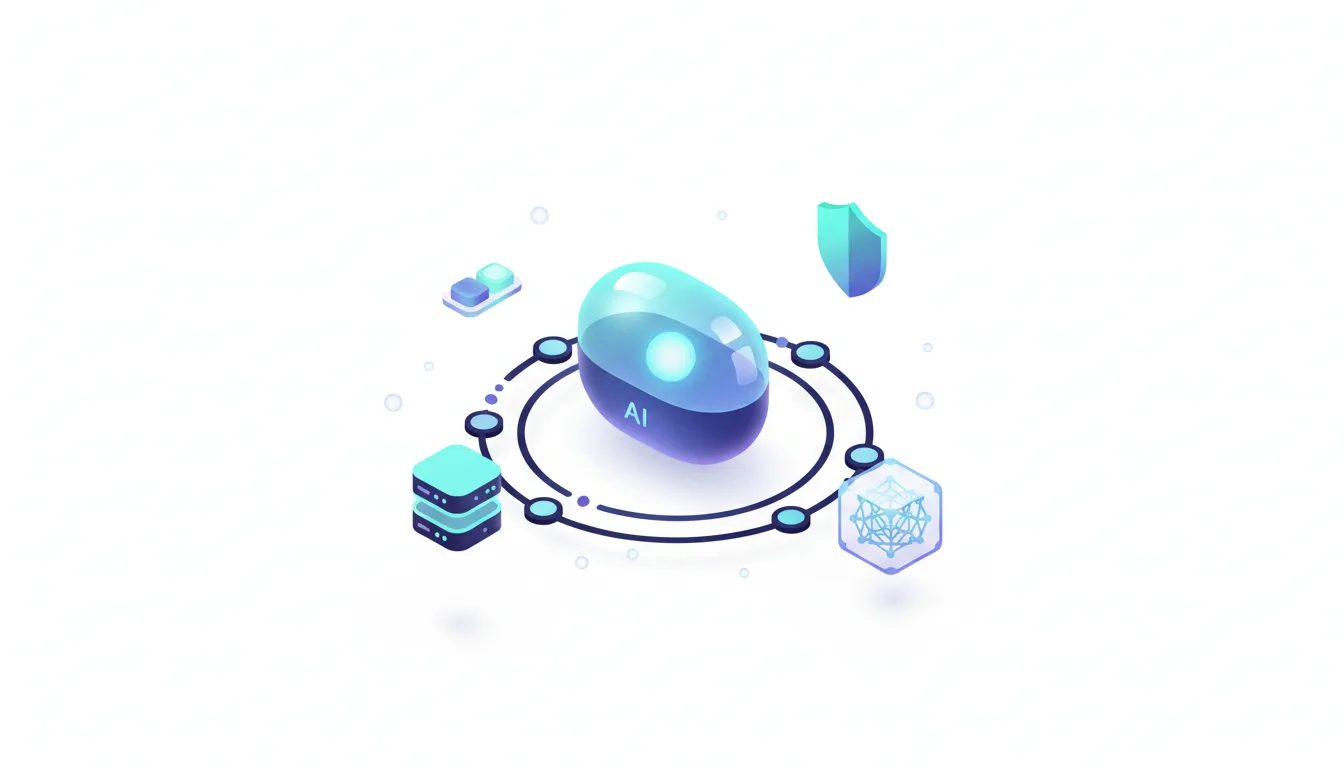
Researched and written with AI assistance under the editorial responsibility of the i10X News team. The title image is an AI-generated illustration. Read our AI Use Policy. Spotted an error? Request a correction.
This analysis synthesizes technical documentation, open-source repositories (FastMCP, Ollama, LangChain), and developer tutorials to map the emerging local agent architecture. It is designed for AI engineers, CTOs, and product leaders tracking the transition from cloud-dependent tool calling to standardized, offline-first intelligence infrastructures.
🔭 i10x Perspective
The rapid adoption of FastMCP and local models points to a broader decoupling of the “brain” (the LLM) from the “hands” (the tools it interacts with). Should the Model Context Protocol reach widespread standardization, the AI landscape shifts from vertical monopolies toward horizontal interoperability. Competitive advantages would then move away from model endpoints and toward the surrounding tool ecosystems. Over the next five years, the critical question becomes how cloud providers will respond – or attempt to absorb – this decentralized, offline-first grid.