Quick Take
- Summary: Samsung Group has committed $1 billion to Helix Digital Infrastructure, a KKR-backed platform aimed at funding the physical backbone of the global artificial intelligence boom.
- What happened: Samsung Electronics is putting up $500 million, while five of its affiliates—including its construction, battery, and insurance arms—are pooling another $500 million into Helix, joining a consortium built to finance heavy AI infrastructure.
- Why it matters now: The primary bottleneck for AI and LLMs has shifted from GPU availability to sheer physical infrastructure, namely power grids, fiber optics, and massive data centers. Hyperscalers need patient, long-duration capital to build this layer, pulling in private equity, sovereign wealth, and hardware giants like Samsung to foot the bill.
- Who is most affected: Hyperscalers seeking infrastructure financing, private equity firms establishing new asset classes, and AI developers whose future scaling laws depend entirely on the success of these megaprojects.
- The under-reported angle: Samsung is actively hedging its AI bets. By investing as a multi-disciplinary conglomerate—bringing in Samsung C&T (construction), SDI (energy/batteries), and SDS (IT services)—it is pivoting from just supplying AI chips to actively building, powering, and servicing the physical AI supply chain.
Deep Dive
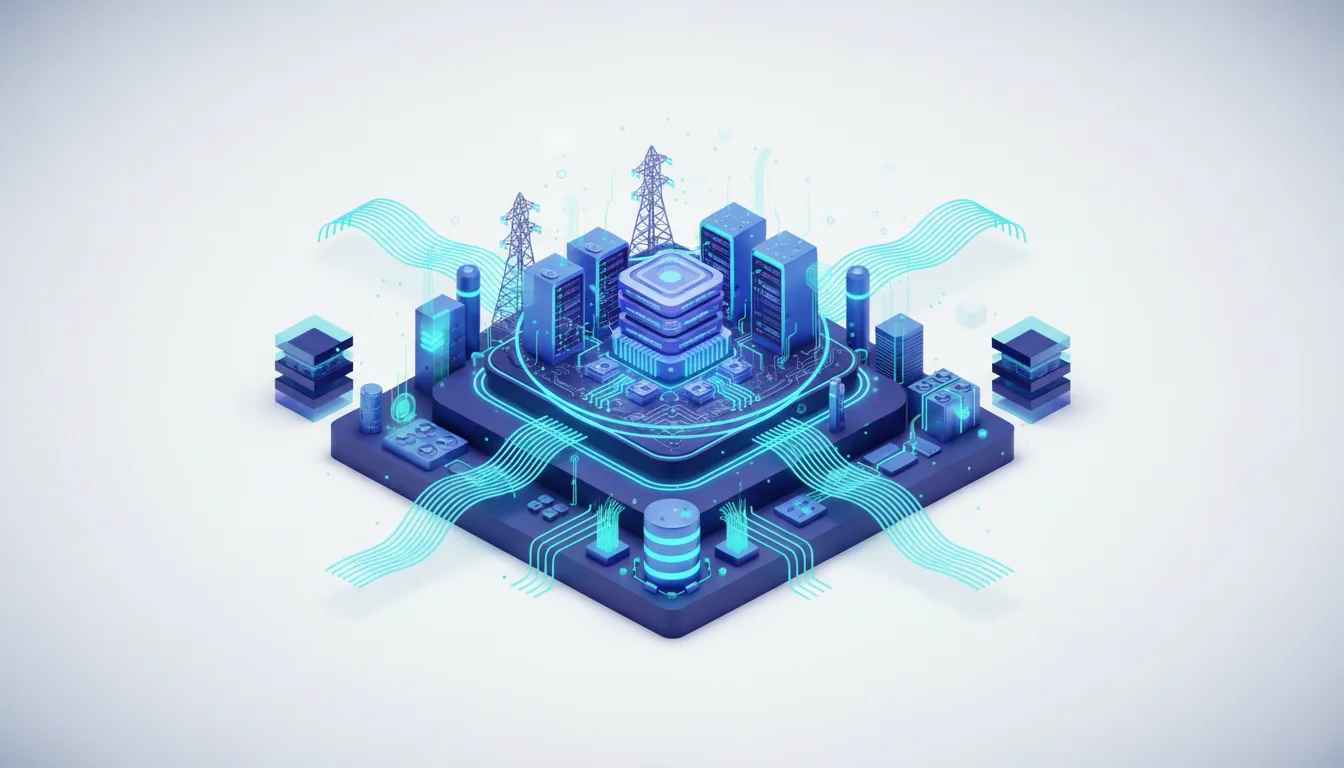
Have you ever wondered why the headlines keep circling back to data centers and power lines rather than the models themselves? The LLM scaling laws have hit a physical wall. To train and serve the next generation of frontier AI models, hyperscalers don’t just need millions of GPUs; they need gigawatt-scale data centers, modernized power transmission lines, and sprawling fiber-optic networks. Enter Helix Digital Infrastructure, a bespoke company established by private equity giant KKR, designed specifically to inject long-duration capital into this exact physical stack.
While official corporate announcements from Samsung heavily push the narrative of generic affiliate synergies, the breakdown of its $1 billion commitment reveals a highly sophisticated infrastructure play. Samsung Electronics is providing half the capital, but the remaining $500 million comes from a strategic alliance of its construction arm (Samsung C&T), battery and energy division (Samsung SDI), IT services (Samsung SDS), and even its life and marine insurance divisions. This isn’t just a financial venture; it is an operational deployment. Samsung is positioning itself to build, power, secure, and insure the AI data centers of tomorrow.
From KKR’s vantage point, the narrative is about hyperscaler exhaustion. Tech giants are bleeding capital to keep up with AI compute demands, and they cannot finance the entire global energy and physical buildout alone. Helix—reportedly led by a former AWS executive and backed by other heavyweights like Nvidia, Vistra, and the Kuwait Investment Authority—acts as an off-balance-sheet release valve. It provides the massive, patient capital required to build the energy and optical ecosystems that cloud providers desperately need to host their LLMs.
Mainstream financial coverage often treats this as a standard corporate venture deal, missing the underlying asset class shift. We are witnessing the total financialization of the “AI infrastructure stack.” Power generation, transmission distribution, liquid cooling systems, and dark fiber are now viewed as a singular, highly lucrative asset category by Wall Street and private equity. Helix is a pure-play bet that the defining constraint of the AI era is energy and real estate, not just silicon, and Samsung is making sure it owns a piece of the foundation.
Stakeholders & Impact
AI / LLM Providers
Impact: High
Insight: Secures the physical layer (data centers, power, fiber) strictly required to train and deploy next-generation, trillion-parameter models.
Private Equity & Finance
Impact: High
Insight: Signals a massive market shift toward “long-duration capital,” treating AI physical infrastructure as a premium, standalone alternative asset class.
Hyperscalers (AWS, MSFT, Google)
Impact: Significant
Insight: Provides a crucial off-balance-sheet funding mechanism to build gigawatt-scale facilities without crushing their own operational margins.
Hardware & Tech Conglomerates
Impact: Medium–High
Insight: Validates the strategy of expanding beyond semiconductor fabrication into real estate, energy storage, and construction for the AI boom.
About the analysis
Researched and written with AI assistance under the editorial responsibility of the i10X News team. The title image is an AI-generated illustration. Read our AI Use Policy. Spotted an error? Request a correction.
This is an independent, research-based analysis synthesizing corporate disclosures, private equity framing, and syndicated financial reporting on the Samsung–Helix transaction. It is designed for CTOs, enterprise leaders, and AI infrastructure planners tracking the physical and financial constraints of global model scaling.
i10x Perspective
Samsung’s $1 billion buy-in to Helix is a flashing indicator that the AI race has officially left the software lab and entered the dirt. The next five years of AI supremacy will not be dictated solely by who has the most efficient algorithm, but by who has the capital to secure power grids, cool server racks, and lay fiber at a planetary scale. From what I’ve seen tracking these infrastructure moves, private equity and hardware giants are locking up the physical constraints of intelligence. Observers should watch for the next wave of monopolistic bottlenecks—not in model weights, but in transmission lines and cooling towers.