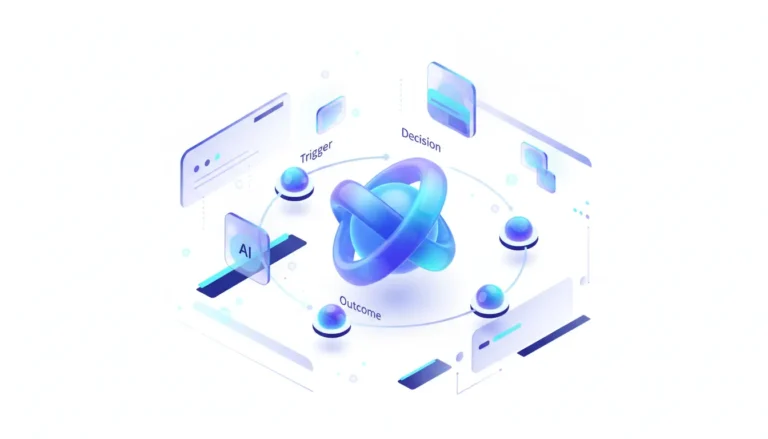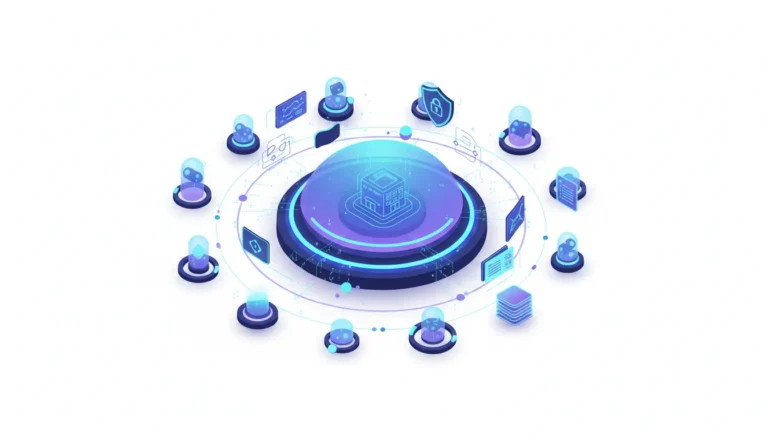
“The bottleneck to autonomous AI isn’t reasoning—it’s risk. Human-in-the-loop is dead at scale; the era of zero-trust, policy-driven AI agents has arrived.”
Quick Take
- Summary: As enterprises push autonomous AI beyond chatbots into read-write agents, the old reliance on human-in-the-loop approvals is buckling. The shift is toward automated runtime policies and tighter agent sandboxing.
- What happened: Cloud providers and security groups—Google Vertex, Microsoft Azure, OWASP, MITRE among them—have all stepped up guidance on AI agent security. Basic prompt engineering, they now admit, won’t stop tool misuse or data leaks once these systems reach production.
- Why it matters now: Agentic AI marks the next real step in enterprise LLM use. Models stop being passive text generators and start acting as digital workers. Miss the egress controls, capability limits, and dynamic risk scoring, and multi-agent setups will stall under enterprise risk concerns.
- Who is most affected: CISOs, AI platform leads, and security architects who now have to design containment strategies and zero-trust boundaries for models that can act on their own.
- The under-reported angle: While attention stays on prompt injection, the deeper gap is the absence of standardized runtime policy engines (think OPA/Rego) and supply-chain checks for the third-party tools agents suddenly get to call.
Deep Dive
Have you ever watched a promising pilot stall the moment it leaves the lab? That’s the pattern emerging as conversational LLMs give way to agentic systems. The attack surface changes completely. We move from models that talk to models that act—granted API keys, database rights, even email access. The old safety net of human review simply cannot keep pace with high-frequency, autonomous workflows. The real constraint now is trust, not compute or model smarts.
The market response still feels scattered. Hyperscalers are tightening infrastructure—VPC controls, private links, managed identities—while frontier labs focus on dry runs and guardrails at the API layer. Standards bodies like OWASP and MITRE ATLAS are cataloging new threat types such as excessive agency. Yet the missing piece is a shared runtime policy layer that sits outside the model itself. Asking an LLM to police its own tool calls through prompts alone is asking for trouble. What architects need are hard capability checks that can trigger an escalation or cryptographic kill switch when an agent tries something high-risk.
The execution environment is equally exposed. Ephemeral containers and microVMs paired with strict egress rules are moving from optional to essential. Without DNS allowlists and data diodes, a single prompt injection could let an agent quietly ship data out. Audit trails present another blind spot. Most SIEM tools still miss the chained telemetry of agent actions—what prompt fired, which tool ran, what parameters passed. Close that gap and incident response stops being guesswork.
Stakeholders & Impact
| Stakeholder / Aspect | Impact | Insight |
|---|---|---|
| AI / LLM Providers | High | Forced to design native “dry-run” capabilities and safer, constrained tool-calling APIs to maintain enterprise trust. |
| Security Architects & CISOs | High | Must build zero-trust pipelines, transitioning from static IAM to dynamic, policy-as-code oversight for autonomous actors. |
| Cloud & Infra Providers | Significant | Azure and Google Cloud are turning native network boundaries (VPCs, Private Link) into core competitive moats for enterprise agent deployment. |
| DevOps & Platform Teams | Medium–High | Tasked with implementing complex sandboxes, ephemeral tool environments, and custom SIEM logging schemas for multi-agent traces. |
About the analysis
Researched and written with AI assistance under the editorial responsibility of the i10X News team. The title image is an AI-generated illustration. Read our AI Use Policy. Spotted an error? Request a correction.
This is an independent, research-based analysis synthesizing current threat models and security frameworks from MITRE ATLAS, OWASP, and major hyperscaler documentation. It is designed for CISOs, AI platform leads, and cloud architects tasked with navigating the secure deployment of autonomous agentic systems.
i10x Perspective
From what I’ve seen, the push toward AGI keeps running into the hard edges of compliance and security architecture. An LLM’s real value in the next five years will hinge less on benchmark scores and more on how cleanly its actions can be contained. Expect consolidation around specialized “AgentSec” middleware that sits between the model and enterprise data. If the industry cannot deliver reliable automated containment soon, the first serious agent-driven breach will likely bring regulatory pressure that slows autonomous AI for years.