The AI industry is quietly pivoting from the race to train ever-larger foundational models toward something less flashy but far more demanding: durable, stateful AI workflows. This shift has set off a tooling scramble among cloud providers and open-source projects alike.
What happened is straightforward enough. OpenAI, Microsoft’s Azure AI Studio, Google’s Vertex AI, and orchestration tools such as LangGraph, Temporal, and Prefect are all pushing infrastructure meant to handle long-running, multi-agent processes that must keep state, recover from failures, and stay within budget.
Why the timing matters is worth pausing on. Querying a large language model is one thing; letting a non-deterministic agent call tools, manage context, and decide its next move without crashing the system or burning through tokens is another. New abstraction layers are suddenly required.
Engineering leaders, MLOps teams, and developers moving from quick AI wrappers to production agentic systems feel the pressure most directly.
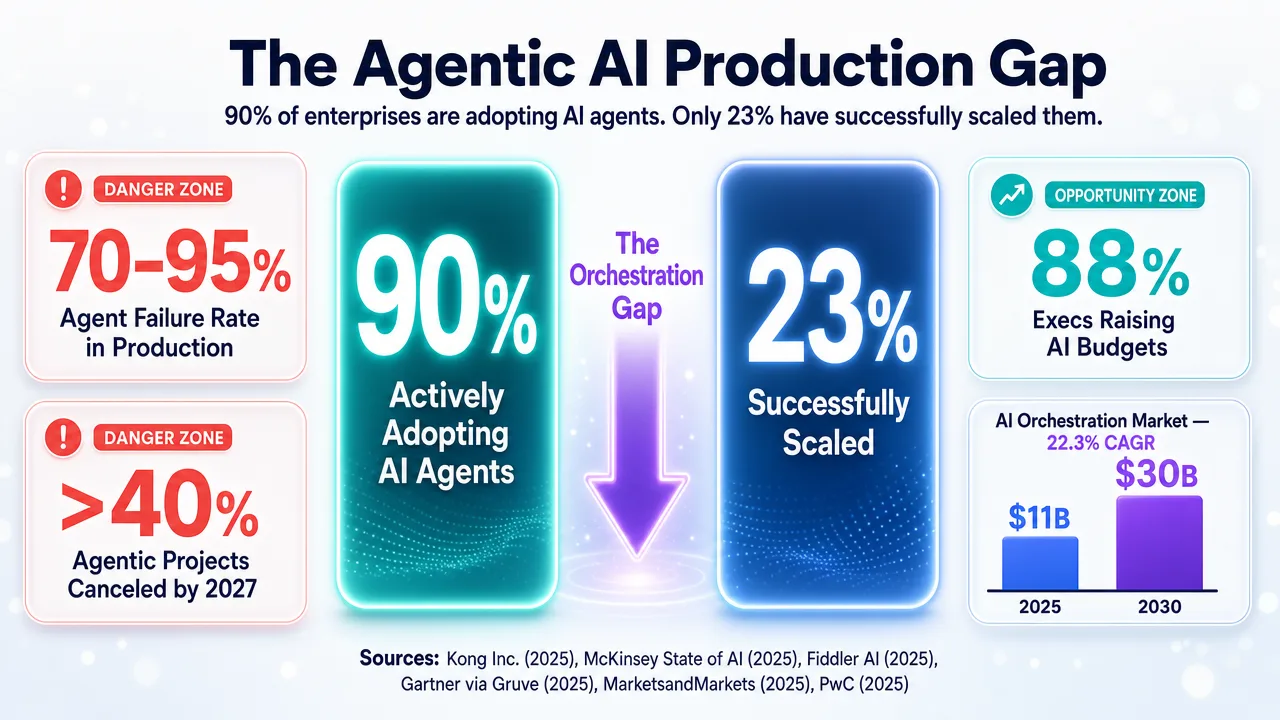
The part that receives less attention is the real moat: not which model you pick, but how solid your orchestration patterns turn out to be—especially when you need human approvals, token budgets, and compensation logic for when agents go off track.
Deep Dive
Have you ever watched a promising demo collapse the moment it leaves the notebook? That gap between prompt and production is what the current wave of updates from OpenAI, GitHub Copilot Workspace, and the major cloud platforms is trying to close. The “naked prompt” era is finished. Model intelligence now runs into a hard limit: fragile execution.
I’ve noticed how developers keep circling back to the same realization. Routing text to an API is simple. Keeping an agent’s memory coherent, its tool calls reliable, and its failures recoverable is not. That gap has triggered an infrastructure land grab. AI-native platforms are folding state and evaluation straight into their APIs. At the same time, graph-based frameworks like LangGraph are betting on explicit state machines, while established engines such as Temporal and Prefect reposition durable execution patterns—idempotency, circuit breakers, automatic retries—as the missing safety layer for non-deterministic work.
But here’s the thing: moving from a single chain to a multi-agent workflow at scale surfaces problems that are easy to overlook on paper. Token spend can spiral. Quotas vanish without warning. The next round of tooling will need cost controls and per-run calculators built into the orchestration layer itself, not bolted on afterward.
Autonomy also requires oversight. When an agent holds credentials that could drop a table or trigger a trade, platforms must offer clean ways to pause, request human sign-off, and resume without losing context. Azure AI Studio’s Prompt Flow and LangGraph are both racing to embed those checkpoints. The result feels less like clever automation and more like traditional CI/CD applied to intelligence pipelines—offline and online evaluations that track success rates, latency, and reliability across changing states.
Stakeholders & Impact
| Stakeholder / Aspect | Impact | Insight |
|---|---|---|
| AI / LLM Providers | High | Pressure to offer managed, stateful APIs and built-in workflow features to prevent developers from dropping their ecosystems for open-source orchestrators. |
| Data & Platform Engineers | High | Must adapt traditional DAGs and CI/CD pipelines to handle the non-deterministic nature of AI, requiring new evals and tracing tools. |
| Enterprise Architects | High | Must implement strict cost governance (token budgets) and security boundaries (RBAC, audit logging) before allowing autonomous agents to execute tasks. |
| Orchestration Tooling (Temporal, Airflow) | Significant | A massive growth opportunity to re-market proven durable execution paradigms (sagas, retries) as the missing reliability layer for AI agents. |
About the analysis
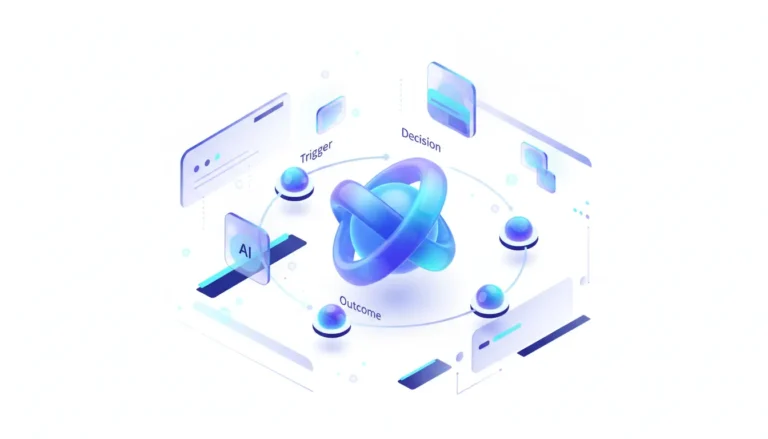
Researched and written with AI assistance under the editorial responsibility of the i10X News team. The title image is an AI-generated illustration. Read our AI Use Policy. Spotted an error? Request a correction.
This independent review pulls together current technical documentation, product roadmaps, and developer discussions across OpenAI, Azure, Google Cloud, Temporal, and LangGraph. Its goal is to give CTOs, ML engineers, and platform teams a clearer picture of what changes when you leave stateless wrappers behind.
i10x Perspective
The rush toward AI workflows makes one point plain: foundational models are turning into commodities. Over the next five years the practical advantage will sit with whoever builds the operating system that routes tasks across fleets of specialized agents. That system will not be glamorous. It will be defined by state persistence, conditional logic, and carefully placed human checkpoints—the unglamorous mechanics that actually keep things running.