Quick Take
- Summary: Backend-as-a-service provider Supabase has launched “Supabase Evals,” an open-source, containerized benchmarking suite designed to test how well AI coding agents perform on real-world infrastructure and database tasks.
- What happened: Supabase open-sourced a new evaluation harness that scores leading AI agents—including Claude Code, Codex, and OpenCode—by placing them in sandboxed environments to execute practical Supabase operations like database migrations and configuring Row Level Security (RLS).
- Why it matters now: General-purpose AI benchmarks like HumanEval or BigCodeBench measure fundamental coding ability, but they fall short when it comes to an agent’s competence in navigating complex, stateful infrastructure. Evals bridges that gap between theoretical LLM coding skills and practical, reproducible software engineering work.
- Who is most affected: AI model builders refining agentic workflows, developer tools companies looking to integrate LLMs, and engineering leaders who need reliable metrics before granting autonomous agents access to backend infrastructure.
- The under-reported angle: The real value here isn’t just the leaderboard—it’s the open-source sandboxing architecture itself. Safely executing untrusted AI code in deterministic, containerized environments is quickly becoming one of the toughest challenges in the AI infrastructure space.
Deep Dive
Have you ever wondered why so many AI coding benchmarks feel disconnected from the actual work engineers do every day? The evaluation landscape is shifting for good reason. As large language models move from stateless chatbots to autonomous coding agents, the old tests are losing their grip. General benchmarks like HumanEval (which leans on LeetCode-style algorithms) or even SWE-bench (focused on patching Python repos) struggle to answer a core enterprise question: Can this agent securely configure my database without hallucinating a destructive command?
Supabase Evals steps in with a more targeted approach. Rather than generic coding puzzles, the open-source benchmark scores agents like Claude Code against a clear set of practical infrastructure tasks. By focusing on Supabase primitives—Auth, Postgres, Storage, and Edge Functions—it checks whether an agent can read documentation, use APIs, and handle stateful backend environments without drifting off course.
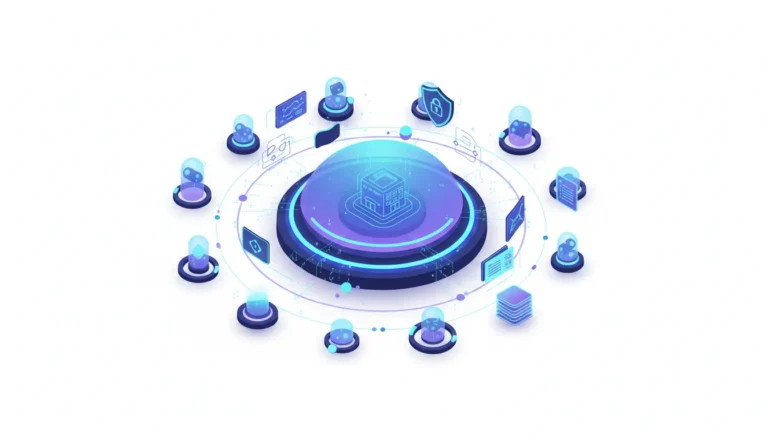
One persistent headache in agent evaluation is environment drift; what runs fine on one machine can break on another. Evals tackles this with a containerized harness that forces agents into isolated Docker-style sandboxes. The result is deterministic, reproducible scoring, along with built-in protections for network access and data privacy. From what I’ve seen, that combination of standardization and security is harder to achieve than it looks.
Beyond the benchmark itself, the project points to a broader change in how teams will bring AI into their workflows. With CI/CD integration built in, organizations can treat these evaluations as routine checks in their pipelines. That lets engineering groups test new LLM versions or prompting methods against their own task sets, catching regressions before they surface in production.
In short, Supabase Evals reflects the growing trend of localized AI benchmarking. Infrastructure providers are no longer waiting for centralized labs to define what models can do—they’re creating their own testing environments that demand proof in specific, containerized scenarios.
Stakeholders & Impact
- AI / LLM Providers — Impact: High — Insight: Models will increasingly be optimized to pass infrastructure-specific tests, pushing development toward better tool-use and state management.
- DevTools & Cloud Platforms — Impact: High — Insight: Platforms will likely follow Supabase’s lead by offering their own sandboxed evaluation harnesses to demonstrate LLM competency on their stacks.
- Engineering Teams (DevOps/CI) — Impact: Medium–High — Insight: Teams now have a practical blueprint for safely testing untrusted agent code inside CI/CD pipelines.
- Security & Infrastructure — Impact: Significant — Insight: The release underscores the rising demand for robust sandboxing protocols built specifically to contain autonomous AI agents.
About the analysis
Researched and written with AI assistance under the editorial responsibility of the i10X News team. The title image is an AI-generated illustration. Read our AI Use Policy. Spotted an error? Request a correction.
This independent, research-based analysis draws from open-source repository documentation, competitor coverage, and emerging evaluation patterns in the LLM ecosystem. It is intended for engineering managers, AI infrastructure developers, and CTOs working through the practical challenges of integrating autonomous coding agents into production environments.
i10x Perspective
The launch of Supabase Evals signals that the era of monolithic AI benchmarking is fading. As models grow more capable, generalized tests lose their signal-to-noise ratio. The future belongs to hyper-specific, localized sandboxes that measure operational execution rather than theoretical knowledge. Over the next five years, the real differentiator among frontier models will be their ability to reliably and securely work with complex digital infrastructure without causing breakage. Trust in AI won’t come from polished demo videos alone—it will need to be demonstrated, repeatedly, inside controlled test environments.