xAI’s Grok: From Edgy Chatbot to Enterprise Automation
Summary
xAI’s Grok is rapidly shedding its reputation as just an “edgy” consumer chatbot, expanding its capabilities to tackle complex, closed-loop enterprise workflows. Backed by direct access to the X (formerly Twitter) data firehose and significant cluster scaling, Grok is now being battle-tested for high-velocity coding, real-time market research, and automated business operations.
What happened
xAI has continuously shipped updates (including the Grok 1.5 to early Grok 4.5 series chatter) that upgrade its reasoning, coding compliance, and context windows. As a result, the user ecosystem is actively mapping out practical use cases—moving beyond basic prompt-engineering into complex API integrations for finance, retail, and automated social monitoring.
Why it matters now
The LLM market is transitioning from the “awe” phase to the “deployment” phase. Enterprises are suffering from AI fatigue and are actively demanding measurable KPIs, integration recipes, and tangible time-saving metrics rather than just novel chat interfaces. Grok’s ability to parse the global neurological network of X in real time provides a unique wedge to capture market share from incumbents.
Who is most affected
AI developers, enterprise automation engineers (Ops), and market analysts are on the frontline, tasked with deciding whether to build internal tools around Grok’s API or stick with traditional AI stacks. Risk and governance teams are also heavily impacted as they navigate the compliance logic of enterprise data parsing.
The under-reported angle
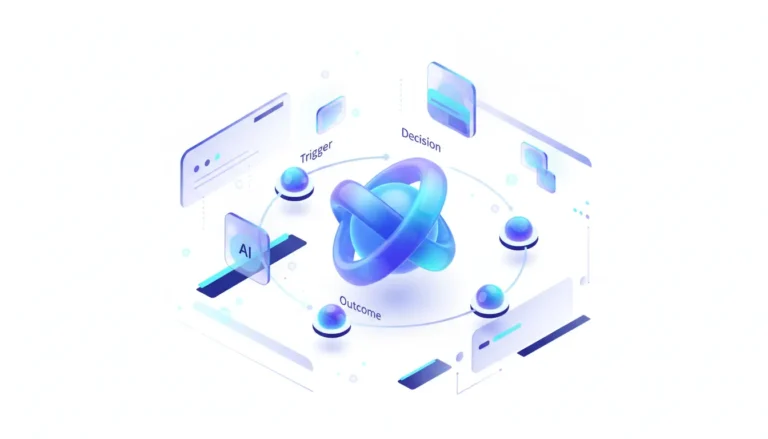
Everyone is comparing Grok’s chat output to ChatGPT, but the actual battleground is closed-loop automation. The true value lies not in manual prompting, but in integrating Grok into BI tools, Zapier pipelines, and internal dashboards where its low-latency real-time context can trigger autonomous business decisions.
🧠 Deep Dive
Have you ever watched a promising AI tool move from flashy demo to something that actually fits inside existing business systems? The discourse surrounding xAI’s Grok has matured along those lines over the past few months. Initially framed by tech media and the official xAI PR machine as a slightly rebellious, uncensored alternative to OpenAI, the model is now facing the ultimate enterprise stress test: real-world utility. Current market analysis reveals a heavy demand for actionable playbooks, with users desperate to understand how Grok performs in coding assistance, business operations, and automated research compared to its heavily entrenched rivals.
What sets Grok apart in the increasingly crowded intelligence infrastructure race is its proprietary data pipeline. While models like Claude 3.5 or Gemini 1.5 rely on massive, but slightly delayed, web-crawled datasets, Grok’s structural integration with X offers a distinct tactical advantage for real-time social and news monitoring. For financial analysts tracking market-moving sentiment, or supply chain operators monitoring local disruptions, Grok functions as a high-fidelity ingestion engine. The underlying infrastructure—powered by xAI’s massive Colossus compute cluster—enables this real-time grounding, drastically reducing the latency between a real-world event and model comprehension.
From what I’ve seen in recent adoption conversations, however, a critical gap remains in the current deployment ecosystem. While early adopters share basic prompt libraries and role-based workflows, the market is starving for end-to-end integration blueprints. The transition from a chat-based novelty to a true business engine requires connecting Grok to external data sources, dashboards, and automation tools via APIs. Developers are currently attempting to build these bridges themselves, figuring out how to funnel Grok’s real-time outputs directly into automated closed-loop workflows, such as updating CRM records based on real-time client sentiment on X, or generating automatic pull-request reviews.
This integration push introduces severe friction points around risk and governance. Tapping into an unfiltered, real-time social firehose elevates the risk of hallucinations or confidently stated inaccuracies. As organizations look to adopt Grok for high-stakes industry playbooks—like healthcare or finance—they are realizing the need for stringent human-in-the-loop verification frameworks. The models are powerful, but enterprise architects are urgently demanding privacy-by-design guidelines, prompt injection safeguards, and hard ROI calculators before committing their production workloads to xAI’s infrastructure.
Ultimately, Grok’s evolving use cases signal a broader fragmentation in the LLM market. We are moving away from the “one-size-fits-all AGI” narrative toward highly specialized AI infrastructure. xAI is positioning Grok not merely as a ChatGPT clone, but as a real-time intelligence terminal. For decision-makers, the question is no longer “What is Grok?” but rather “How do we embed Grok’s real-time reasoning into our legacy infrastructure to yield a measurable competitive advantage?”
📊 Stakeholders & Impact
| Stakeholder / Aspect | Impact | Insight |
|---|---|---|
| AI / LLM Providers | High | Pushes competitors (OpenAI, Google) to accelerate their own real-time grounding and search-integration capabilities. |
| Enterprise Ops & Developers | High | Requires evaluating a new API for deterministic tasks, shifting focus to closed-loop automation and integration recipes. |
| Risk & Governance Teams | Significant | Demands new frameworks to verify real-time, unstructured social data to prevent hallucination-driven business errors. |
| Market Data & Analysts | High | Unlocks new, low-latency workflows for sentiment analysis and breaking news ingestion previously restricted to expensive specialized software. |
✍️ About the analysis
Researched and written with AI assistance under the editorial responsibility of the i10X News team. The title image is an AI-generated illustration. Read our AI Use Policy. Spotted an error? Request a correction.
This independent analysis synthesizes current search intent, competitor content gaps, and market positioning data regarding real-world application of xAI’s Grok. It is designed for CTOs, AI developers, and enterprise operators looking past standard chatbot tutorials toward architectural integration, ROI measurement, and the evolving intelligence infrastructure landscape.
🔭 i10x Perspective
Grok’s shift toward enterprise workflows is a trailing indicator of xAI’s massive infrastructure play. By demonstrating that high-velocity, real-time data can be securely harnessed for business ROI, xAI is validating the multi-billion-dollar investments powering their Colossus supercomputer. The unresolved tension for the next five years will be governance: as models ingest and react to unfiltered real-time global events, the competitive edge will belong not just to the smartest model, but to the one that can offer the most verifiable, hallucination-free integration into corporate automation pipelines. The race is no longer about who can write the best poem, but who can securely route the real-time internet into a spreadsheet.