Tesla’s $2 Billion Investment in xAI: Quick Take & Deep Dive
⚡ Quick Take
Tesla’s reported $2 billion investment in xAI isn’t just another funding round – it’s the bold step toward crafting a fully integrated intelligence system from the ground up. You can almost feel the ambition here, right? Tesla wants to weave its automotive hardware, robotics, and that custom Dojo silicon together with a homegrown foundation model, taking charge of the entire AI journey from gathering data to making things happen in the real world.
Summary
Tesla has reportedly sunk $2 billion into xAI, Elon Musk’s AI startup behind the Grok chatbot. This tightens the already close strategic and financial knots between Musk’s companies, setting Tesla up to tap xAI‘s foundation models for its own big AI dreams. From what I’ve seen in these interconnected ventures, it’s a smart play for long-term control.
What happened
Details are still trickling out, but this investment locks in xAI‘s model-building right into Tesla’s future product plans. The cash will likely pour into the heavy lifting of computation – think stacks of NVIDIA GPUs – to train models that can go toe-to-toe with the heavyweights from OpenAI, Google, and Anthropic. It’s the kind of scale that demands serious resources, no question.
Why it matters now
Tesla’s been laser-focused on AI for self-driving tech, especially computer vision. But this? It catapults them into the broader foundation model arena. The real shift is owning the “brain” for upcoming stuff like the Optimus robot or smarter car assistants, ditching the idea of leaning on outsiders. That said, it’s a pivot that could redefine their edge.
Who is most affected
Tesla shareholders, developers tinkering with AI on cars, and NVIDIA stand out here. Shareholders are now bankrolling a connected company with some tricky oversight issues, while NVIDIA gets a sales windfall short-term – but watches warily as Tesla’s Dojo supercomputer ramps up as a potential rival down the line. Plenty of ripple effects to unpack, really.
The under-reported angle
Forget the chatbot-in-a-car hype for a second. The heart of this is Tesla betting big on an AI setup fueled by its unique vehicle and robotics data to shape xAI‘s models. The drama brewing inside? Whether that money funnels to NVIDIA’s reliable GPUs or pushes everything onto Dojo, proving Tesla’s pricey custom hardware isn’t just a side project.
🧠 Deep Dive
Have you ever wondered what it takes to bridge the gap between raw hardware and truly smart systems? Tesla’s $2 billion pour into xAI feels like that exact bridge – less a side bet on finance, more a must-do for survival. For so long, Tesla’s AI efforts centered on spotting and forecasting for Full Self-Driving (FSD). But creating agents that actually think and chat, like the Optimus robot or a car companion worth talking to? That demands reasoning and language smarts far beyond just seeing the road. I’ve noticed how this investment lays it bare: they need their own foundation model to act as the nerve center for all that hardware.
Right away, this sparks a tense showdown over AI’s backbone. xAI‘s funding hauls have mostly lined NVIDIA’s pockets with orders for H100 and B200 GPUs – and Tesla’s money keeps that fire burning, powering up for Grok-3 and whatever comes next. Still, it leaves Dojo, Tesla’s homebrew supercomputer, at a pivotal spot. Dojo was meant to streamline training for their AI, tailored just so. Now the big if hangs: Can it handle large language models, or is it stuck on vision work, meaning they keep buying from others for the heavy AI lifting? It’s a crossroads that could make or break their independence.
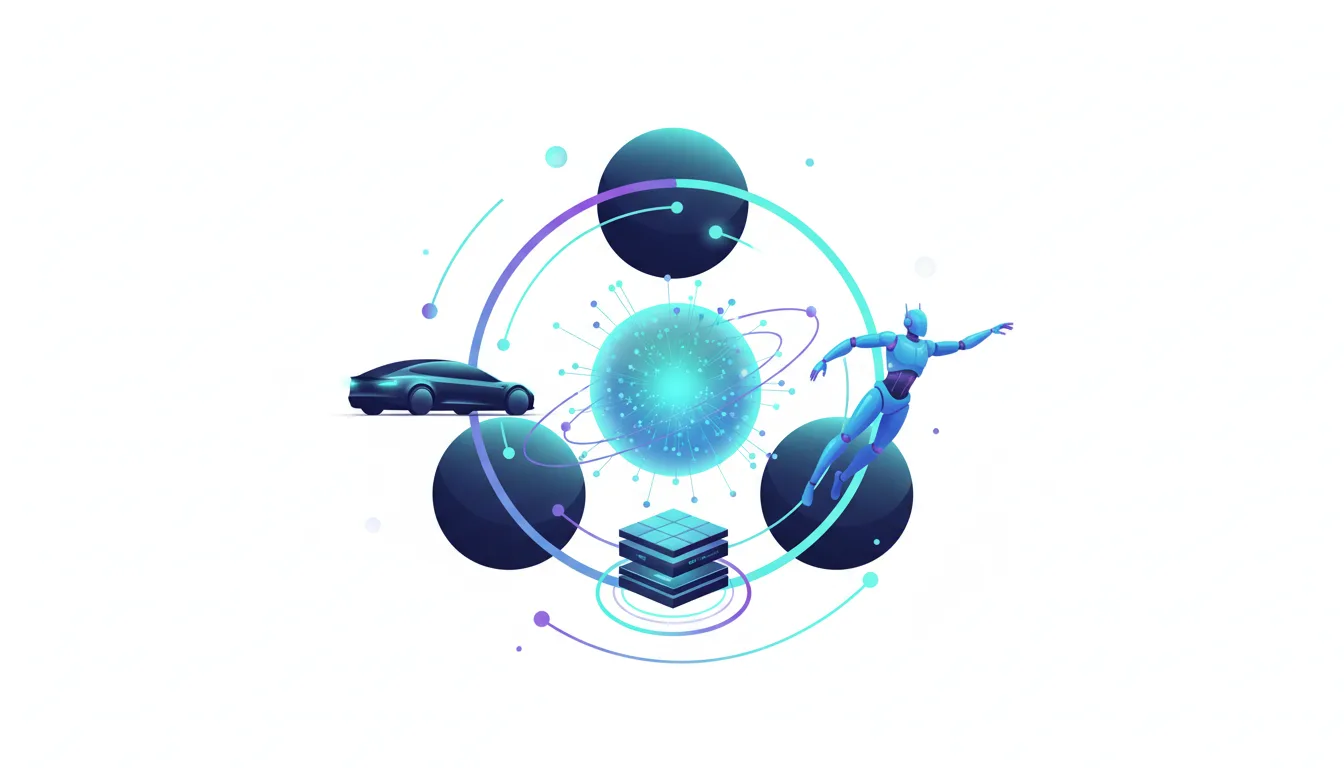
This seals the deal on a “Musk AI ecosystem” with a data engine like no other. It links up three goldmines: Tesla cars churning out video and driving insights, Optimus grabbing hands-on physical data, and X (you know, old Twitter) feeding in endless real-time chatter. No one else touches this mix of text, sight, and action data. The plan’s straightforward – train Grok on it all, run it on custom gear like Dojo and HW4, then roll it out across their cars and bots. It’s a full-stack challenge to the API world of OpenAI or the cloud plays from Google and Microsoft – vertical all the way.
Potentially brilliant, sure, but it’s a governance tightrope. I’ve read the reports, like those in the Wall Street Journal, and they’re spot-on about the conflicts. A public giant like Tesla funneling shareholder cash to a private outfit run by its CEO? It speeds things up, no doubt, but stirs up worries over IP, pricing deals, and who answers to whom. In the end, this whole setup’s fate rides on whether the seamless data-to-action flow pays off bigger than the headaches – financial tangles, oversight gaps. It’s the kind of bold weave that could either soar or snag.
📊 Stakeholders & Impact
Tesla (as entity)
Impact: High
Insight: They snag their own foundation model boost, but it’s capex heavy with governance eyes watching close. This tests Dojo head-on against standard GPUs for LLM training – a make-or-break for their hardware dreams.
xAI / Grok
Impact: Critical
Insight: Locks in huge funding and, better yet, prime dibs on Tesla’s robotics and car data rivers – fast-tracking the chase against Google and OpenAI’s top models. That data edge? Game-changer.
NVIDIA
Impact: Mixed
Insight: Short-term jackpot from GPU buys for xAI‘s training sprints. Long haul, though? If Dojo nails large-scale LLMs, it spells trouble – could inspire other tech titans to ditch the middleman.
AI Competitors (Google, OpenAI)
Impact: Medium
Insight: Spotlights how vital real-world robot data is for AGI pushes. Now there’s this woven-in rival with a physical-world data moat that’s tough to copy – shakes up the field.
Tesla Shareholders
Impact: High
Insight: Upside in AI software riches, but risks galore from the insider deal, cash burn, and skimpy checks-and-balances. Weighing the wins against the worries, it’s a high-wire act.
✍️ About the analysis
Researched and written with AI assistance under the editorial responsibility of the i10X News team. The title image is an AI-generated illustration. Read our AI Use Policy. Spotted an error? Request a correction.
This i10x take pulls from public news, rival reports, and a close look at AI’s nuts and bolts. It ties corporate money moves to model-building and tech strategy – aimed at tech execs, planners, and investors who want the full picture behind the buzz, not just the surface skim.
🔭 i10x Perspective
Ever feel like the AI world is tipping from standalone software to these all-in-one powerhouses? This investment hints at the close of the “pure-play” AI software chapter. Tomorrow’s smarts might go to outfits that grip the data, models, chips, and real-life rollout – cars, bots, you name it – not just the open-API crowd.
Tesla’s push lands a core question on everyone’s lap: Win by being the go-to AI service like OpenAI, or build your own sealed system à la Musk? The lingering pull is whether this tangled, oversight-straining web can spark faster breakthroughs than the streamlined, deep-pocketed Big Tech machines – or if it’ll buckle under its own clever knots.