The shift from stateless chatbots to always-on autonomous AI agents has split the market wide open. OpenAI Dots, Anthropic Claude Duet, Meta Muse, and xAI Grok Bot are now competing for ongoing access to user workflows. More than a simple UX tweak, this marks a deeper change in AI infrastructure – from on-demand inference triggered by users to constant background polling. That forces the industry to tackle fresh challenges around compute expenses, regional rules, and protocols for actions that can’t be undone.
Quick Take
- What happened: The big four AI labs have rolled out always-on, cloud-computer agents—OpenAI Dots, Claude Duet, Meta Muse, and Grok Bot—each optimized for different environments ranging from developer terminals to enterprise inboxes.
- The dividing line: Raw model intelligence has taken a backseat to governance frameworks; the primary battle is now over permission models like Meta’s Sentinel, OpenAI’s Custom Rules, and Anthropic’s hard blocks on unapproved payments and emails.
- The infrastructure impact: Continuous background execution introduces “warm versus cold polling” costs, dramatically shifting the economics of AI inference for both cloud providers and heavy users.
- The under-reported angle: Severe regional availability constraints—specifically the widespread exclusion of the UK, EEA, and Switzerland—highlight how far ahead agentic capabilities are outstripping global regulatory compliance.
What happened
The AI ecosystem has rapidly segmented its agent offerings to target distinct enterprise and consumer workflows. OpenAI’s Dots, powered by GPT-6 Astra, is maneuvering into corporate environments with deep Slack and Teams integrations, utilizing “Custom Rules” for automated background checks. Anthropic has countered with Claude Duet (running on Opus 5.5), boasting over 6,000 connectors but implementing strict “approval-before-send” gates for messages, signatures, and payments.
Meanwhile, Meta is targeting broad consumer accessibility and Meta ad workflows with Muse (using the Muse Spark model) and its proprietary Sentinel approval system. On the other end of the spectrum, xAI’s Grok Bot is abandoning the consumer inbox entirely to focus on developer-oriented parallel bots and high-frequency technical tasks.
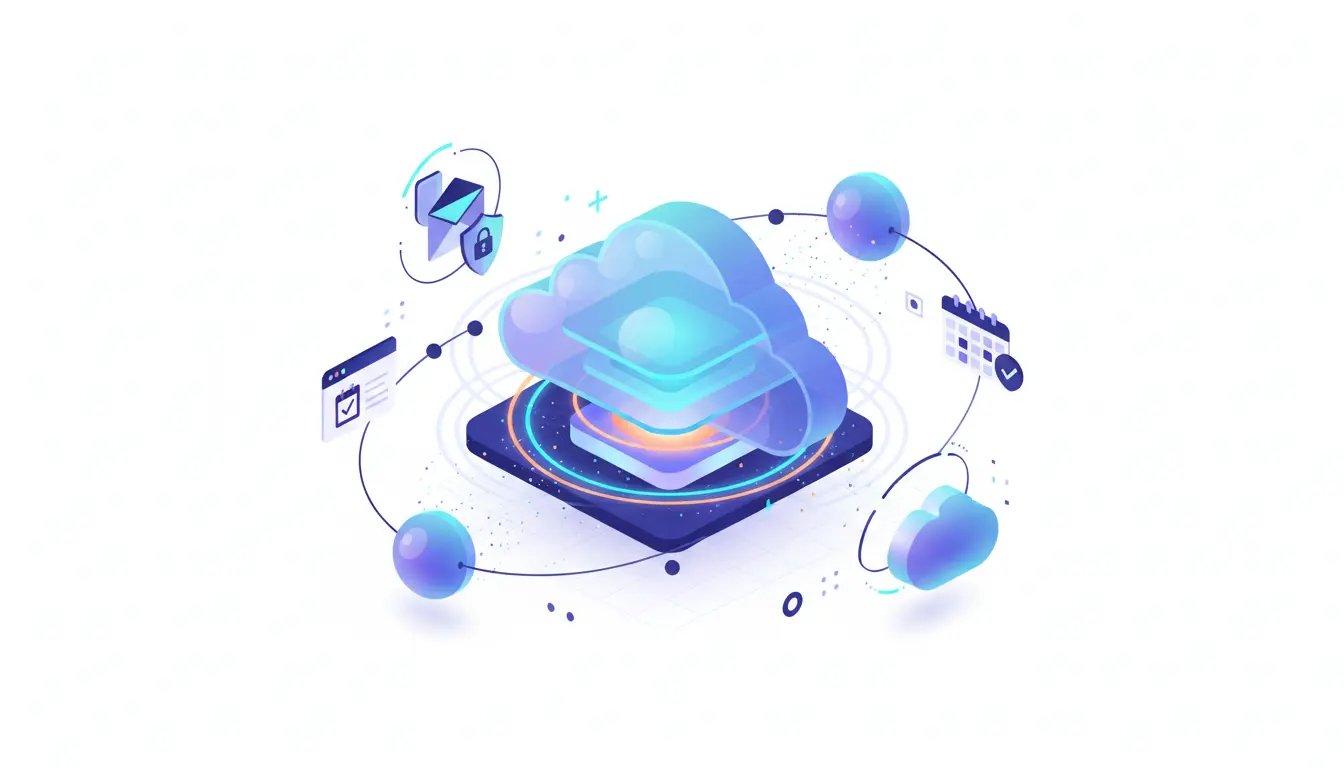
Across the board, these agents are transitioning from running strictly as browser extensions to functioning as dedicated “cloud computers.” However, this rollout has been highly fragmented. Due to escalating data privacy and autonomous action concerns, early previews are heavily waitlisted in the US, with full lockouts across the UK and EEA.
Why it matters now
For the AI industry, the shift to always-on agents rewrites the rules of scaling laws and infrastructure demand. We are moving from a paradigm where compute is consumed in discrete, user-initiated bursts to one of constant background polling. Providers must now balance the operating costs of “warm polling” (keeping an agent instance active and aware of state changes) against “cold polling” to prevent token usage pools from draining rapidly. This continuous cloud-computer model places unprecedented stress on data centers and fundamentally alters subscription unit economics.
Furthermore, the competitive moat between OpenAI, Anthropic, Meta, and xAI is no longer defined just by benchmark scores, but by workflow governance. The hardest problem in AI right now is not generating text; it is safely orchestrating irreversible actions. Agents that hallucinate a background task, send an unauthorized client email, or trigger unapproved ad spend will be immediately uninstalled by enterprise IT. Consequently, permission architectures—audit trails, memory controls, read/write separation, and failure escalations—are becoming the core product offering.
Who is most affected
| Stakeholder | Impact | Why |
|---|---|---|
| Enterprise IT & Founders | High | Must audit permission models (Custom Rules vs. Sentinel) before allowing autonomous read/write access to CRMs and cloud storage. |
| AI Infrastructure Providers | Critical | The shift to continuous background polling alters inference demand, requiring new optimizations to manage runaway compute costs. |
| Developers & Tech Teams | Medium | Forced to choose ecosystems; Grok Bot offers parallel tasking, while self-hosted alternatives like Hermes provide escapes from SaaS usage limits. |
| UK & EEA Users | Negative | Locked out of the agentic productivity wave due to regulatory friction, risking a regional gap in automation capabilities. |
The Governance and Cost of Ownership Trap
Current market comparisons heavily index on monthly entry prices for tiers like Claude Pro/Max, xAI Super/Ultra, or ChatGPT Pro. However, the true total cost of ownership for always-on agents is hidden in unmetered background tasks. Continuous polling can exhaust usage limits rapidly, leaving users with throttled capabilities during urgent active tasks. Additionally, the lack of continuous browser visibility—a noted limitation in early Claude Duet reviews—means users must trust the agent’s audit log entirely. If a workflow breaks, the failure mode is opaque, shifting the user’s role from a prompt engineer to an escalation manager.
About the analysis
Researched and written with AI assistance under the editorial responsibility of the i10X News team. The title image is an AI-generated illustration. Read our AI Use Policy. Spotted an error? Request a correction.
This is an independent i10x analysis mapping the autonomous AI agent landscape for CTOs, product builders, and developers evaluating integration risks and infrastructure costs.
- Claude Duet vs OpenAI Dots vs Meta Muse vs Grok Bot
- I Tested Every Major AI Agent for a Day. Here’s the Best One
- Personal AI Agents for Marketers: 9 Compared (2026)
- Claude Duet vs dots vs Muse vs Gemini agent (2026)
- Always-On AI Agents: Dots vs Muse vs Grok Bot (2026 Guide)
- Grok Bot vs Meta Muse vs OpenAI Dots vs Claude Duet – HokAI
i10x Perspective
The arrival of always-on agents marks the death of the “copilot” era and the birth of stateful, autonomous cloud computing. The AI race is no longer about who can build the smartest model, but who can build the most secure execution environment that enterprises actually trust with their money and data. As these agents consume vast amounts of background compute just to “pay attention,” the next major bottleneck won’t be training runs, but the sheer cost of keeping millions of AI workers awake at the same time.