Perplexity just launched Teammates, moving AI from reactive chatbots to persistent, autonomous agents that can own complex, ongoing workflows. The system runs on the Perplexity Computer architecture and points to faster enterprise adoption, with the company already running a 20-to-1 ratio of AI agents to human employees.
Quick Take
- The launch: Perplexity introduced Teammates, persistent AI agents designed to take high-level goals and manage long-running tasks, retain memory, and coordinate across applications.
- The workforce math: CEO Aravind Srinivas revealed that Perplexity has spun up roughly 10,000 internal Teammates in the last 30 days, creating a 20:1 ratio of synthetic agents to human staff.
- The enterprise cost: Access is gated behind the Perplexity Max subscription—priced at $200 per month—positioning this firmly as a premium B2B utility rather than a consumer chatbot.
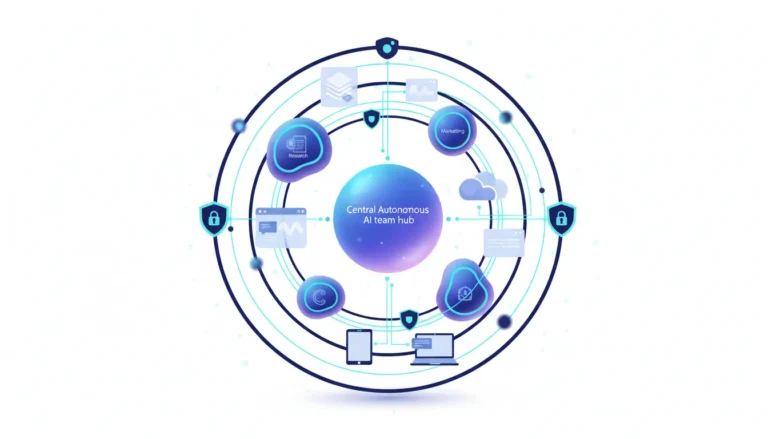
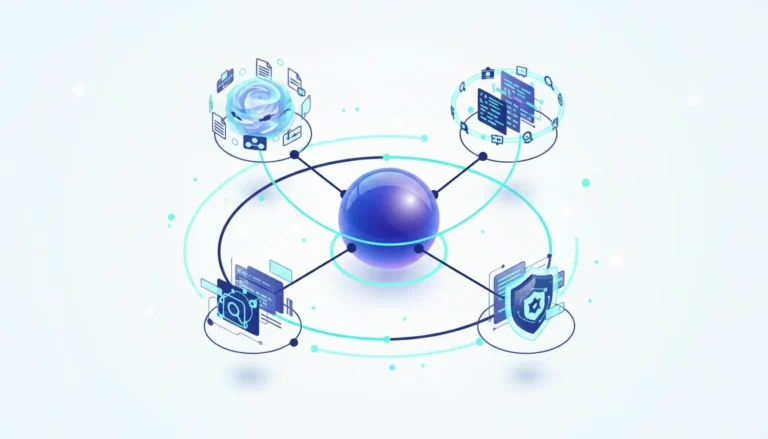
- The architecture: Teammates operate on top of “Perplexity Computer,” inheriting context, projects, and skills to run continuous background workflows and ping human reviewers via Slack when decisions or approvals are needed.
What happened
Perplexity unveiled Teammates, a new feature suite that lets users create named AI agents for recurring, multi-step business tasks. Unlike standard LLMs that wait for a one-off prompt, these agents take ownership of ongoing operations such as market research, software bug triage, or ad campaign monitoring and run them in the background. The system builds on the Perplexity Computer foundation, so agents keep session memory, access shared project files, and use external tools over long stretches.
To show the scale, CEO Aravind Srinivas said the company created about 10,000 internal Teammates in the past 30 days. That internal test produced an agent-to-employee ratio of 20 to 1 and gave an early look at how automated operations are becoming. The feature is rolling out on the web first, with mobile support planned later. It sits behind the $200-per-month Perplexity Max tier, aimed at power users, developers, and enterprise teams that want specialized agents with human oversight.
Why it matters now
Teammates mark a clear shift in the LLM space from chat interfaces to autonomous agentic AI. While models from OpenAI, Anthropic, and Google keep improving at reasoning, the harder problem has been workflow integration. Perplexity adds persistent memory, planning, and simple guardrails such as Slack pings for approvals, which moves the focus from raw intelligence to actual labor substitution.
This change also alters the compute profile of AI systems. Agents that run continuously in the background need steady GPU time rather than the short bursts typical of human chat queries. As these ratios grow, inference demand will tie more to task volume than to headcount, creating steadier baseline loads for cloud providers and chipmakers. The $200 price tag further signals a move toward high-margin enterprise pricing, with vendors betting that companies will pay for always-available synthetic coworkers.
Who is most affected
The immediate impact falls on knowledge workers, middle managers, and enterprise IT leaders who now need to integrate, govern, and audit non-human labor. Software engineers, marketers, and operations teams will see routine tasks such as system monitoring, lead generation, and metric tracking handed off to agents, shifting their own work toward review and oversight.
| Stakeholder | Impact | Why |
|---|---|---|
| Enterprise CTOs | High | Must establish governance, access controls, and data permissions for autonomous agents operating persistently inside corporate networks. |
| Knowledge Workers | Moderate to High | Routine administrative and monitoring tasks will be automated, requiring a shift toward managing and reviewing AI output. |
| AI Infrastructure Providers | Positive | “Always-on” background agents will drive continuous inference demand, fundamentally increasing total compute volume. |
| Workflow Automation SaaS | Negative | Traditional, rigid automation platforms face disruption as multi-agent orchestration handles complex, dynamic routing naturally. |
About the analysis
Researched and written with AI assistance under the editorial responsibility of the i10X News team. The title image is an AI-generated illustration. Read our AI Use Policy. Spotted an error? Request a correction.
This independent i10x analysis synthesizes official product documentation, competitive market mapping, and executive statements to provide actionable insights on the agentic AI shift for CTOs, AI founders, and enterprise operators.
i10x Perspective
The 20:1 agent-to-employee ratio inside Perplexity is more than a headline number. It previews the hyper-automated enterprise setups expected later this decade. We’ve seen intelligence unbundle from headcount, so growth limits will move from hiring to inference capacity and agent governance. Companies that succeed will be those that orchestrate synthetic labor effectively, turning human managers into coordinators for fleets of digital teammates.