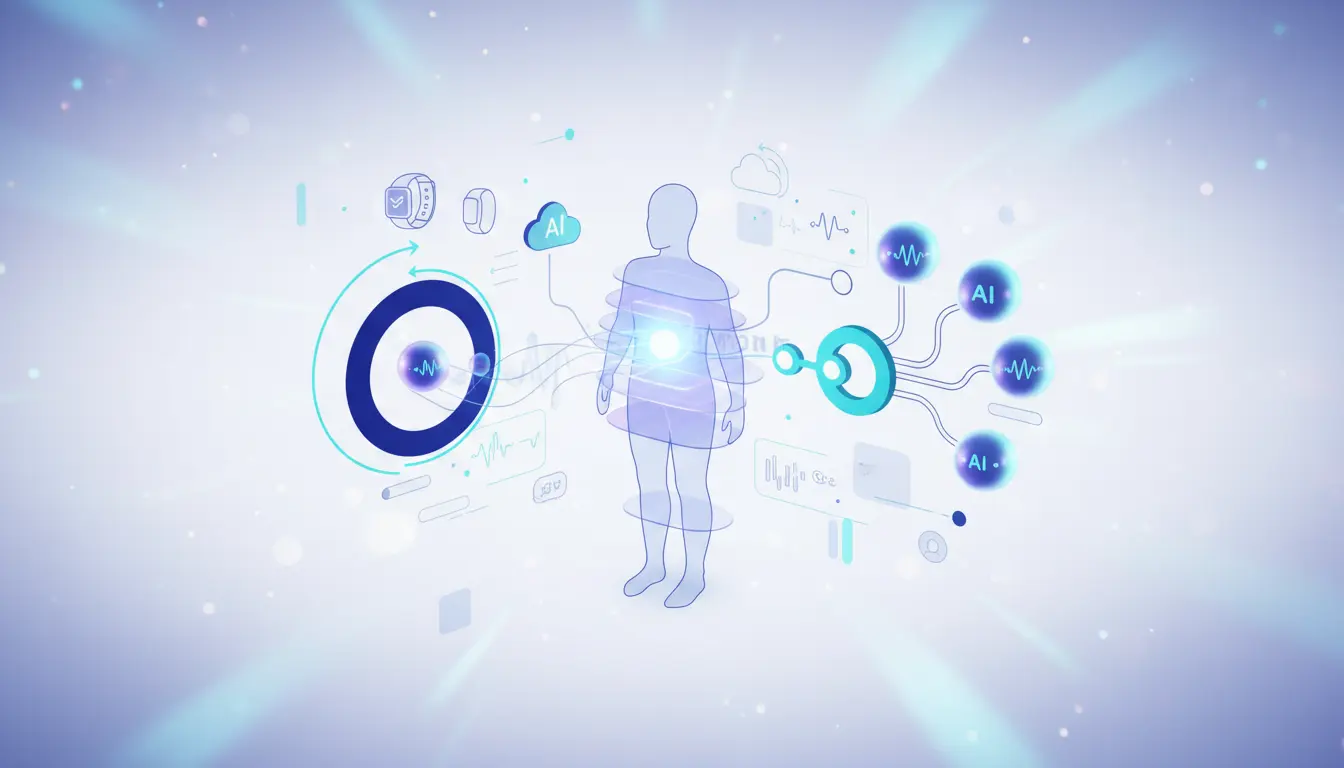
The wall between siloed personal health data and general-purpose LLMs has started to give way. reThrive Labs just launched an integration called “freddy” that lets users feed records from Google Health, Fitbit, and Pixel Watch straight into ChatGPT, Claude, Grok, and other AI assistants. By tapping connective infrastructure like the Model Context Protocol (MCP), the move takes wearable data out of static dashboards and into live, conversational AI environments, sharpening the contest over who controls the personal intelligence layer.
Quick Take
- The catalyst: An integration tool called freddy now bridges Google Health databases with major LLMs, allowing natural-language querying of sleep, HRV, and fitness history.
- The underlying tech: The integration relies on standardized connective layers-including the Model Context Protocol (MCP)-to make highly structured health data readable to external AI models.
- The ecosystem threat: By letting users port their Fitbit and Pixel Watch data into Claude or ChatGPT, this circumvents Google’s attempts to keep health insights locked exclusively within its own Gemini-powered ecosystem.
- The privacy friction: Pumping sensitive biometric data into third-party AI models introduces new data governance challenges, forcing users to navigate complex authorization and API revocation controls.
What happened
reThrive Labs has opened a direct Google Health link through its freddy platform, turning personal health metrics into readable context for modern LLMs. Users can now authorize their Google accounts to share sleep stages, heart rate variability (HRV), blood glucose levels, weight, and workout histories with assistants such as ChatGPT, Claude, Grok, Perplexity, and Gemini.
The setup runs on a tiered model: a free tier caps history at seven days from one source, while the $49 annual Pro plan unlocks full historical imports. It leans on the Model Context Protocol (MCP) and similar connector APIs to create a standard bridge between Google’s consumer health databases and outside AI interfaces. Early access is already rolling out, positioning the tool as a universal translator between hardware like a Pixel Watch or Fitbit and whichever generative model the user prefers.
Why it matters now
Biometric and health data have stayed fragmented for years, trapped inside proprietary dashboards or guarded medical portals. Treating the Model Context Protocol (MCP) and similar API bridges as a shared standard turns the body into a continuous, queryable stream for LLMs. Foundation models are moving beyond generic answers toward hyper-personalized, context-aware systems that can link a sleep deficit to daily output or blood glucose trends.
This step also undercuts the walled-garden approach of big tech. Google has pushed its Gemini-powered tools, such as the Google Health Coach, as the only interpreter of Fitbit and Pixel Watch data. Third-party connectors now let users export that information to Claude or ChatGPT instead, turning the data layer into a commodity and giving people a choice of intelligence engine.
Who is most affected
This shift primarily impacts AI application developers building on top of MCP, wearable manufacturers trying to retain ecosystem lock-in, and privacy-conscious consumers who must now balance the utility of AI health analysis against the risks of sharing sensitive biometric data with cloud-based LLM providers.
| Stakeholder | Impact | Why |
|---|---|---|
| LLM Providers (OpenAI, Anthropic) | Massive utility boost | Access to rich, longitudinal user data creates stickier, hyper-personalized AI assistants. |
| Google / Wearable OEMs | Ecosystem leakage | Users can bypass native AI features (Gemini) and take their proprietary hardware data to competing models. |
| Consumers & Patients | Enhanced agency & risk | Gains conversational access to complex health trends, but assumes the burden of revoking API access and monitoring data privacy across multiple platforms. |
About the analysis
Researched and written with AI assistance under the editorial responsibility of the i10X News team. The title image is an AI-generated illustration. Read our AI Use Policy. Spotted an error? Request a correction.
This independent i10x analysis examines the intersection of personal health data and the evolving Model Context Protocol ecosystem, written for AI developers, infrastructure architects, and founders tracking the commoditization of data layers.
- freddy x Google Health: Google Health records now connect to ChatGPT, Claude and other AI assistants through freddy
- freddy x Google Health: You Can Now Connect Google Health and Ask Your AI About Your Fitbit and Pixel Watch History
- FAQs on Privacy: Google Health – Help
- Google Health
- Track your blood tests over time with ChatGPT or Claude
i10x Perspective
The freddy integration signals early that personal intelligence will not be governed solely by hardware makers. It will depend instead on the connective tissue between raw data and foundation models. As protocols like MCP standardize the intake of private, scattered datasets, the competitive edge moves from who collects the data to which LLM can reason over it most effectively. The tension worth watching is how hard giants like Google or Apple will push back on third-party API access-once external models begin delivering sharper health insights than their own systems.