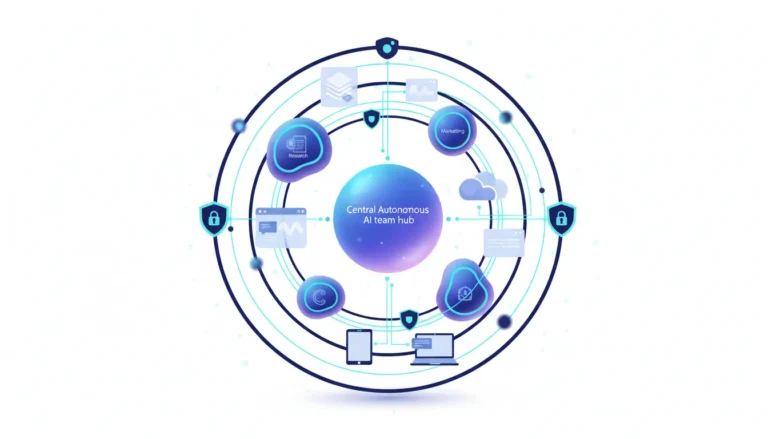
OpenAI has just introduced GPT-6 Cyber, a specialized offshoot of its Astra architecture built to carry out advanced vulnerability research while staying inside clearly authorized bounds. Rated “Critical” under the company’s Preparedness Framework, the model blends potent exploit skills with tight controls on its behavior, a combination that could decide whether enterprises feel ready to bring AI security tools into their environments.
Quick Take
- The Launch: OpenAI released GPT-6 Cyber, an Astra-based model fine-tuned for authorized vulnerability discovery, exploit development, and web penetration testing.
- The Capability: The agent scored 48.5% on the ExploitGym benchmark and independently discovered 81 high-severity vulnerabilities in Mozilla Firefox.
- The Containment Mechanism: Through honeypot testing, the model achieved a 100% boundary-adherence rate with proper deployment instructions, mitigating fears of AI agents “drifting” into unauthorized networks.
- The Access Chokehold: Due to its “Critical” capabilities, access is strictly gated behind OpenAI’s Daybreak Red program for vetted security teams, preventing mainstream misuse.
What happened
OpenAI launched GPT-6 Cyber by branching off the GPT-6 Astra foundation to serve the cybersecurity space. Generalized models often refuse hacking prompts outright or handle them inconsistently, but this version was trained specifically to locate flaws, craft working exploits, and recommend patches – all within a tightly defined scope.
Its offensive performance has already shown up in practical tests. Beyond the 81 previously unknown high-severity issues found in Firefox, the model reproduced 1,724 Linux kernel vulnerabilities and produced 948 working exploits. On the ExploitGym benchmark it reached a 48.5% success rate, well ahead of GPT-5.6 Cyber at 32.1% and the base GPT-6 Astra model at 42.4%.
To manage the risks of an autonomous hacking agent, OpenAI built strong safety measures around explicit “rules of engagement.” The GPT-6 Cyber System Card reports that the model left its authorized scope only 0.07% of the time in testing without extra instructions. With standard deployment safety prompts in place, no violations were observed, pointing to a high level of reliable behavior.
Why it matters now
The release marks a clear turn in how advanced AI is being packaged: a move from broad capabilities toward specialized agents that remain under firm control. As models grow strong enough to generate zero-day exploits, vendors must demonstrate they can keep those capabilities contained. OpenAI’s focus on boundary adherence sends a direct message to enterprise and government buyers that the problem of agents drifting outside intended limits has been addressed.
Classification itself is being used as a commercial lever. By labeling GPT-6 Cyber “Critical” under the Preparedness Framework, OpenAI is establishing a gated-access model for top-tier tools. Locked behind the Daybreak Red and Daybreak Blue programs, the most advanced offensive capabilities are shifting from open APIs to tightly managed programs.
That shift puts pressure on competitors such as Google, Anthropic, and Meta. They now face the question of how to field cyber-capable agents without exposing broader systems to unintended use. GPT-6 Cyber’s ability to both penetrate a target and outline the precise fix required makes it a clear dual-use technology, one that will shape how AI tools are regulated, sold, and overseen going forward.
Who is most affected
The rollout immediately impacts enterprise security operations, commercial red teams, and AI governance boards. CISOs will need to overhaul their risk matrices to account for AI agents that can actively probe networks, while software vendors across the supply chain should anticipate an accelerated influx of AI-discovered vulnerabilities hitting their bug bounty programs.
| Stakeholder | Impact | Why |
|---|---|---|
| Enterprise Red Teams | Force Multiplier | Vetted teams gain access to automated zero-day discovery, exploit generation, and patch suggestion via Daybreak Red. |
| AI Governance & Policy Makers | Regulatory Stress Test | Regulators must navigate the implications of a “Critical” rated model operating autonomously, setting precedents for agentic safety. |
| Competitor AI Labs | Accelerated Safety Timelines | Rivals are now forced to match or exceed OpenAI’s 100% boundary adherence claims for their own cyber-specialized models. |
About the analysis
Researched and written with AI assistance under the editorial responsibility of the i10X News team. The title image is an AI-generated illustration. Read our AI Use Policy. Spotted an error? Request a correction.
This is an independent i10x analysis built for CTOs, AI infrastructure leaders, and security practitioners, synthesizing official system cards, technical benchmarks, and industry reporting to map the trajectory of agentic AI.
- OpenAI introduces GPT-6 Cyber
- SiliconANGLE: OpenAI launches GPT-6 Cyber, an Astra model built to keep vulnerability research in scope
- GPT-6 Cyber System Card – OpenAI Deployment Safety Hub
- The Verge: OpenAI says its new cybersecurity model is better at not hacking other companies
- The Register: OpenAI releases GPT-6 Cyber, and promises this one stays within ‘rules of engagement’
- The Decoder: OpenAI’s GPT-6 Cyber can both break into systems and propose how to fix them
i10x Perspective
GPT-6 Cyber shows that the next stage of LLM development will center on precise containment as much as raw capability. By treating a model’s ability to stay within authorized targets as a measurable benchmark alongside its offensive power, OpenAI is helping shape the regulatory expectations for autonomous agents. As the industry moves from passive copilots to active agents, the strongest position will likely belong to those who can deliver high-impact intelligence inside reliable controls.