Washington is about to hand out jerseys. According to a Wall Street Journal report relayed by Reuters, President Donald Trump’s administration plans to designate more than two dozen artificial intelligence companies as US “national champions,” including Nvidia, Amazon, Microsoft, OpenAI and Anthropic. The goal: help them win business abroad and push foreign buyers toward American AI instead of Chinese alternatives. Nothing is official yet, and the reaction on X split fast between “smart strategy” and “the government is now picking winners.”
Quick Take
- What was reported: The WSJ, citing people familiar with the plans, says more than two dozen AI firms will be named “national champions.” Reuters said it could not immediately verify the report.
- Who is on the list: Nvidia, Amazon, Microsoft, OpenAI and Anthropic are named in the reports. The rest of the list has not been published.
- What the label brings: Under the Commerce Department’s American AI Exports Program, designated packages may get priority government advocacy, federal financing access and expedited export licensing review.
- When: Hindustan Times and Moneycontrol, citing the WSJ, say Commerce Secretary Howard Lutnick is expected to announce the selections within about a week, although the timing could change.
- Why it matters: AI exports are becoming formal industrial policy, with Washington openly backing a set of companies against Chinese rivals such as Huawei.
In plain English
The US government reportedly wants to give a special badge to about two dozen big American AI companies. The badge would mean extra help from Washington when these companies try to sell their chips and AI services in other countries. The idea is that foreign governments and businesses should buy American AI rather than Chinese AI. Critics worry that the government is choosing favorites among private companies. Nothing has been officially announced yet.
What happened
On Sunday, November 15, Reuters reported that the WSJ had learned of the plan from people familiar with it. The program “aims to help the AI companies expand overseas and better compete with Chinese rivals,” Reuters wrote, adding that it “could not immediately verify the report.”
Follow-up coverage added detail. Hindustan Times and Moneycontrol, both citing the WSJ, report that Commerce Secretary Howard Lutnick is expected to announce the selections within the next week and that the timing could change. Hindustan Times adds that the program would bundle American chips, AI models and other products into packages that overseas customers could buy more easily.
CoinDesk stressed the open questions: the report “remains unconfirmed, and it is unclear what benefits the designation would provide.” It also noted the timing. Nvidia closed Friday at $162.85, about 33% below its October 6 peak of $243.37, according to CoinDesk.
Background: the American AI Exports Program
The “national champions” label is new; the machinery behind it is not. The Commerce Department’s International Trade Administration (ITA) runs the American AI Exports Program, which implements what ITA calls “the President’s directive to organize and promote export-ready, end-to-end AI systems.”
According to ITA’s July 6 statement, companies formed consortia and submitted 78 applications to export “full-stack” AI packages, which “include hardware, data, models, cybersecurity, and sector-specific applications.” Each application is reviewed against published criteria, and “following interagency consultation, the Secretary of Commerce will issue final designation determinations.”
Moneycontrol reports that the department formally invited applications on April 1, 2026 with a June 30 deadline, and that under the published guidelines designation “does not guarantee federal funding, licence approval or a commercial contract.” In other words, the reported list would be the first public answer to a question that has been open since July: which of those packages Washington will actually stand behind.
How the designation would work
Based on ITA’s statement and the reporting so far, the program works roughly like this:
- Packages, not single products: Consortia bundle compute, data center infrastructure, cloud, models and security into one offer for a foreign government or company.
- Designation: After interagency review, the Commerce Secretary designates packages as US government supported.
- Support: Designated packages “may include priority government advocacy, federal financing access, and expedited export licensing review,” per ITA.
- Guardrails: ITA says the program must stay aligned with “U.S. national security and foreign policy objectives.” Hindustan Times reports that Commerce is separately moving ahead with rules to curb the diversion of advanced chips to China.
What we do not know: whether “national champion” is the formal name for designated companies or a WSJ shorthand, how many of the 78 applications made it, and whether smaller AI firms or open-model providers are on the list.
Pros and cons
For users
- Pro: Businesses and public agencies outside the US may get easier, financed access to American AI stacks, including chips, cloud and models, as one package.
- Con: A government-blessed shortlist can narrow choice. Buyers abroad may face pressure to pick a “champion” bundle instead of the best tool for the job.
For developers
- Pro: Developers building on designated platforms could see those platforms spread faster into new markets, with export paperwork moving quicker.
- Con: Startups and open-source projects that are not on the list compete against rivals with official advocacy and federal financing behind them.
For companies
- Pro: Designated firms get diplomatic backing and faster export licenses in a race where China has long supported its own tech leaders abroad.
- Con: More political exposure. Champions are tied to Washington’s foreign policy and may face tougher scrutiny when things go wrong, as Nvidia’s recent troubles show.
What X is saying
The headline spread through market accounts within minutes:
*TRUMP ADMIN TO NAME NVIDIA AMONG AI ‘NATIONAL CHAMPIONS’: WSJ
— zerohedge (@zerohedge) November 16, 2026 · View on X
*AMAZON, MICROSOFT, OPENAI, ANTHROPIC TO GET DESIGNATION: WSJ
The most shared critical take framed it as a borrowed playbook:
JUST NOW: The US is about to do something China has done for decades.
— Donald Trump Stock Tracker (@DJTRadar) November 16, 2026 · View on X
Per the WSJ, the Trump administration plans to officially name more than 20 AI companies, including Nvidia, Microsoft, Amazon, OpenAI and Anthropic, as “National Champions.”
The idea: the US government helps these companies win deals abroad and gets foreign countries to choose American AI over Chinese AI.
Picking winners is now official US policy.
Others asked what taxpayers get in return. “Supporting American innovation is one thing, but Washington shouldn’t be picking winners and losers or handing special treatment to billion-dollar corporations,” wrote @rodslifestories. A finance account took the market angle: “The tape reads it as a policy tailwind, with more political exposure as the catch,” posted @stock_duty. And from India, @Sheshanksingh26 summed it up as “AI is officially industrial policy now.”
Grok’s take
Asked about the plan, Grok replied: “Benefits: faster export licenses, federal financing, diplomatic backing. Risks: entrenches Nvidia’s ~65-80% AI GPU dominance, favors connected incumbents amid its leadership turmoil, and could blunt competition or spark more geopolitical friction. Classic industrial policy trade-off.” (The market share range is Grok’s estimate, not a figure from the WSJ report.)
Critical analysis
Three things are worth separating. First, the program itself is not a surprise. ITA has said since July that it would designate export packages and support them with advocacy, financing and faster licensing. What is new is the names, and the “national champions” framing that makes the industrial policy explicit.
Second, the list looks like the current market leaders. Nvidia, Amazon, Microsoft, OpenAI and Anthropic already dominate chips, cloud and frontier models. Backing them abroad is a logical way to sell “full-stack” packages quickly. It also makes it harder for a smaller US company to get the same door opened by an embassy. If the remaining 20 or so names include mid-sized and open-model companies, that criticism softens; if not, it sharpens.
Third, the timing. Hindustan Times notes that Nvidia’s inclusion comes amid renewed scrutiny over chip exports to China and reports about CEO Jensen Huang, and that Lutnick is preparing to accompany Trump on a visit to China this week. For Anthropic, which is pricing its IPO this week, a government “champion” label is a talking point investors will notice. Neither company has commented publicly on the report as far as we could find.
What’s still open
- The full list of “more than two dozen” companies and the criteria used to pick them.
- Whether the label is the formal designation under the American AI Exports Program or media shorthand.
- What concrete obligations come with it, for example security, export control or reporting requirements.
- How allies and China react, especially with Lutnick expected to travel to China with the President.
- Whether the announcement actually comes within the week, as reported.
About the analysis
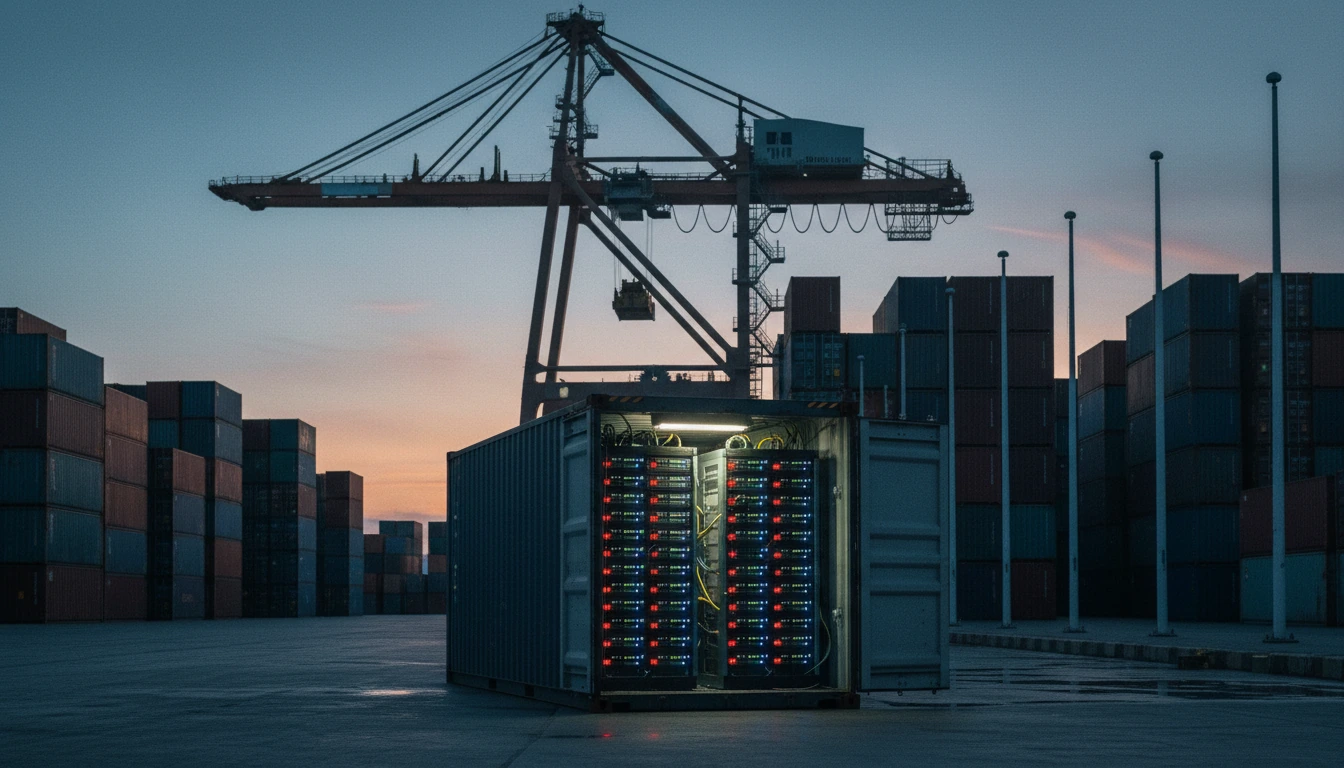
Researched and written with AI assistance under the editorial responsibility of the i10X News team. The title image is an AI-generated image. Read our AI Use Policy. Spotted an error? Request a correction.
This independent i10x analysis is based on Reuters’ summary of the Wall Street Journal report, follow-up reporting by Hindustan Times, Moneycontrol and CoinDesk, the Commerce Department’s official statement on the American AI Exports Program, and public posts on X. The WSJ article itself is paywalled; we rely on how Reuters and others relayed it.
- Reuters via Investing.com: Trump administration to name Nvidia, other AI firms as US national champions
- Hindustan Times: Trump administration to name Nvidia, Microsoft among over two dozen AI national champions
- Moneycontrol: Trump picks Nvidia, OpenAI, Microsoft among AI national champions
- CoinDesk: Trump administration to name Nvidia, OpenAI and several others as AI national champions
- ITA: Commerce Statement on Application Conclusion, Next Steps of the American AI Exports Program
i10x Perspective
The AI race just got a team sheet. For years the US criticized China for backing national champions; now it is reportedly printing its own list. That may well help American AI win contracts abroad, because foreign governments like buying a complete package with a government handshake attached. The price is that the market gets a little less like a market. Watch the second half of the list: if it is only the giants, the champions program becomes a moat. If it includes challengers, it could become a launch pad.