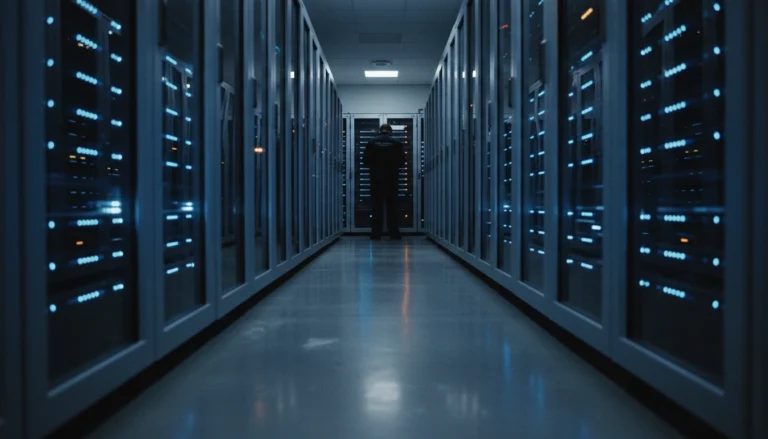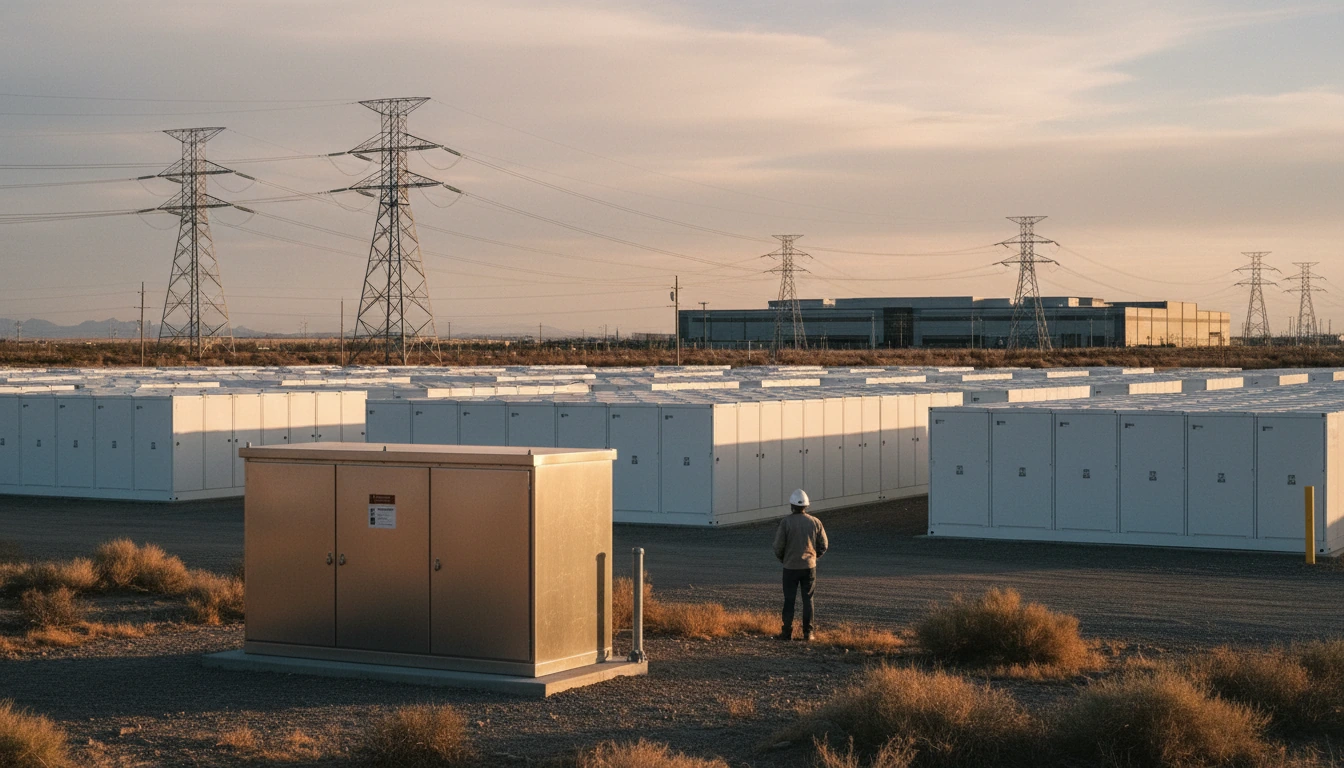
Tesla has introduced Powercore, a solid-state transformer that packs a medium-voltage transformer, an inverter and a circuit breaker into one enclosure. It is aimed at utility-scale solar, battery storage, EV charging and AI data centers, where Tesla says it can turn grid power into 800 V DC for server racks in a single step. The first units are planned to be operating in 2027.
Quick Take
- The product: A solid-state medium-voltage transformer, inverter and breaker in one unit, made in the US.
- The power: 7.4 MW or 9 MVA continuously at 34.5 kV AC, with grid-forming support for 10 MVA of peak power.
- The voltages: 10 kV to 34.5 kV on the AC side and a nominal 800 V to 2,000 V on the DC side, according to Tesla.
- For AI data centers: One conversion step from the grid feeder to 800 V DC for servers. Tesla says it is working with NVIDIA to certify Powercore for the DSX Ready program.
- Timing: Operating in 2027, Tesla says.
In plain English
Data centers and solar farms need transformers to step high grid voltage down to something their equipment can use, and transformers have become a serious bottleneck with long waiting times. Powercore replaces the heavy traditional transformer and several other boxes with power electronics, the same kind of technology Tesla builds for its cars and batteries. For AI data centers, it can deliver the direct current that new server racks use without several conversion stages in between.
What happened
Tesla announced Powercore on November 17 through its Tesla Megapack account and presented it at the RE+ 2026 trade show in Las Vegas. The company describes it as “reliable, safe and secure” and “Made in America.”
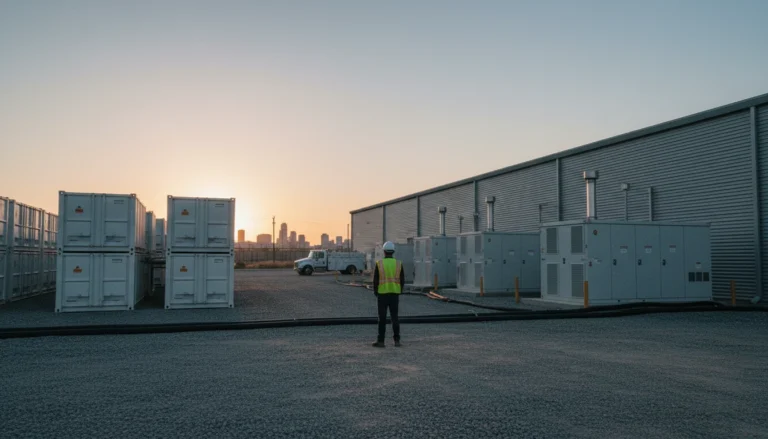
Tesla says the unit has a built-in solid-state circuit breaker that can clear electrical faults in 100 microseconds, is designed to run from minus 40 to 55 degrees Celsius, and can be covered by a warranty of up to 25 years. It connects directly to Megapack batteries over a DC bus, so storage and power electronics can be delivered pre-assembled. Paired with Megapack, Tesla says Powercore’s grid-forming controls can provide synthetic inertia and reactive power support to stabilise the local grid around a data center.
Background
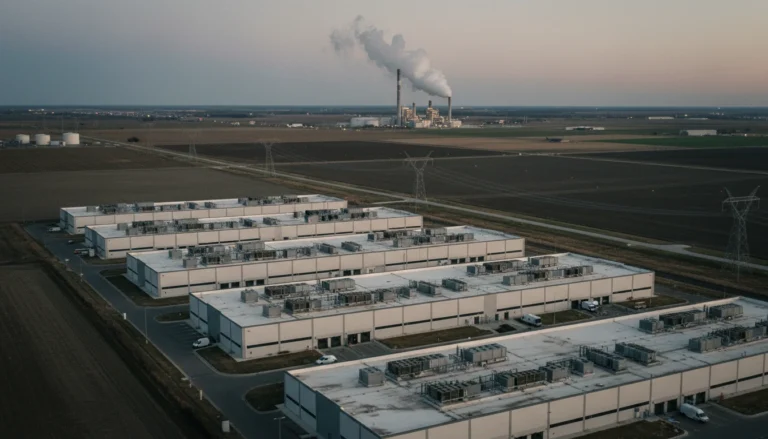
Lead times for conventional transformers have stretched for years as electricity demand from AI data centers, renewables and electrification rises. The data center industry is also moving toward 800 V DC power distribution for dense AI racks. How much power AI uses, and where it comes from, is tracked in our AI Energy Meter. A new Harvard study recently put the CO2 footprint of 403 US hyperscale data centers at 25.7 million tons in one year.
Why it matters
Grid equipment, not chips, is increasingly what slows new AI capacity and new solar and storage projects. A transformer built from power electronics in high volume could shorten build times and cut conversion losses. Combined with batteries, it could also let data centers support the grid instead of only straining it.
What’s still open
- Price and real delivery volumes once production starts in 2027.
- Whether utilities and data center operators trust a new solid-state design for critical infrastructure.
- When NVIDIA’s DSX Ready certification for Powercore will be completed.
About the analysis
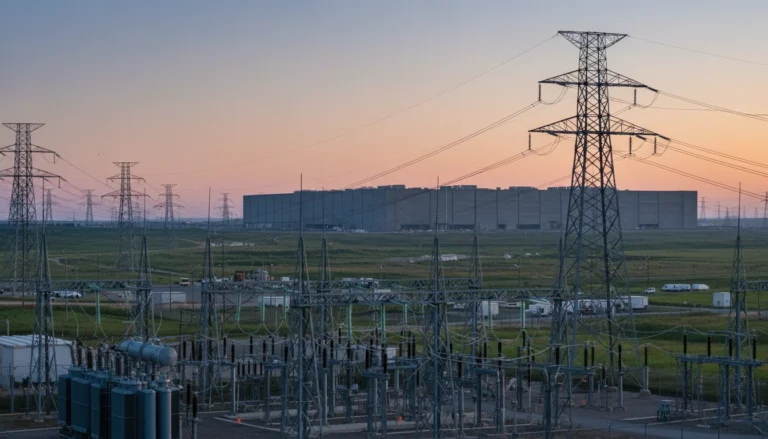
Researched and written with AI assistance under the editorial responsibility of the i10X News team. The title image is an AI-generated image. Read our AI Use Policy. Spotted an error? Request a correction.
This independent i10x analysis is based on Tesla’s announcement and the product details Tesla presented at RE+ 2026. Quotes are taken from Tesla’s announcement post.
Sources (plain text, no links):
- Tesla Megapack on X: “Introducing Powercore” (November 17, 2026)
- Tesla: Powercore product presentation at RE+ 2026, Las Vegas (November 2026)
i10x Perspective
The AI buildout is turning power electronics into strategic infrastructure. If Tesla can mass-produce transformers like it mass-produces batteries, it could become a key supplier to AI data centers far beyond Megapack. Follow the energy side of AI on our Climate & Energy page.