The International Energy Agency (IEA) expects electricity use by data centers to double to 1,000 terawatt-hours (TWh) by 2030, driven by the boom in AI investment. The projection is part of the World Energy Outlook 2026, the agency’s flagship annual report published on November 19. The IEA also warns that the AI build-out is running into limits in grids, supply chains and, in some places, public acceptance.
Quick Take
- The headline number: Data center electricity consumption doubles to reach 1,000 TWh by 2030 in the IEA’s Stated Policies Scenario.
- The driver: “The boom in artificial intelligence-related investment,” according to the report’s key findings.
- The constraints: The boom “is also revealing several constraints related to grids, supply chains and, in some cases, public acceptance.”
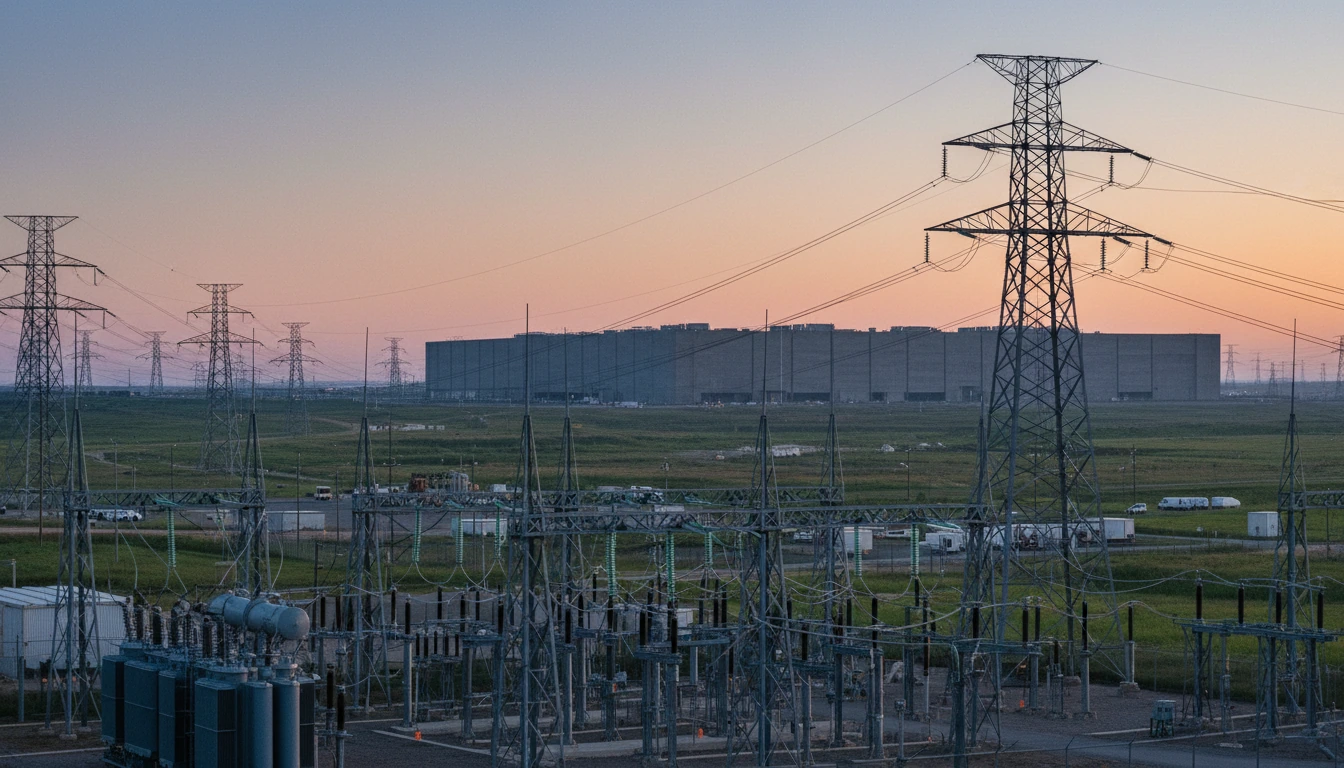
- The grid task: At least 25 million kilometres of new power lines are needed over the next ten years, and 15 million kilometres of existing lines need replacement or upgrades.
- The perspective: Efficiency gains in household lighting, televisions, refrigeration and other appliances over the past decade, at 600 TWh, are larger than the world’s current annual data center electricity use.
In plain English
Every AI answer, image or agent task runs on servers in data centers, and those servers need power around the clock. The Paris-based IEA now expects the world’s data centers to use twice as much electricity in 2030 as today. That is a lot, but the bigger problem is delivering it: power lines, transformers and grid connections take years to build.
What happened
The World Energy Outlook 2026 covers the whole energy system and is dominated this year by the oil and gas supply shock linked to disruptions in the Strait of Hormuz. AI shows up as one of the structural forces. “The energy sector is starting to feel the potentially transformative impacts of artificial intelligence (AI),” the executive summary states.
The IEA lists data centers next to industry, appliances, air conditioning, electric vehicles and heat pumps as drivers of electricity demand, which grows by more than 10,000 TWh over the next decade. It sees both sides of AI: “AI could help to optimise the electricity system and bring down costs, but for the moment, surging demand from data centres is amplifying strains in some markets and supply chains.”
The grid build-out the IEA calls for requires copper, transformers, cables and other electrical equipment “for which supplies are currently tight”, the same components AI data center developers are competing for.
Background
The new figure is in line with the IEA’s separate report Key Questions on Energy and AI, which projected data center consumption to roughly double from 485 TWh in 2025 to 950 TWh in 2030 and found that data center electricity demand rose 17% in 2025. Developers are already looking for workarounds to grid bottlenecks, from new grid hardware such as Tesla’s Powercore transformer to on-site generation.
Why it matters
The IEA’s projections are used by governments, utilities and investors to plan power plants and grids. A doubling of data center demand by 2030 confirms that AI is now a planning factor for national energy systems, not only for tech companies. The warning about grids, equipment and public acceptance also signals that power, rather than chips, could become the main brake on how fast AI capacity grows in some regions.
What’s still open
- How much of the projected demand will be met by new low-emissions generation versus existing fossil plants.
- Whether efficiency gains in chips and models will slow demand growth after 2030.
- How electricity bills for households will be affected where data centers cluster.
About the analysis
Researched and written with AI assistance under the editorial responsibility of the i10X News team. The title image is an AI-generated image. Read our AI Use Policy. Spotted an error? Request a correction.
This independent i10x analysis is based on the IEA’s World Energy Outlook 2026 press release, executive summary and key findings, and on the IEA’s Key Questions on Energy and AI report. Quotes are taken from those documents.
Sources (plain text, no links):
- IEA: World Energy Outlook 2026, executive summary and overview of key findings (November 19, 2026)
- IEA press release: “As an unprecedented shock reshapes the energy world, its duration will determine the scale of the change” (November 19, 2026)
- IEA: Key Questions on Energy and AI, executive summary
i10x Perspective
The AI race is increasingly an energy race. When the world’s main energy agency puts data centers into its headline findings, power becomes a strategic AI input on par with compute. Track the numbers in our AI Energy Meter and on the Climate & Energy page.