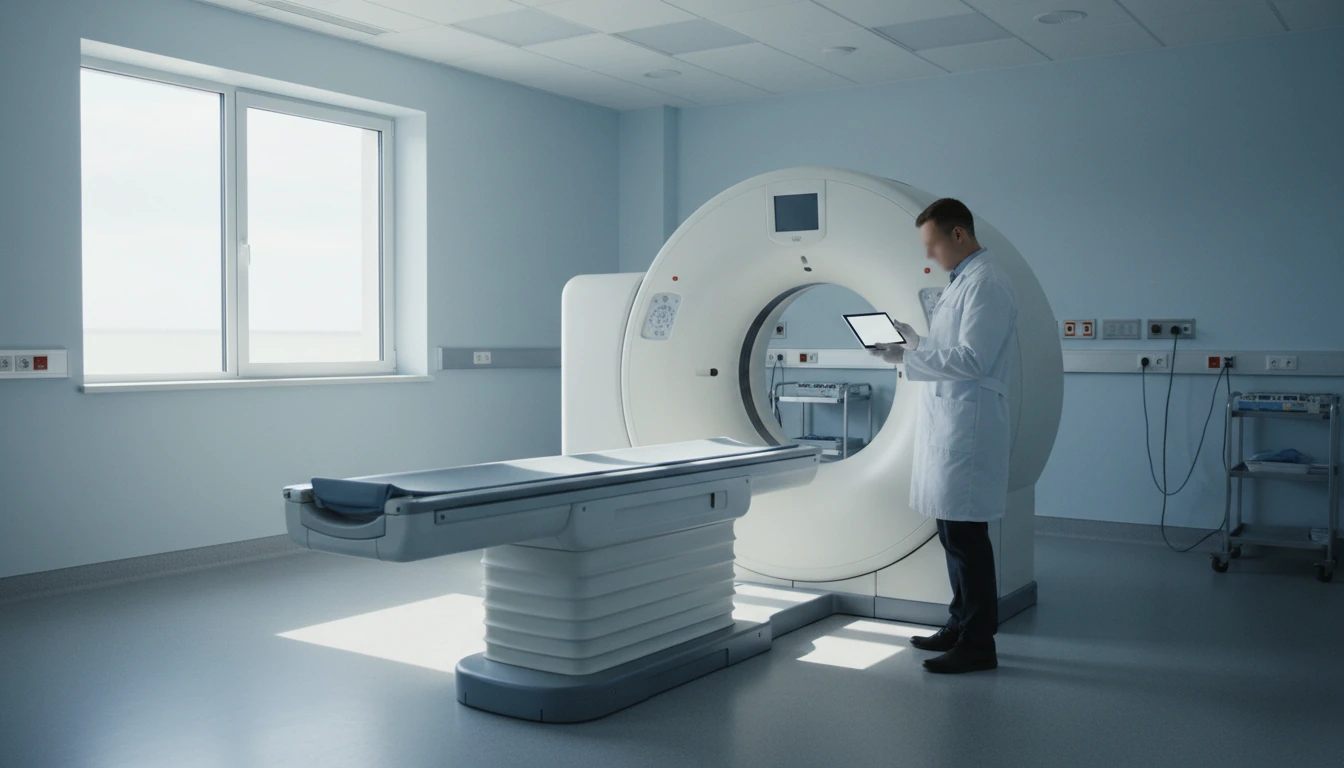
Siemens Healthineers has received clearance from the US Food and Drug Administration for Syngo.CT Coronary Cockpit, software that uses AI to analyze coronary plaque in CT scans of the heart. The tool is meant to help clinicians judge a patient’s risk and decide whether a stent procedure or medical treatment is the better path, using coronary CT angiography (CCTA) data from any CT scanner.
Quick Take
- The product: Syngo.CT Coronary Cockpit, part of the Syngo.via imaging software platform.
- The AI: AI-based segmentation, labeling and visualization of plaque across the entire coronary tree or within individual lesions.
- The use: Assessing plaque amount, composition, size and distribution, and planning percutaneous coronary intervention (PCI).
- Compatibility: Works with CCTA data from any CT scanner, with extra benefits on Siemens Healthineers dual-source and photon-counting systems.
- Status: FDA cleared, announced November 19, 2026.
In plain English
Heart attacks are often caused by fatty deposits, called plaque, in the arteries that feed the heart. A CT scan can show that plaque without a catheter, but measuring it by hand is slow. This software lets AI outline and measure the plaque automatically, so doctors get a detailed picture faster and can decide whether a patient really needs an invasive procedure.
What happened
Siemens Healthineers announced the FDA clearance in a press release. The company says the software “provides advanced, automated analysis of coronary plaque, enabling access to critical details in cardiac CT images to support clinical decision-making and percutaneous coronary intervention (PCI) planning.”
“With Syngo.CT Coronary Cockpit, clinicians can obtain advanced insights from a patient’s CT scan to support a more comprehensive assessment of cardiac health and better inform treatment decisions,” said Olivia Egan, head of Computed Tomography at Siemens Healthineers North America.
The company notes that patients with suspected or known coronary artery disease often undergo invasive diagnostic procedures in the cath lab that could have been avoided with more information. Citing published studies, it says CCTA on its Naeotom Alpha photon-counting CT scanner can reduce diagnostic angiography referrals by more than 50% and lower costs and hospital stays.
Background
Coronary artery disease is the most common form of heart disease, which is the leading cause of death in the US and worldwide, according to the US Centers for Disease Control and Prevention as cited by Siemens Healthineers. Radiology and cardiology account for the bulk of AI-enabled medical devices cleared in the US, a trend tracked in our FDA AI Medical Device Tracker.
Why it matters
Plaque analysis has long been possible but labor intensive, which limits how often it is used in routine care. An FDA-cleared AI tool that works with scans from any CT vendor lowers that barrier and could help steer more patients toward noninvasive diagnosis. For Siemens Healthineers, it also strengthens the case for its photon-counting scanners in cardiac imaging.
What’s still open
- Which clinical validation data supported the FDA clearance.
- Pricing and when the software will be broadly available to US hospitals.
- How results compare with other cleared plaque analysis tools in head-to-head use.
About the analysis
This independent i10x analysis is based on the Siemens Healthineers press release. Quotes are taken from that release.
Sources (plain text, no links):
- Siemens Healthineers press release: “Siemens Healthineers Receives FDA Clearance for Syngo.CT Coronary Cockpit Arterial Disease Management Software” (Malvern, Pa., November 19, 2026)
i10x Perspective
Imaging AI keeps moving from detection to decision support. More on our Health & Medical Research page, where recent research also shows the limits of AI agents reading CT and MRI scans.