Oracle says it has all the money it needs to build out its infrastructure contract with OpenAI. In a statement dated November 20, the company called its capital raise earlier this month its final one for the current investment cycle and said the financing it presented at its October Investor Day, vendor financing included, is in place. Funding was the main risk our earlier coverage of the deal flagged, so the claim matters. Below, we check it against Oracle’s own filings and add up what the money costs.
What Oracle says, and what it leaves out
The statement makes four points:
- Funding: Oracle calls itself “the first hyperscaler fully funded for this investment cycle.” Further private talks with vendors are described as optional extras that its OpenAI commitments do not depend on, and the company says in advance that any media report claiming otherwise is wrong.
- Abilene: the Texas campus where Astra-6 was trained is “nearly complete.”
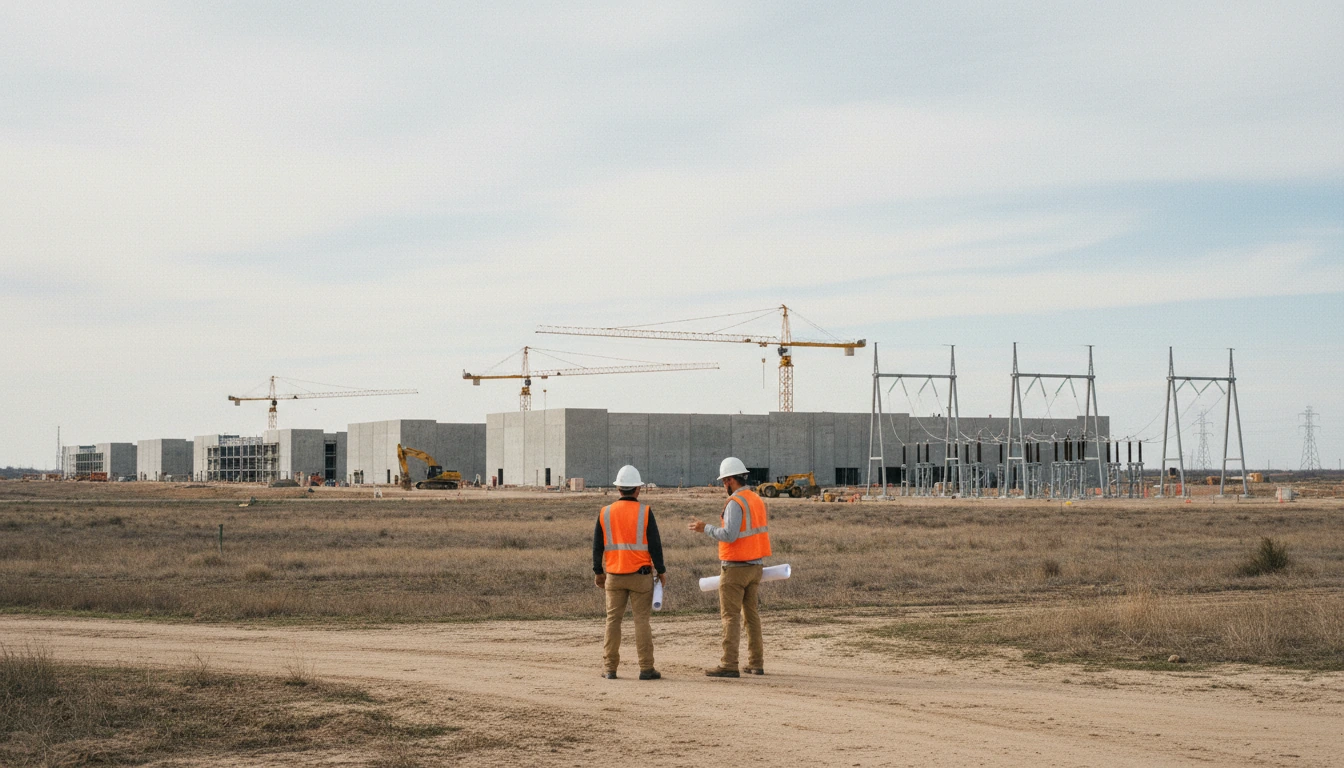
- Shackelford: the next gigawatt-scale campus is fully permitted, and the handover of Nvidia Vera Rubin racks in its data halls is on track for the coming weeks.
- Cash flow: Oracle still expects positive free cash flow in the second half of fiscal 2028, targets more than $30 billion in fiscal 2029 and plans to self-fund growth from that year.
The statement gives no contract value, no capacity figure and no delivery dates beyond “the coming weeks.”
Our math on the $20 billion raise
The pricing release of November 2 and the Form 8-K filed on November 4, when both deals closed, give the full terms. The equity half was 86,206,897 new shares at $116, which works out to $10.0 billion gross (about $9.9 billion net). Measured against the 3,023,726,695 shares outstanding on August 31, as listed in the prospectus supplement, that is about 2.85% more shares.
The debt half was $10 billion of senior unsecured notes in five tranches. We calculated the annual interest per tranche from the coupons:
| Notes | Amount | Coupon | Matures | Annual interest (our calc) |
|---|---|---|---|---|
| 2029 notes | $2.00 billion | 7.000% | Nov 4, 2029 | $140.0 million |
| 2031 notes | $1.75 billion | 7.450% | Nov 4, 2031 | $130.4 million |
| 2033 notes | $2.25 billion | 7.850% | Nov 4, 2033 | $176.6 million |
| 2037 notes | $2.50 billion | 8.000% | Feb 4, 2037 | $200.0 million |
| 2046 notes | $1.50 billion | 8.650% | Nov 4, 2046 | $129.8 million |
| Total | $10.00 billion | 7.77% weighted | about 8.6 years weighted | $776.8 million |
By our calculation the weighted average coupon is about 7.77%, which means roughly $777 million in interest a year, and the weighted average term to maturity is about 8.6 years. The prospectus capitalization table shows total debt rising from $125.3 billion to $135.3 billion with the new notes, an increase of about 7.9%.
The raise used Oracle’s entire self-imposed cap
The key comparison is with Oracle’s own promise. In its Investor Day release of October 28, Oracle committed to limit new capital market funding for fiscal 2027 through 2030 to $20 billion, excluding refinancing, expected as $10 billion of equity and $10 billion of gross debt. That came on top of a $20 billion at-the-market equity program completed in the first quarter of fiscal 2027. Five days later it raised exactly that amount in exactly that split.
So “final capital raise” is consistent with the plan Oracle set itself: the cap is used up. Any further cash for the build-out has to come from operations, refinancing, or the levers named in October, which are vendor financing, customer-provided hardware and customer prepayments. Oracle counts vendor financing toward net debt in its leverage target (below 3.5 times adjusted EBITDA in fiscal 2029).
For scale, our AI Capex Tracker shows Oracle spent $28.5 billion on capital expenditures in the quarter to August 2026 and $75.7 billion over the last four reported quarters, with capex at 161% of operating cash flow. The whole November raise equals about 70% of one quarter’s spending.
How the story has shifted since our first reports
When we covered the deal in late 2025, the reported $300 billion contract was unconfirmed and the open question was whether Oracle could carry the debt. The new statement does not confirm a contract value, but it moves the conversation from financing to delivery: finishing Abilene and filling Shackelford with Vera Rubin systems, the platform Nvidia described in its latest earnings.
Oracle’s dates in calendar terms
Oracle’s fiscal year ends on May 31, which makes its targets easy to misread. Translated into calendar dates:
- Positive free cash flow in the second half of fiscal 2028 means December 2027 to May 2028, at the earliest about a year from now.
- More than $30 billion of free cash flow in fiscal 2029 covers June 2028 to May 2029. By our calculation, the roughly $777 million a year in interest on the new notes would take about 2.6% of that target.
- The used-up $20 billion cap runs through fiscal 2030, which ends in May 2030. Taken at its word, Oracle plans no new capital market funding beyond refinancing for three and a half years.
Three checkpoints to watch
- Shackelford rack handover, promised for the coming weeks. It is the first claim in the statement that can be checked on a date.
- Second-quarter fiscal 2027 results, for the three months to November 30. Data vendors expect them around December 14, though Oracle has not yet confirmed the date. Watch capex, operating cash flow and remaining performance obligations, the backlog figure that reflects signed contracts like OpenAI’s.
- Any new financing headline. Oracle has said in advance that the build-out does not depend on further vendor talks. A new equity or bond deal before mid-2030, beyond refinancing, would contradict the statement it made on November 20.
For OpenAI customers the practical reading is simpler. Oracle’s Abilene campus is where OpenAI trained Astra-6, according to the statement, and the financing risk that hung over that capacity is smaller after this statement. Delivery is now the risk to watch, and Shackelford is where it will show first.
What is still open
- The value and capacity of the OpenAI contract, which Oracle again did not state.
- The size and terms of the vendor financing that is “in place.”
- Whether the Shackelford rack handover happens in the coming weeks as promised, the next milestone anyone can check.
i10x Perspective
On paper, Oracle’s numbers add up: the November raise matches the October plan in size and split, and the company has now told investors that this was its last capital raise of the cycle. That is a strong commitment, and it narrows Oracle’s room for surprises. The trade-off is cost. Paying close to 7.8% on average for new long-term debt and carrying capex above operating cash flow leaves little slack if construction slips. Pre-emptively calling future reports wrong is unusual for a company of Oracle’s size; the more convincing answer will be visible progress at Shackelford.