SenseNet, a wildfire detection company based in San Francisco, said on November 24 it raised $43 million in Series B financing led by Idealist Capital, with Fusion Fund, Stormbreaker Ventures, Thin Line Capital, the National Bank of Canada and The Sitka Foundation also taking part, according to SenseNet’s announcement. The company fuses ground sensors, AI cameras, satellite data and drones to spot fires early across 12 countries. The headline number is clean, but the structure of the round and what the money is actually for are the parts worth reading closely.
What the $43 million really is
SenseNet’s own release says the round “includes primary, secondary sales and debt financing.” That distinction matters. Secondary sales put money in the pockets of existing shareholders rather than into the company, and debt is not equity. So the fresh growth capital landing on SenseNet’s balance sheet is smaller than the $43 million headline suggests, though the company did not break out the split. For a customer judging the vendor’s runway, or a candidate weighing a job offer, that is the first thing to pin down.
The numbers behind the raise
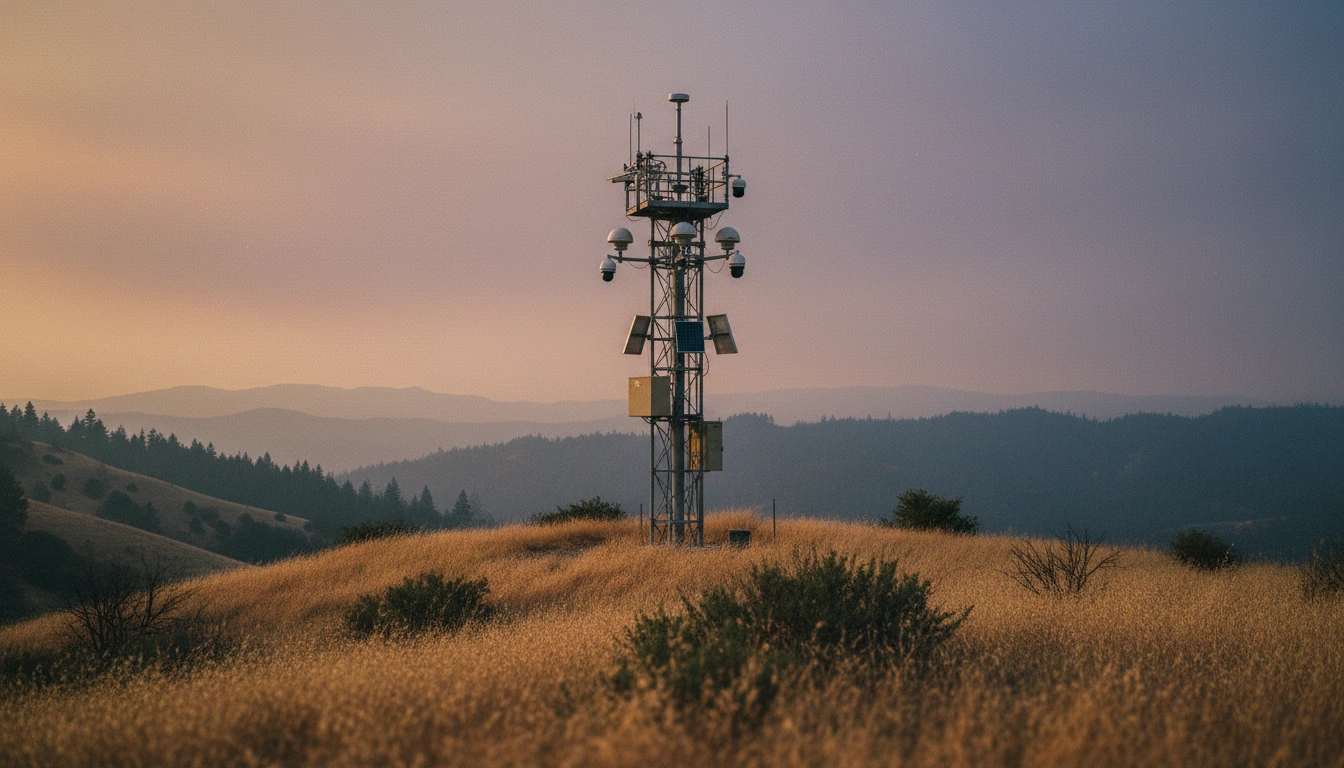
The operating figures are the stronger signal. Over the past year SenseNet says it more than tripled its monitored area from 130 million to more than 450 million acres, and it now runs more than 5,300 ground sensors and AI cameras that it credits with the early detection of more than 10,000 fires. During the last season it says it flagged several fires hours before the first 911 calls. Its named US customers include the Palo Alto and Woodside fire departments, Santa Clara County and San Jose Water in California, plus agencies in Colorado, Nevada and Hawaii.
How it compares in our funding data
In our AI Funding Index, which tracks 311 rounds since early 2025, $43 million is a modest Series B. Recent AI Series B rounds have clustered higher, from Formic’s $50 million to Traversal’s $120 million, and most went to software rather than physical sensor networks. The closest story we have covered is Bedrock Energy’s $24 million round for AI-guided geothermal drilling. Both are climate-infrastructure plays where the AI sits on top of hardware in the field, which is slower and more capital-hungry to scale than a pure software product. For the wider picture, see our State of AI in Climate and Energy tracker.
What makes the approach different
SenseNet’s pitch is that it fuses several detection layers, ground sensors, cameras, satellite and drones, into one operational view rather than relying on a single technology. Its CTO frames the goal as spotting risk “before ignition,” not just detecting an active fire. That is a sensible direction, but it is also a claim that is hard for a customer to verify from the outside, because prediction accuracy before a fire starts is far harder to measure than detection speed once one has begun.
If you are evaluating wildfire tech
For a utility, fire agency or large landowner weighing SenseNet or a rival, three questions cut through the marketing. First, what is the measured detection lead time and false-alarm rate in terrain like yours, not a national average. Second, does it integrate with your existing dispatch and emergency systems, which SenseNet says it does, without ripping out current infrastructure. Third, how much of any “prediction” claim is validated against real ignition events rather than modeled risk. The multimodal approach is a real advantage over single-camera systems, but only if the extra layers actually feed decisions.
i10x Perspective
Wildfire detection is becoming a genuine AI category, driven by insurers, utilities and governments that now treat fire as a chronic infrastructure risk rather than a seasonal event. A $43 million round, part of it secondary and debt, says investors like SenseNet’s footprint and customer list more than they are betting on a moonshot. The company to watch is whichever one can prove, with numbers, that it shortens the gap between ignition and response. For now SenseNet’s 450 million acres and 10,000 fires are the kind of operating scale that is harder to fake than a funding headline.