The AI Agent Economy
⚡ Quick Take
“We are transitioning from a paradigm where humans prompt software to an era where software prompts itself. The AI agent economy isn’t just a new feature layer – it is an autonomous, continuous compute cycle that will fundamentally rewrite enterprise unit economics and infrastructure demand.”
Summary: The AI agent economy is a rapidly forming ecosystem of autonomous, goal-seeking systems capable of planning, tool-use, and multi-agent collaboration.
What happened: Major industry stakeholders—from Google’s multimodal Project Astra to NVIDIA’s production-grade agent microservices—are laying the groundwork for agentic workflows, while capital allocators like Sequoia and a16z map the shift from traditional apps to intent-fulfillment ecosystems.
Why it matters now: This transition fundamentally alters the trajectory of AI compute. By moving from synchronous, human-in-the-loop interactions to asynchronous, background agent operations, the demand for continuous inference will scale exponentially, heavily stressing existing GPU data centers and power grids.
Who is most affected: Traditional SaaS incumbents facing a potential “software apocalypse,” cloud infrastructure providers preparing for an inference tsunami, and enterprise CTOs attempting to architect reliable, non-deterministic workflows.
The under-reported angle: The true bottleneck to the AI agent economy isn’t model intelligence, but the glaring lack of quantitative economic modeling, standardized evaluation harnesses, and enterprise-grade observability required to safely deploy these autonomous systems into production at scale.
🧠 Deep Dive
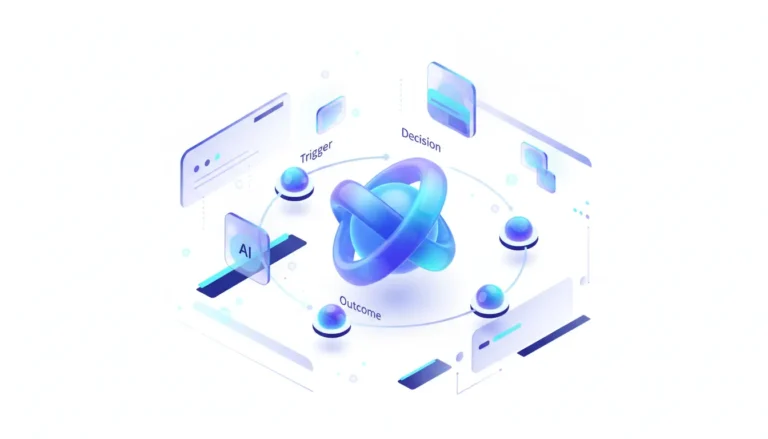
Have you ever watched a simple chatbot conversation and wondered what happens when the software stops waiting for your next message? The era of static, single-turn LLM interactions is ending, making way for what venture firms and researchers are calling the Agentic Era. Instead of relying on traditional CRUD interfaces, software is being rewritten around intent-fulfillment. In this emerging AI agent economy, large language models act as the cognitive engines powering autonomous systems that utilize planning loops, memory architectures (episodic and semantic), and tool-use via function calling to execute complex, multi-step workflows.
From what I’ve seen, the real shift shows up beneath the software layer. When agents begin prompting other agents—orchestrated by frameworks like LangGraph, CrewAI, or AutoGen—inference demand completely detaches from human typing speeds. NVIDIA’s aggressive push into generative AI agent microservices highlights this reality: the future of AI compute is continuous, low-latency, and 24/7. This agentic background processing will force data centers to rethink cost optimization, batching, and edge inference to manage the resulting power and GPU supply strain.
That said, a fierce debate is brewing over market structure and value capture. As KraneShares notes, this shift poses a “software apocalypse” for legacy SaaS vendors whose rigid interfaces can be bypassed entirely by API-calling agents. Conversely, an open agent ecosystem could trigger a renaissance for developers building specialized micro-agents. The ultimate winners will likely be those who control the orchestration layers, the API registries, and the multi-agent interoperability protocols—effectively building the tollbooths of the AI agent economy.
Despite the glossy demonstrations of universal agents like Google’s Project Astra, enterprise adoption is stalling in the “prototype-to-production” chasm. Our analysis reveals a massive gap in rigorous evaluation playbooks. Enterprises lack the quantitative economic models, ROI calculators, and safety guardrails needed to trust autonomous workflows. Without robust telemetry, threat models, and fail-safe human-in-the-loop patterns, corporate IT remains hesitant to hand over the keys to proprietary data.
The AI agent economy will mature only when the industry standardizes how agents are audited, monitored, and monetized. As open vs. closed ecosystem dynamics play out, the focus must shift toward robust procurement frameworks and security controls. The next massive software moat won’t be a standalone application, but rather an orchestration platform that safely networks hundreds of specialized agents to run an enterprise on autopilot.
📊 Stakeholders & Impact
| Stakeholder / Aspect | Impact | Insight |
|---|---|---|
| AI / LLM Providers | High | Shift from scaling raw parameters to optimizing models for tool-use, function calling, and low-latency reasoning. |
| Infrastructure & Cloud | High | Continuous agentic loops mean inference compute will scale dramatically, demanding new edge/cloud topologies and higher grid loads. |
| Enterprise SaaS Vendors | Disruptive | High risk of disintermediation; interfaces become obsolete as agents interact directly via APIs and backend protocols. |
| Enterprise IT & Security | Significant | Urgent need for new evaluation metrics, observability tools, and governance frameworks to manage non-deterministic workflows. |
✍️ About the analysis
Researched and written with AI assistance under the editorial responsibility of the i10X News team. The title image is an AI-generated illustration. Read our AI Use Policy. Spotted an error? Request a correction.
This independent, research-based synthesis cross-references academic taxonomies, leading venture capital market maps, and hardware vendor documentation to decode the AI agent economy. It is designed for CTOs, product strategists, and infrastructure leaders tasked with navigating the transition from LLM prototypes to production-grade agentic architectures.
🔭 i10x Perspective
The transition to the AI agent economy is the moment artificial intelligence evolves from a tool you use to an entity that works on your behalf. Over the next five years, the bulk of cloud compute will shift toward machine-to-machine transactions, where autonomous agents negotiate, retrieve data, and execute tasks across fragmented API ecosystems. The fiercest competitive battleground will not be over the smartest foundational model, but over the protocols and registries that allow disparate agents to trust and interact with one another. Watch closely for the emergence of native “agent economics”—including dynamic pricing models and micro-transactions—as non-human actors become the primary consumers of both software and compute infrastructure.